Väčšina kryštálových náramkov sa vyberá rovnakým spôsobom: niečo vás zaujme, mená kameňov znejú slubne, kúpite si ho. Nie je na tom nič zlé — ale znamená to aj to, že väčšina ľudí nemá žiadny skutočný spôsob, ako zistiť, či kombinácia, ktorú si vybrali, skutočne drží pohromade, alebo či len vzali hŕstku pekných kameňov, ktoré sa náhodou nachádzajú na tom istom špagáte.
Skóre litoerapie je pokus odpovedať na túto otázku s skutočným číslom namiesto pocitu.
Čo vlastne meria skóre litoterápie
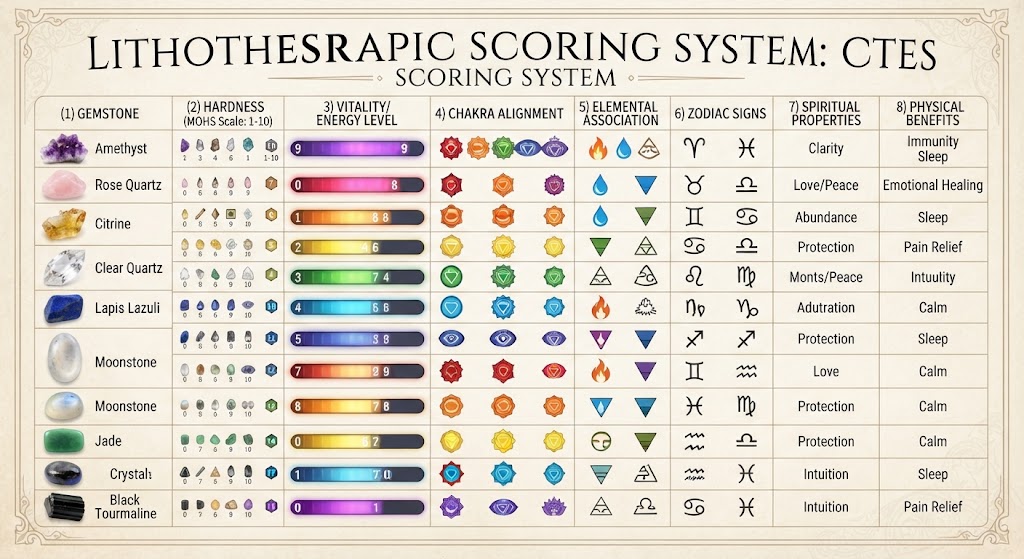
V praxi sa skóre litoterapie rozkladá na zloženie náramku na niekoľko konkrétnych dimenzií namiesto jednej nejasnej klasifikácie "dobrých vibov":
- Pokrytie čakier — koľko z 7 tradičných čaker je reprezentovaných kameňmi v dizajne, z celkovo 7.
- Elementárna rovnováha — koľko z klasických prvkov (zem, voda, oheň, vzduch, a niekedy éter/duch, v závislosti od tradície) je prítomných.
- Energetické skóre — ako koherentne spolu fungujú tradične pripisované vlastnosti kameňov, namiesto toho aby sa ťahali v nesúvisiacich smeroch.
- Estetické skóre — samostatné hodnotenie toho, ako farby a textúry vybraných kameňov skutočne pôsobia vizuálne ako kus šperkov.
Rozdelenie energetického a estetického hodnotenia od seba je dôležitejšie, ako sa zdá. Kombinácia môže byť vizuálne pútavá, ale energeticky neusporiadaná, alebo energeticky koherentná, ale vizuálne nezhoda. Zhrnutie oboch do jedného čísla by túto distinkcii úplne skryl.
Prečo Dať Číslo na Niečo Symbolické?
Stojí za to byť jasný na tom, čo to je a čo to nie je. Litoterapia je tradičná a symbolická wellness prax, nie klinicky overená medicínska liečba — neexistuje žiadny recenzovaný dôkaz, že minerálne zloženie kameňa produkuje emocionálne alebo energetické účinky, ktoré sa mu tradične pripisujú. Litoterapeutické skóre to nemení; nie je to zdravotný ukazovateľ a nie je náhradou za medicínsku starostlivosť.
Na čo je to užitočné, je zámer. Ak budujete náramok zameraný na zdôraznenie uzemňovania a komunikácie, skóre, ktoré ukazuje nízke pokrytie čaker alebo chýbajúci prvok, vám povie niečo konkrétne, s čím môžete niečo urobiť — vymeňte kameň, vyvážte dizajn — namiesto hádania. Zmení to symbolickú prax na niečo, čo môžete zámerне iterovať, rovnako ako paleta farieb pomáha dizajnérovi bez toho, aby si nárokoval meranie čohokoľvek vedeckého.
Pozrite si to v akcii: Skutočné náramky, Skutočné skóre
Najpresvedčivejší spôsob, ako pochopiť, ako tieto skóre skutočne vyzerajú, je vidieť skutočnú, rozmanitú skupinu z nich vedľa seba — nie len najvyššie bodovaný highlight reel. The Katalóg tvorby uvádza desiatky hotových návrhov náramkov s ich úplným rozpisom a ponuka je naozaj rozmanitá:
- Kombinácia Jaspe Bréchique a Achát ohňa - skóre 93/100so všetkými 7 aktivnými chakrami a úplným pokrytím všetkých prvkov.
- Párovanie Jaspe Dalmatian a Serpentín pristáva na 95/100, zameraný na ochranu a duchovné uzemňovanie.
- Na druhej strane, dizajn iba s malachitom dosahuje 20/100, s iba 1 z 7 čakier v činnosti — pripomienka, že jeden krásny kameň automaticky nevytvára vyváženú kompozíciu.
Videnie tak 90-tych rokov ako aj 20-tych rokov v rovnakom katalógu je ten zmysel: systém bodovania, ktorý by mal len vysoké čísla, by nič nemerial.
Postavte a Ohodnoťte Svoj Vlastný
Namiesto výberu z pevného katalógu si môžete zložiť vlastný náramok korálikom za korálikom a vidieť, ako sa aktualizuje jeho litoterápeutické skóre, keď ho budujete, pomocou bezplatného Konfigurátor Náramku zo Liečivých Kryštálov. Niekoľko vecí, ktoré robí, čo väčšina tvorcov náramkov nerobí:
- Živé skórovanie počas navrhovania — energetické a estetické skóre sa aktualizujú v reálnom čase, keď pridávate alebo vymeňujete korálky, nie len pri pokladni.
- Úplný rozpad, nie len číslo — aktívne čakry, prítomné prvky a dominantné vlastnosti sú zobrazené oddelene, takže môžete vidieť presne to, čo poháňa váš výsledok.
- Uložte a zdieľajte svoj dizajn — exportujte vašu kompozíciu ako zdieľateľnú kartu, alebo vygenerujte pre ňu špecializovanú stránku.
- Inštalovateľné ako aplikácia — pridajte si to na domovskú obrazovku a pokračujte v dizajnovaní offline, na počítači alebo mobilnom zariadení.
Či už skončíte s tým, že postavíte niečo, čo dosahuje skóre v 90-tich, alebo niečo bližšie k osobnému experimentu s nižším skóre, pointa je rovnaká: budete presne vedieť, prečo, namiesto len dúfania, že sa vám páčiace kameňe náhodou skombinujú dohromady.
Často kladené otázky
Je skóre litoterápie vedecky overené?
Nie. Odráža tradičné a symbolické spojenia medzi kameňmi, čakrami a prvkami — nie merateľný fyzický alebo medicínsky účinok. Používajte to ako návrhový a zámernný nástroj, nie ako zdravotnú záruku.
Čo je "dobrý" skóre litoterapie?
Neexistuje univerzálna hranica úspechu/neúspechu. Návrh postavený okolo jedného kameňa a konkrétneho zámeru môže dosiahnuť nižší skóre v pokrytí čaker a napriek tomu robiť presne to, na čo bol určený. Skóre je najužitočnejšie ako spôsob, ako vidieť, čo vaša kompozícia zdôrazňuje, nie ako stupeň, ktorý by sa mal maximalizovať.
Môžem používať konfigurátor bez nákupu čohokoľvek?
Áno — konfigurátor je dostupný zadarmo na návrh a hodnotenie náramkov. Taktiež funguje ako inštalovateľná aplikácia, ktorú môžete kedykoľvek znovu navštíviť on Shopify, WordPress/WooCommerce, PrestaShop, etc.
Kde si môžem pozrieť hotové príklady pred navrhnutím vlastného?
The Katalóg tvorby má úplný rozsah hotových návrhov so svojimi skóre, kombináciami kameňov a zamýšľanými vlastnosťami už rozpracovaní.