Loch Ness · PREVERJENO ALI SAMO OBČUTKI? · Vodnik za les
"Ebony", "sandalwood" in "rosewood" zvečajo kot tri vrste lesa. So tri trgovska imena, in vsako lahko skriva več dreves — nekatera od njih so zaščitena. Preverili smo, kaj bi moralo pomeniti vsako ime, in jo primerjali z videzom naših lastnih zapestnic. Ena izmed njih verjetno ni tisto, kar pravi njena objava.
Za rezbarije na teh zapestnicah glejte našo vodnik za ogrlice iz rezljanega lesenih perlic.
Tri vrste lesa na prvi pogled
| Ime | Kako bi moral biti | Barva | Stanje |
|---|---|---|---|
| Ebonovina | Diospyrosova drevesa; afriška ebenovina je D. crassiflora (PROTA) | Črno do temno rjavo s črnimi črtami | Huda prekomerna nabirka po vsem svetu (Wikipedija); Afriško ebenovina na seznamu ogroženih vrst (Advantage Lumber) |
| Sandalvec | Santalum album, belo ali indijsko sandalovje (Wikipedija) | Rumeno-rjava, trdna, aromatična srcna les (Springer) | Ranljivo na Rdečem seznamu IUCN |
| Rosewood | Trgovinsko ime, ki zajema veliko vrst, najbolj znano v rodu Dalbergia (CITES / WRI) | Se razlikuje glede na vrsto | Vsa rola Dalbergia v Dodatku II CITES od 2017 |
Ebonovina
Afriška ebenovina je težka — 900 do 1.010 kg na m³ — in njeno jedro se razprostira od globinsko črne do črno-rjave ali temno rjave barve s črnimi črtami (PROTA). Zato rjava perla ni avtomatično ponarejena ebenovina.
Ebenovska drevesa so majhna in počasi rastoča, povpraševanje pa je vodilo do hudega preplavljanja (Wikipedija). Afriško ebenovina je na Rdečem seznamu IUCN-a kot ogrožena vrsta, in vrste Diospyros z Madagaskarja so na Dodatku II CITES (Advantage Lumber).
Naše zapestnice: Večina naših rezljanih kosov se prodaja kot ebonovina. Les je bil verificiran na eni zapestnici v epizoda 1. Ostali in vrsta še niso preverjeni. Na fotografijah ta ista zapestnica izgleda svetlo rjava namesto črne, kar je vredno podrobnejšega pogleda.
Sodba: ⚪ Še v preiskavi — preverjeno na eni zapestnici, vrsta neznana.
Sandalwood: zeleni problem
Pravo santalovino drevo, Santalum album, ima trdo, aromatično, rumeno-rjavo srčno les (Springer). Preuporaba je divjo populacijo naredila ranljivo za izumrtje (Wikipedija).
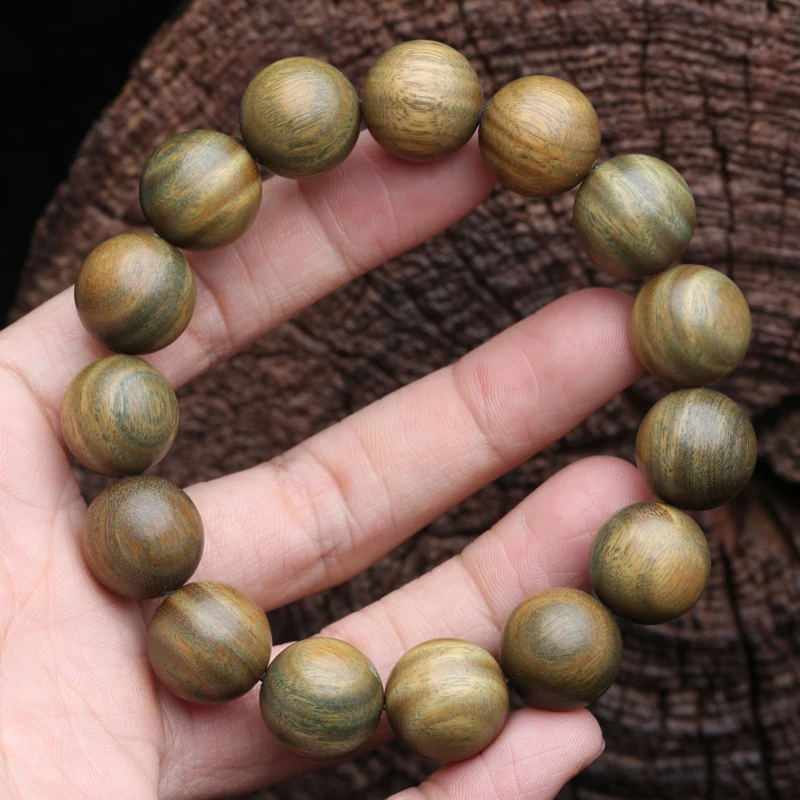
"Zeleno sандaloVo" je nekaj drugega. Običajno je to verawood, Bulnesia sarmientoi, aromatično les, ki ni botanično povezan s sandalovim lesom (IndiOdyssey; Prva koža). Njeno trdno srčno les se razteza od svetlo olivno zelene do čokoladne rjave barve, in je bilo leta 2018 vpisano na Rdeči seznam IUCN kot ogrožena vrsta (Wikipedija). Leta 2010 se je preselil v CITES Prilogo II (Prva koža; Bois-Exotique).
Naša zapestnica: prodajano kot "pravi sandalovec", je na vseh fotografijah jasno olivno zeleno s temnejšimi črtami — barva veravesa, ne pravega sandaljovca.
Odločitev: 🟡 Delno — "sandalwood" velja le kot trgovsko ime "zeleni sandalwood"; "genuine" ne velja, če je barva takšna, kot videti je. Fizični pregled v teku.
Rosewood
"Rdeče drevo" je družina trgovskih imen. Leta 2016 je CITES uvrstil celoten род Dalbergia — približno 250 vrst, vključno s številnimi najbolj cenjenim rdečim drevjem — v Prilogo II, ki je v veljavi od 2. januarja 2017, predvsem zaradi nezakonitega posekanega lesa za repliko antičnega pohištva "hongmu" (CITES / WRI).
Od 26. novembra 2019 naprej končni proizvodi, ki vsebujejo do 10 kg brazilskega palisandra vrste Dalbergia rosewood na pošiljko, ne potrebujejo več dovoljenj CITES; brazilski palisander, Dalbergia nigra, je izjema (Informativni list avstralske vlade). Naramnica s perlami tehta nekaj deset gramov.
Naša zapestnica: navadne perle z izrazitim, kontrastnim vzorcem vlaken, dve biseri v obliki tikve in les oblikovan v obliko ogrlice. Še ne vemo, katera vrsta je, ali je sploh Dalbergia.
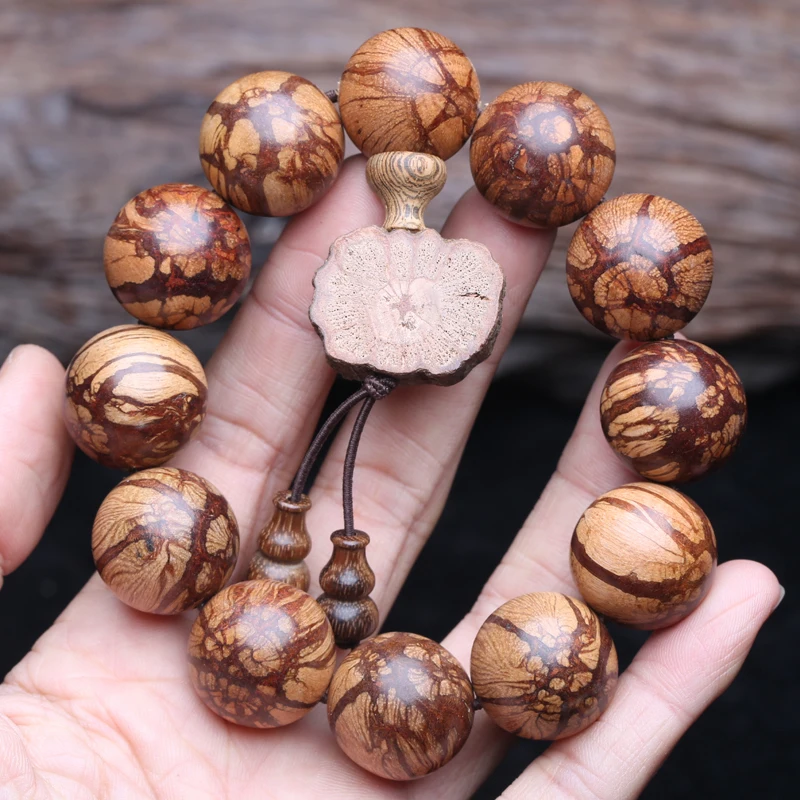
Verdikt: ⚪ Še vedno poteka preiskava — vrsta neznan.
Kaj naredimo v zvezi s tem
Od našega dobavitelja zahtevamo botanično naziv svakog drva koje prodajemo, kao i dokumentacije koja ga prate. Kad ih dobijemo, ta stranica dobija ažuriranje sa datumom — a ako je neki unos pogrešan, unos se ispravlja, ne samo ovaj članak.
Izbira med njimi, odkritosrčno
- Želite vonj? Resnično sandalovec in zeleni sandalovec sta oba aromatična lesu; ebenovina se ne prodaja za njen vonj.
- Želite težo in črno površino? Ebenovinec je med najtežjimi; oglejte si naš Vodilo za perle 20 mm kaj to pomeni na zapestju.
- Vas zanima izvor? Zahtevajte botanično ime. Trgovsko ime samo – ebenovina, sandalovina, palisander – vam ne pove, katerega drevesa je, ali je zaščiteno.
Pogosto zastavljena vprašanja
Ali je zeleno sandalovino pravo sandalovino?
Ne. Običajno je to verawood, Bulnesia sarmientoi, ki ni botanično povezan s pravim sandalovcem (IndiOdyssey).
Ali je rjava ebenovka ponarejena?
Ni nujno: Afriško ebenovino trdnega lesa lahko preznamuje temno rjava barva s črnimi črtami (PROTA).
Ali potrebujem dovolenje CITES za zapestnico iz palisandra?
Za Dalbergia rosewood so končni proizvodi, težji manj kot 10 kg na pošiljko, izjemljeni od leta 2019, razen brazilskega rosewood (Informativni list avstralske vlade). Pravila za druga zaščitena gozdova se razlikujejo.
Ali lahko ta lesena tla dražijo kožo?
Ebenovino les rodu Diospyros je bil prijavljen kot senzibilizator, čeprav so hudi odzivi redki (Advantage Lumber). Verawood prah se je poročal, da povzroča kihanje (Bois-Exotique). Če se vaša koža odzove, prenehajte jo nositi.
Pomagajte nam zapreti odprte sodbe
Če delate z lesom in lahko identificirate te vrste iz fotografij, pošljite e-pošto contact@lochness-paris.comJavno posodabljamo presojo in vas zahvalimo.
Viri
- Wikipedia — Ebenovino
- PROTA preko Pl@ntNet — Diospyros crassiflora
- Advantage Lumber — gabutonski ebonit
- Wikipedia — Santalum album
- Springer — poglavje Santalum album
- Wikipedia — Bulnesia sarmientoi
- IndiOdyssey — Rdeče, belo, zeleno in črno santalovo les
- Première Peau — Paragvajsko zeleno sандalno les
- Bois-Exotique — Verawood
- CITES / WRI — Izvajanje vključitev vrst palisandra v CITES (2019)
- Avstralska vlada — Informativni list o lesnih vrstah po CITES (2019)
Dnevnik posodobitev
[DOPOLNITI : datum] — Prva objava. 2 odločbi odprti, 1 delna. Dobavitelj je prosil za botanična imena.