Loch Ness · PREVERJENO ALI SAMO OBČUTKI? · Vodnik za simbole
Kitajski srečni motivi delujejo kot koda. Muzej Palače v Pekingu opisuje tri načine njihovega branja: kaj predstavlja neka stvar, kako zveni njeno ime, in besede, vklesane neposrednoPalačni muzej). Nauči se treh, in večina kiparskih del postane berljiva.
Te tri ključe smo uporabili na sedmih naših lastnih zapestnicah. Tri so prebrane kot srečni motivi, ena je prebrana kot besedna igra, ena nima nobenega motiva — in dve se sta izkazali kot nesreči amuleti. Za polno zbirko, glejte naš vodnik za ogrlice iz rezljanega lesenih perlic.
Trije načini branja srečnega motiva
| Ključ | Kako deluje | Primer |
|---|---|---|
| 1. Kaj predstavlja | Predmet nosi željo skozi svojo naravo | Buče in granatna jabolka, polna semena, si želijo številnih potomcev; bor, prav tako kot ždral in želva, si želijo dolgega življenja |
| 2. Kako zveni njegovo ime | Predmet predstavlja besedo, ki zveni enako. | Netopir, 蝠 fú, zveni kot srečo, 福 fú |
| 3. Besede, vklesane neposredno | Želja je preprosto napisana | Sreča, blaginja in dolgoživost: 福 fú, 禄 lù, 寿 shòu |
Vsi trije primeri prihajajo iz Palačni muzej. Ključi se prosto kombinirajo: en sam predmet lahko hkrati uporablja dva izmed njih.
Ključ 1: kaj predstavlja
- Oblaki (云 yún). Povezano z dežjem in plodnostjo, sreče in srečo (Göteborg). Stilizirana različica se imenuje xiangyun, 祥云, "srečni oblaki" (Wikipedija).
- Trikovina (葫芦 húlu). Dolgoživost in zaščita pred zlimi vplivi; je tudi simbol Li Tieguaia, enega izmed osmih nesmrtnikov (Göteborg).
- Gotovinski kovanec. Okrogla kovina s kvadratno luknjo je simbol bogastva in obilja (Göteborg).
- Pixiu. Mitični varuh bogastva, katerega podoba sega v kamnite rezbarije dinastije Han (Chow Sang Sang).
Ključ 2: kako se njegov odslej sliši
Kitajščina ima številne homofonih besed, dekorativna umetnost pa jih uporablja kot slikovne uganke, včasih pa jih naslaga v popolno rebus (Göteborg). Netopir je klasičen primer. Netopirji in buče skupaj prebrane kot neskončna sreča in blaginja (The Met).
Znak 卍 deluje na enak način. Prispel je v Kitajsko z budizmom kot indijski simbol sreče; leta 693 je cesarica Wu Zetian izdala ukaz, da se berè kot wàn, "deset tisoč", in ga je nato spairal z drugimi motivi, da bi tvoril rebuze, kot je "deset tisoč let življenja" (Roots, Nacionalni svet za dediščino Singapurja; Stvari, ki govorijo).
Ključ 3: besede vklesane neposredno
Tri zvezde sreče, blaginje in dolgovečnosti — 福, 禄, 寿 — so najpogostejši rezljani željeni izrazi (Palačni muzej). Znak za dolgoživost shòu se pojavljuje na tekstilih, keramiki in nakitu, sam ali obdan z drugimi srečnimi simboli, vendar vedno na osrednem mestu (Wikipedija). Izrezani znaki so pogosto stiliziraani ali napisani v kurzivi, kar jih otežuje branje tudi za tekoče bralce.
Naše sedem zapestnic, prebrane s tremi ključi
Naslednje je osnovano na fotografijah oglasa. Kjer kaj preberemo sami, to navedemo: ena bralca je namig, ne preverjanje.
| Zapestnica | Ključ | Kaj vidimo | Sodba |
|---|---|---|---|
| Črna žad Srečni oblak Zapestnica, 15 mm | 1 | Oblaki podobni zwoju | ⚪ |
| Ebony Srečna Značajska Zapestnica, 15/18 mm | 3 | En stiliziran lik na medalji | ⚪ |
| Ebony "Spremeni Situacijo" Zapestnica, 20 mm | 2 | Jin-jang medaljoni, novoletna besedna igra | 🟡 |
| Večbarvna lesena zapestnica z mitološkim živalskim motivom, 20 mm | 1 | Več motivov, vključno s kovanca | ⚪ |
| Ebony "Classic Book" Zapestnica, 15/18 mm | — | Budistični sutra, ne srečnostni motiv | 🟡 |
| Ebonski Feng Shui Amulet Naramnica, 20 mm | — | Črke indijske pisave | ⚪ |
| Črna ebenovinska zapestnica za srečo, 20 mm | — | Tekstura s črtastim robom, brez motivov | 🔴 |
Naklonjena oblaka
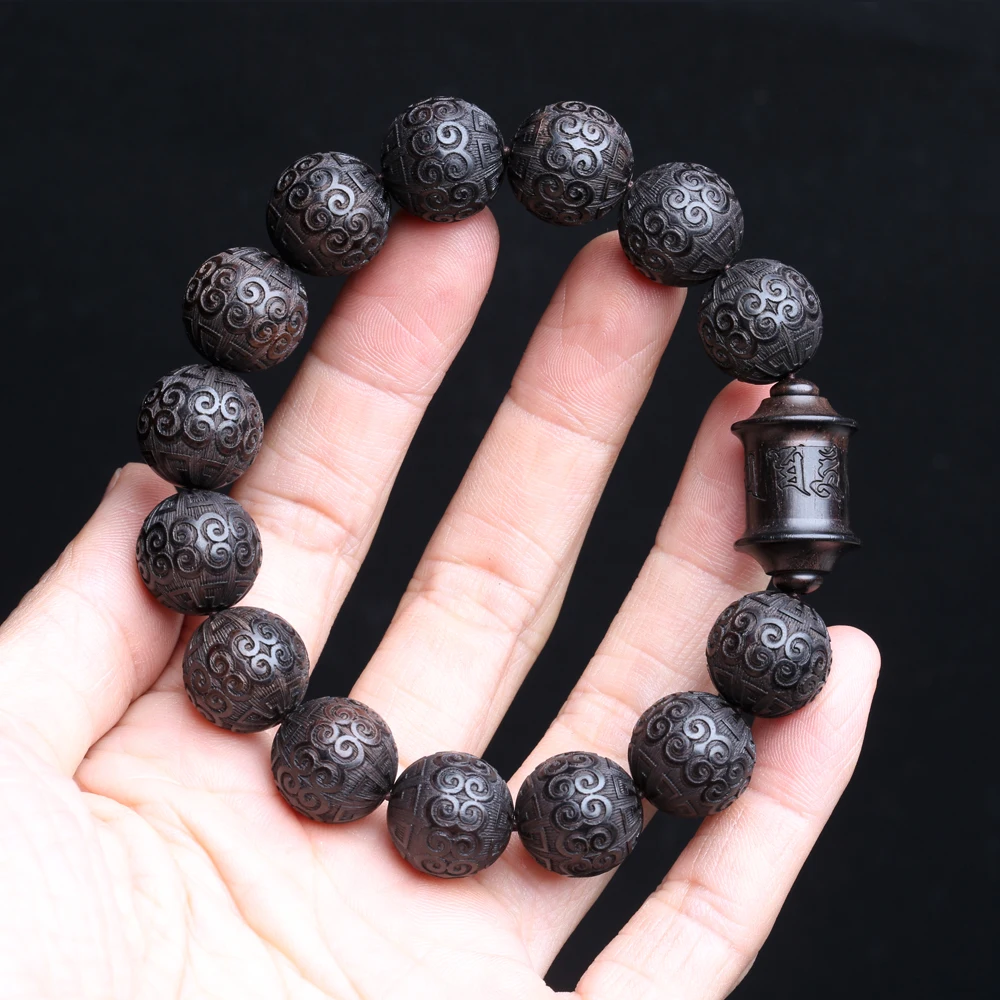
Ključ 1. Vsaka kroglica ima obliko zvitka podobnih oblačkov, kar je videz xiangyvuna; ena cilindrična kroglica je vklesana s znaki, ki jih nismo mogli prebrati.
Sodba: ⚪ Še poteka preiskava — motiv se ujema; črke na valju niso prebrane.
Medaljon s srečnim likom
Ključ 3. Vsak medaljon vsebuje en stiliziran znak, obdan s cvetnimi listi. V bližjem pogledu izgleda kot kursivna kaligrafija, in naši poskusi, da bi ga prebrali, niso dovolj zanesljivi za objavo. To ostaja odprto vprašanje epizoda 1.
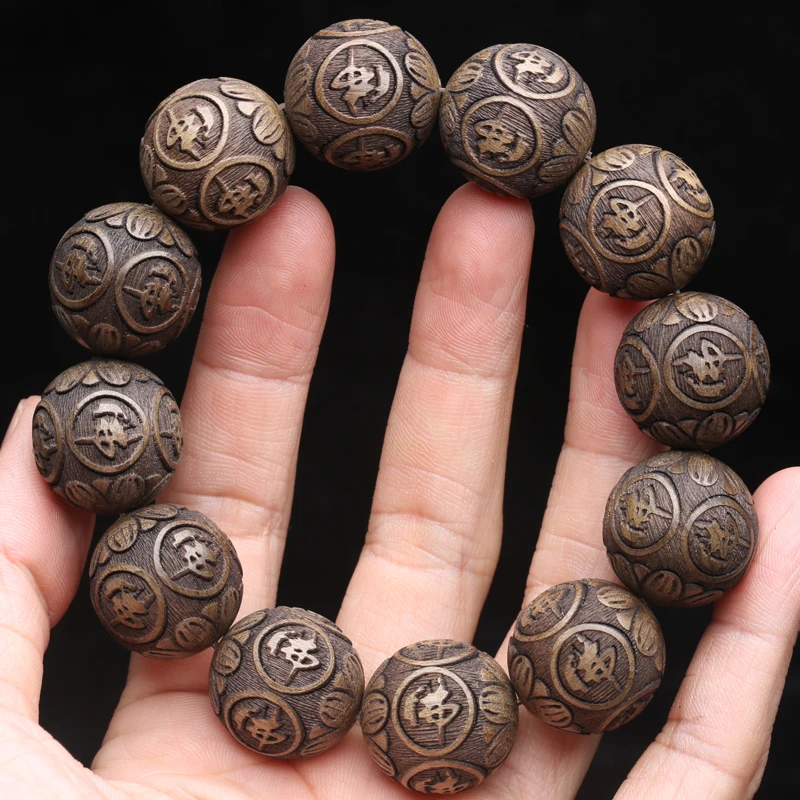
Sodba: ⚪ Še v preiskavi.
"Spremeni situacijo"
Ključ 2. Ime je idiom 扭转乾坤, "obrniti nebo in zemljo"; za Leto Vola je niǔ (扭) zamenjan s svojim homofonom niú (牛, vol) (Dnevnik jezika; ChinesePod). Perlice prikazujejo yin-yangove medalje, ki ustrezajo "nebu in zemlji" iz idioma. Na glavni fotografiji ni vidnega vola.
Sodba: 🟡 Delna — besedna igra je preverjena; znaki okrog medaljonov so neberljivi.
Mitična žival
Ključ 1, večkrat zapored. Vsak koralik je iz drugačnega lesa z drugačnim rezbarjenjem: živali, vzorci in najmanj en okrogel kovinski kovanec s kvadratno luknjo — simbol bogastva. Katere živali so, še ne moremo reči.
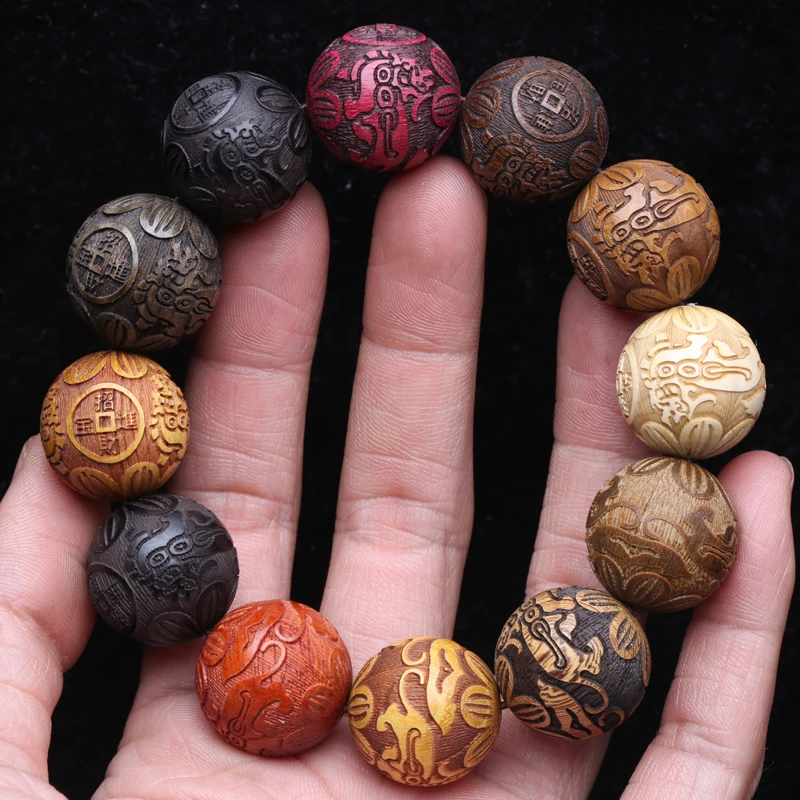
Sodba: ⚪ Še se preiskuje — kovanec je identificiran, živali še ne.
"Klasična knjiga": ne talisman, temveč sutra
Ta verzija ne uporablja nobenega od treh ključev. V detajlu so perle okrašene s stolpci drobnih znakov znotraj meja znakov 卍. Beremo frazo 人相、眾生相、壽者相 — del štirih "predstav" (o sebi, o osebi, o živem bitju, o trajanju življenja), ki jih Diamantna sutra učí, da se jih moramo odreči (NTI Budistični bralnik besedil; Diamond Sutra, kitajski tekst). Večji znaki na eni kroglici izgledajo kot 金剛經, kitajski naslov Diamond Sutre.
Če naša razlaga velja, je "klasična knjiga" strojni prevod besede 經 jīng, "sveto pismo", in zapestnica nosi budistični sutra v kitajščini — budistični, ja; tibetanski, ne.
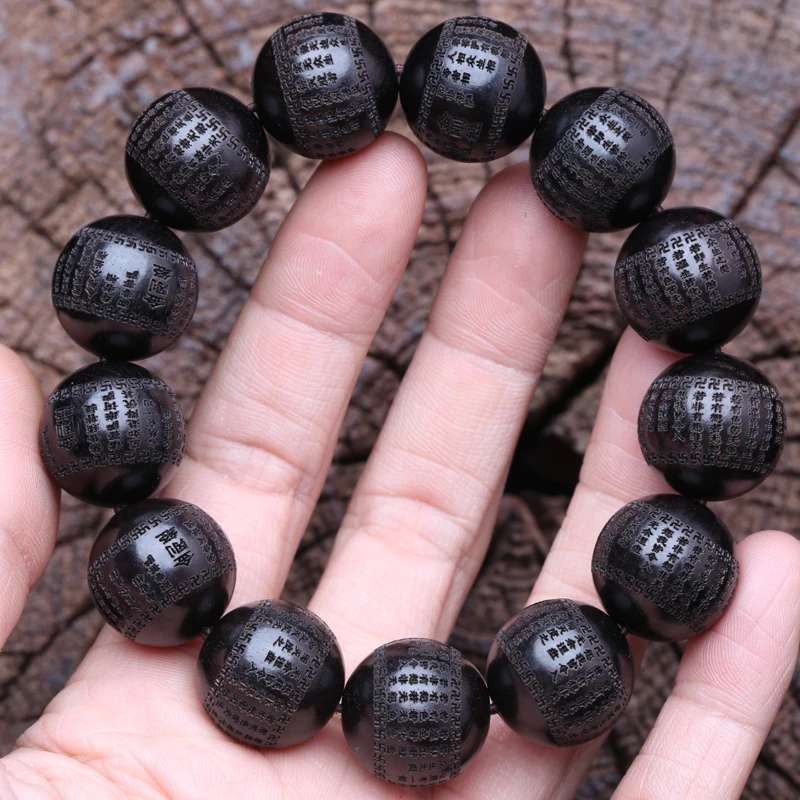
Presoja: 🟡 Delno — stavek je verificiran kot besedilo Diamantne sutre; našo branje kroglic potreba drugi čitatelj.
Amulet "feng shui": sploh ni kitajski
Fotografije prikazujejo kroglice, izklesane s črkami, ki so podobne indijski pisavi, kot je naša zapestnica Om mani padme hum, in eno kroglico s cvetličnim grbom. Nič na njej ne spominja na motiv feng šuija. Prekrili jih bomo z mantra zapestnicami.
Sodba: ⚪ Še v preiskavi — scenarij ni identificiran.
Rezbarjenje "sretnega kamna" velikosti 20 mm
Kroglice so pokrite s fino dimljasto teksturo. Ni nobenega lika, živali, predmeta ali vzorca s srečnim pomenom — nič, kar bi ga lahko prebrale katere koli od treh ključev.
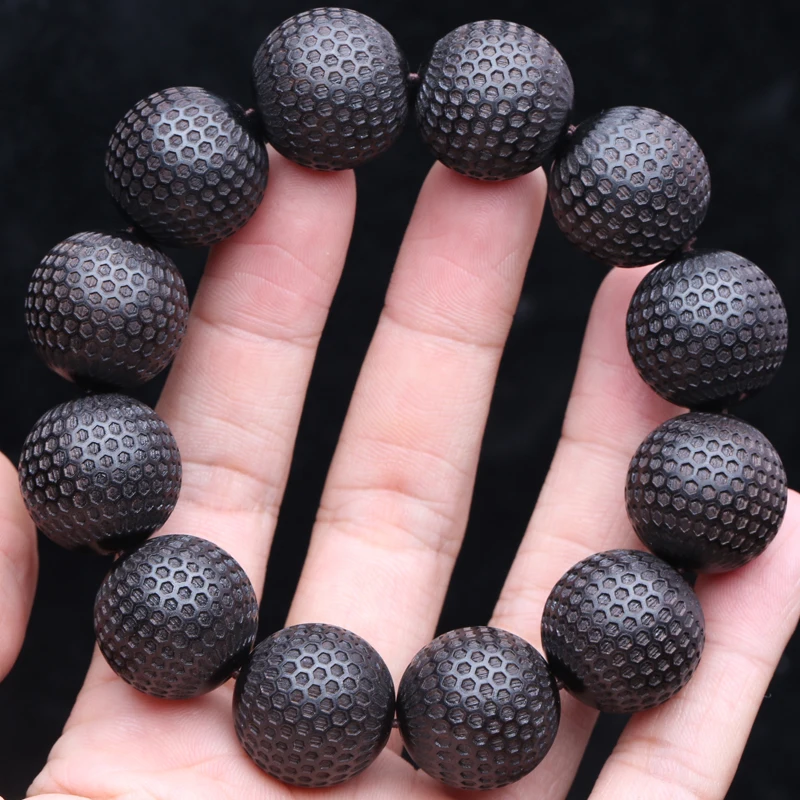
Odločitev: 🔴 Samo vzdušje — "sretna te" nima osnove v rezbariji, glede na fotografije oglaša. Fizični pregled je v pripravi.
Tiga na dveh dodatnih zapestnicah
Naš Ebonski Yin Yang Zapestnica, 20 mm in Zapestnica iz rozžinega lesa s perlic, 20 mm vsak nosijo kulebine oblike perle. To so ključni 1: dolgoživost in zaščita, kot zgoraj.
O znaku 卍
Videti 卍 na ogrlici je lahko šok za evropske bralce. V Aziji je to starodavni srečni simbol, prinesel v Kitajsko s budizmom in berljen wàn, "deset tisoč" (Korenine). To ni nacistični simbol (Stvari, ki govorijo). Kontekst je še vedno važen: zunaj Azije ga bodo nekateri ljudje napačno razumeli, in to je vredno vedeti, preden si ga nadeneš.
Branje svoje zapestnice
- Začnite s ključem 3: ali je tam znak? Posamezen znak v krogu je pogosto 福, 禄 ali 寿 — vendar pa sloganizirane različice zaslužijo ponovno mnenje.
- Nato ključ 1: ali obstaja predmet ali živali? Oblaki, buče, kovanci, netopirji in bitja imajo vsak svoj pomen.
- Potem ključ 2: ali ime zveni kot želja? Netopirji za srečo, 卍 za deset tisoč, volapia za preobrat.
- Stolpci s sitnimi znaki, pogosto obdani z znaki 卍 → verjetno budistično besedilo, ne le srečen motiv.
- Črke zapored, ki niso kitajske → verjetno mantra v indijski pisavi.
- Samo tekstura → brez simbola, ne glede na to, kaj piše v seznamu.
Pogosto zastavljena vprašanja
Ali so kitajski srečni simboli religiozni?
Večinoma ne. Spadajo med vsakodnevno dekorativno umetnost: netopirji na stenah dvorišnih zaslonov, znaki na kritinah, motivi na porcelanu (Palačni muzej; Göteborg). Nekateri, kot npr. 卍, so prišli skozi budizem in postali splošni znaki sreče.
Kako razlikovati 福, 禄 in 寿 na granici?
V svoji standardni obliki jih je enostavno primerjati s slovarjem. Rezane verzije so pogosto stilizane ali v kurzivi, zato če si negotov, vprašaj nekoga, ki bere kitajščino — mi naredimo isto.
Na katero roko bi moral/a nositi pixiu?
Pravilo "leve roke" je feng šui napotek, ki ga objavljajo draguljarji (Chow Sang Sang), ne nekaj, kar bi lahko preverili.
Ali je 卍 na zapestnici nacistični simbol?
Ne. To je star azijski srečnostni simbol, ki ima korenine, starejše od nacističnega simbola za več stoletij (Korenine).
Ali je primerno nositi sutrski naramec?
Budistični pisatelji na splošno pravijo, da si lahko ne-budisti obdevajo budistične predmete z razumevanjem in spoštovanjem (Samo Buddha). Vedeti, da so perlice napolnjene s sveto besedo, je dober začetek.
Pomagajte nam zapreti odprte sodbe
Če znate kitajščino in lahko potrdite znak na medaljoni ali našo branje Diamantne sutre, pošljite sporočilo — v idealnem primeru s tem, kako to veste — na contact@lochness-paris.comJavno posodabljamo presojo in vas zahvalimo.
Viri
- Muzej Palače – Mladina — Obsežna iskanja za srečnimi motivi
- The Met — Vaza v obliki tike s tikvami in netopirji
- Gotheborg — Homofoni motivi
- Gotheborg — Simboli, razloženi
- Gotheborg — Osem dragocenih stvari
- Wikipedia — Shou (lik)
- Wikipedia — Xiangyun (srečni oblaki)
- Chow Sang Sang — pomen Pixiuja in vodnik za nošenje
- Language Log — niú zhuǎn qiánkūn
- ChinesePod — slovarski vnos 扭转
- Roots (National Heritage Board of Singapore) — Kvadratna posoda s svastiko
- Things That Talk — Ali je to 壽?
- Just Buddha — Ali je budistična nakit nespoštljiva?
- NTI Buddhist Text Reader — Značaj dolgožive osebe
- Dijamantna sutra, kitajsko besedilo (Chung Tai Zen Center of Sunnyvale)
Dnevnik posodobitev
[ZA DOPOLNITEV : datum] — Prva objava. 4 odprti verdikti, 2 delna, 1 samo občutki.