Loch Ness · PREVERJENO ALI SAMO OBČUTKI? · Vodnik za mantre
Om mani padme hum je najbolj znani mantra tibetanskega budizma in ena najbolj rezanih na zapestnicah. Skoraj vsaka trgovina jo prevaja kot "dragulj v lotusu" in obljublja zaščito ali srečo. Preverili smo prevod — in tri lastne zapestnice, ki lahko nosijo mantramo, v dveh različnih pismih.
Za preostanek naše zbirke si oglejte našo vodnik za ogrlice iz rezljanega lesenih perlic.
Kaj je mantra
Šest zlogov v sanskrtu, povezanih z Avalokitešvaro, bodhisatvo sočutja. Prvi in zadnji zlog, oṃ in hūṃ, sta sveta zvoka brez slovarskega pomena (Wikipedija). V kitajščini se imenuje šestsilabični mantra, 六字真言 liùzì zhēnyán (BabelStone).
Zahtevek: "To pomeni drago kamen v lotusu"
To je ponavljanje prevajalne trgovine. Učenjaki se ne strinjajo. V skladu s tibetanskimi slovničnimi viri Budhistolog Donald Lopez bere maṇipadme kot obravnavo bodhisattve, ki se imenuje "Dragulj-Lotos", epiteta Avalokitešvare. Drugi učenjak Alexander Studholme pa ga bere kot "v dragulj-lotosu" (Wikipedija). Tretji predlog je, da je mantra prvotno prizivala žensko figuro po imenu Manipadma (BabelStone).
Torej je "dragulj v lotusu" ena izmed več možnih interpretacij, in ne tista, ki jo favorizirani strokovnjaki. Čestna prevod je: sporno je.
Sodba: 🟡 Delno — možna razlaga, predstavljena kot rešena, čeprav ni.
Trditev: "Te ščiti in ti prinaša srečo"
Nekateri prodajalci to imenujejo "mantra univerzalne zaščite" (Feng Shui Mall). To je prepričanje, ne pa nekaj, kar bi lahko kdo preveril, in tega ne trdimo za naše zapestnice.
Sodba: Ni preverljive trditve — mi je ne postavljamo.
En mantra, več pisav
Mantra je bila vklesana v mnogih pisnih sistemih. Stela, postavljena leta 1348 v pečinah Mogao blizu Dunhuanga, jo nosi v šestih različnih pisih (Wikipedija), in se pojavljuje v tibetanščini, Lantsa, Siddham, kitajščini in drugih (BabelStone).
| Scenarij | Mantra | Vir |
|---|---|---|
| Tibetanščina | ཨོཾ་མ་ཎི་པདྨེ་ཧཱུྃ | Wikipedija |
| Kitajščina | 唵嘛呢叭咪吽 (ǎn ma ní bā mī hōng) | ChinesePod |
| Kitajščina, različica | Om mani padme hum | Kitajske opombe |
Dve stvari pomagata, da ga prepoznaš. V tibetanski pisavi so zlogovi ločeni z majhno piko na vrhu vrstice. V kitajščini je šest znakov izbranih po njihovem zvoku, večina pa ima na levi strani komponento 口 "usta" — pogost znak za prepisan tuji zvok.
Naše tri zapestnice
Na podlagi fotografij v oglasu. Kjer kaj preberemo sami, to navedemo: en bralec je vodilna informacija, ne preverjanje.
| Zapestnica | Scenarij | Sodba |
|---|---|---|
| Ebonski Ogrlica Om Mani Padme Hum, 12 mm | Videti indijski, še ne prebran | ⚪ |
| Ebony "Tibetanski" Amulet Naramnica, 18/20 mm | Kitajščina: 4 od 6 znakov prebrano | 🟡 |
| Ebonski Feng Shui Amulet Naramnica, 20 mm | Videti indijski, še ne prebran | ⚪ |
Perle za cev premera 12 mm
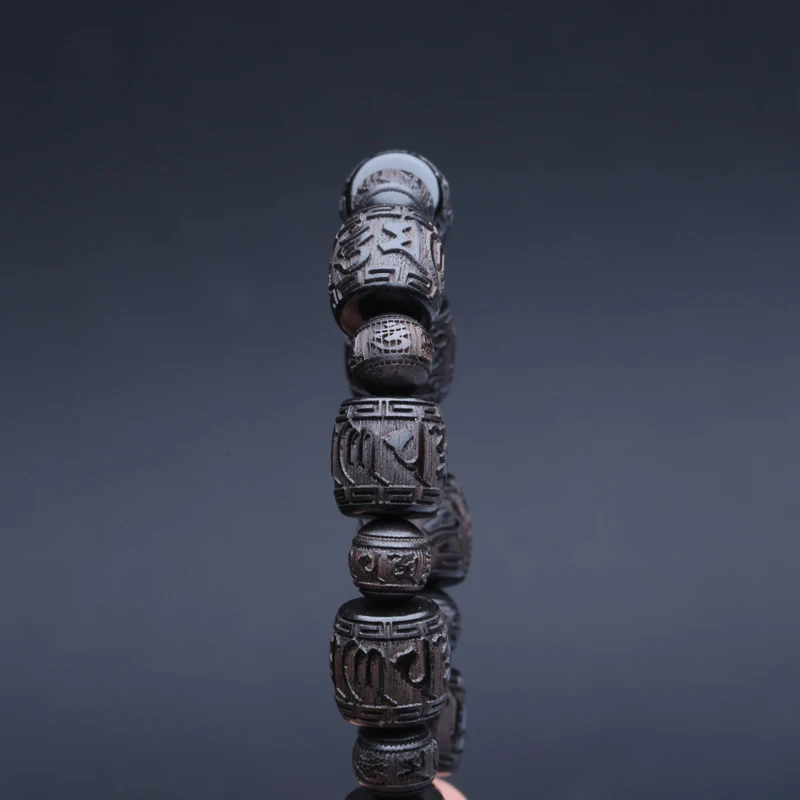
Kroglice v obliki soda, vklesane s črkami pisave, ki izgleda indijske, izmenjujoče se z majhnimi okroglimi kroglicami, plus ena prozorna kroglica. Fotografije niso dovolj ostre, da bi lahko prebrali črke ali razlikovali tibetanščino od lantše.
Sodba: ⚪ Še v preiskavi — scenarij je nepregledan.
Amulet "tibetanski": mantra v kitajščini
Veliki kitajski znaki, po en na vsaki strani perlice. Na fotografijah v bližnjem pogledu beremo 叭, 咪 in 吽, in zelo verjetno tudi 唵 — štiri od šestih znakov 唵嘛呢叭咪吽. Druga dva nista bila vidna na fotografijah, ki smo jih preverili.
Če to potrdi drugi bralec, ima zapestnica napisano Om mani padme hum v kitajskih znakih. "Budistični" drži; "Tibetanski" ne — je kitajska pisava, ne tibetanska.
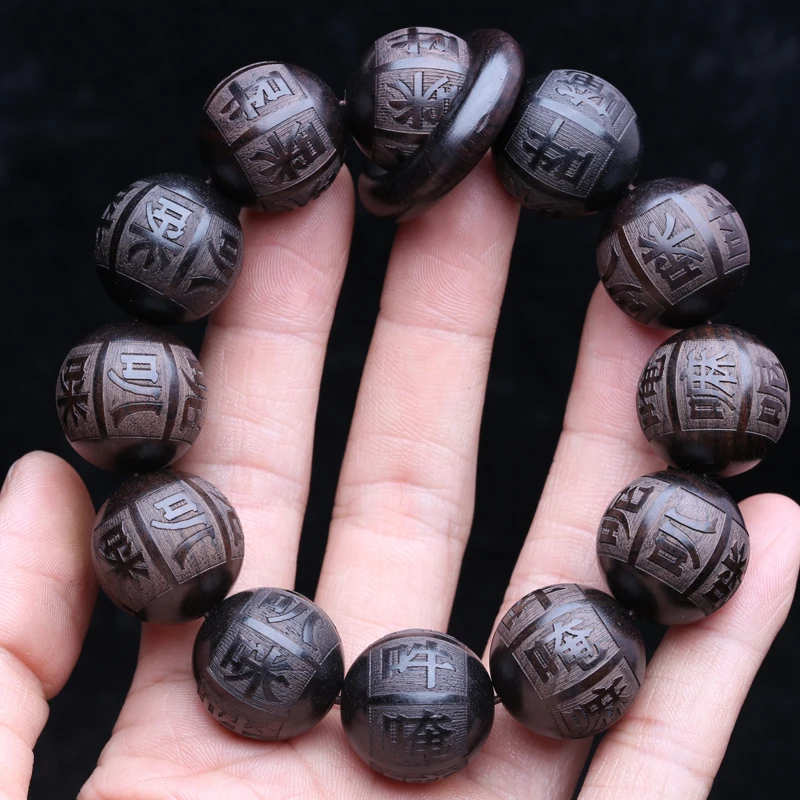
Razhodka: 🟡 Delno — štiri od šestih znakov, ki smo jih prebrali; potreben je drugi bralec.
Amulet "feng shui"
Črke pisave, ki izgleda kot indijska, na ozadju, podobnem oblaku, in kroglica v obliki buče. Bi lahko bila mantra ali posamezne "semenaste" zlogove; še ne moremo jih prebrati. Nič na njem se ne nanaša na feng šui, kot je navedeno v naših Vodnik po kitajskih simbolih sreče.
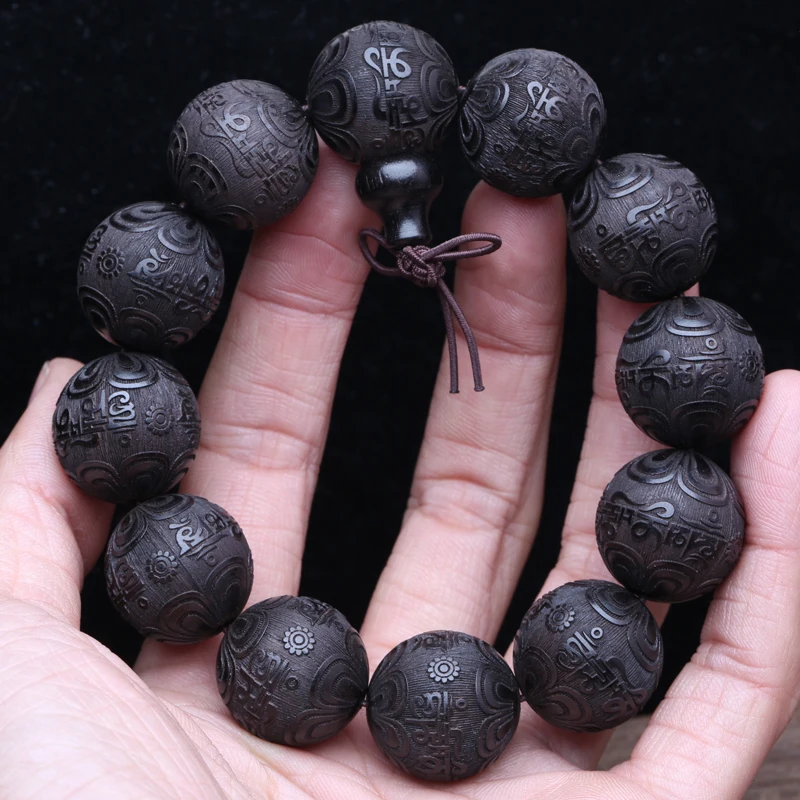
Sodba: ⚪ Še v preiskavi — scenarij je nepregledan.
Kako preveriti svojo mantra naramnico
- Preštej zlogе ali znake: mantra ima šest.
- Črke z majhno piko med zlogami → verjetno tibetansko pisavo; primerjaj z ཨོཾ་མ་ཎི་པདྨེ་ཧཱུྃ.
- Šest kitajskih znakov, večinoma s 口 na levi → primerjaj z 唵嘛呢叭咪吽 in njegovimi različicami.
- Črke, ki jih ne morete ujemati z nobenimi → mogoče Lantsa ali Siddham. Pošljite nam jasno fotografijo.
Pogosto zastavljena vprašanja
Ali je mantra tibetanska ali sanskrtska?
Besede so sanskritskeǰ mantra je osrednja za tibetanski budizem in je napisana v mnogih pisavah (Wikipedija; BabelStone).
Ali ga lahko nosim, če nisem budist?
Budistični pisci na splošno pravijo da, z razumevanjem in spoštovanjem (Samo Buddha). Vedeti, kaj pravijo perle, je dober začetek.
Ali je pisava pomembna?
Ne za pomen: šest zlogov je isto, bodisi da so napisani v tibetščini ali kitajščini. Pomembno je za navedbo: mantra v kitajskih znakih ni "tibetanski" predmet.
Pomagajte nam zapreti odprte sodbe
Če znate brati tibetanščino, lantso ali kitajščino in lahko prepoznate črke na teh perlah, pošljite sporočilo — po možnosti s pojasnilovom, kako veste — na contact@lochness-paris.comJavno posodabljamo presojo in vas zahvalimo.
Viri
- Wikipedia — Om mani padme hum
- BabelStone — Mani kamni v mnogih pisavah
- Wikipedia — Stepa Sulajmana
- ChinesePod — vnosek v slovar 唵嘛呢叭咪吽
- Kitajske opombe — Šest pravih besed
- Feng Shui Mall — Naroganjenica Om mani padme hum
- Just Buddha — Ali je budistična nakit nespoštljiva?
Dnevnik posodobitev
[DOKONČATI : datum] — Prva objava. 2 odločbi odprti, 1 delna.