Loch Ness · ZWERYFIKOWANE CZY TYLKO SPEKULACJE? · Przewodnik symboli
Chińskie motywy szczęścia działają jak kod. Muzeum Pałacu w Pekinie opisuje trzy sposoby ich czytania: to, co dana rzecz symbolizuje, jak brzmi jej nazwa, i słowa wyryte bezpośrednio (Muzeum Pałacowe). Naucz się tych trzech, a większość rzeźb stanie się czytelna.
Użyliśmy tych trzech kluczy na siedmiu naszych własnych bransoletkach. Trzy czytają się jako szczęśliwe motywy, jeden czyta się jako gra słów, jeden w ogóle nie ma motywu — i okazało się, że dwa nie są szczęśliwymi amuletami. Aby zobaczyć pełną kolekcję, zobacz naszą przewodnik po bransoletach z drewnianych korali.
Trzy sposoby czytania motywu szczęścia
| Klucz | Jak to działa | Przykład |
|---|---|---|
| 1. Co to oznacza | Przedmiot nosi życzenie w swojej naturze | Tykwy i granaty, pełne nasion, pragną wielu potomków; sosna, żuraw i żółw pragną długiego życia |
| 2. Jak brzmi jego nazwa | Obiekt oznacza słowo, które brzmi tak samo | Nietoperz, 蝠 fú, brzmi jak fortuna, 福 fú |
| 3. Słowa wyryte bezpośrednio | Życzenie jest po prostu napisane | Fortuna, dobrostan i długowieczność: 福 fú, 禄 lù, 寿 shòu |
Wszystkie trzy przykłady pochodzą z Muzeum Pałacowe. Klucze łączą się swobodnie: jeden obiekt może używać dwóch jednocześnie.
Klucz 1: co to oznacza
- Chmury (云 yún). Związany z deszczem i płodnością, szczęściem i dobrobytem (Goteborg). Wersja stylizowana jest nazywana xiangyun, 祥云, „szczęśliwe chmury" (Wikipedia).
- Tykwa (葫芦 húlu). Długowieczność i talizman ochronny przed złymi wpływami; jest również godłem Li Tieguai, jednego z Ośmiu Nieśmiertelnych (Goteborg).
- Moneta gotówkowa. Okrągła moneta z kwadratowym otworem symbolizuje bogactwo i dostatek (Goteborg).
- Pixiu. Mityczny strażnik bogactwa, którego wizerunek sięga rzeźb kamiennych z dynastii Han (Chow Sang Sang).
Klucz 2: jak brzmi jego nazwa
Chiński ma wiele homofonów, a sztuka dekoracyjna wykorzystuje je jako rebusy obrazkowe, czasami układając kilka obiektów w pełny rebus (Goteborg). Nietoperz jest klasycznym przykładem. Nietoperze i tykwy razem czytane jako niekończące się szczęście i dobrobycie (The Met).
Znak 卍 działa w podobny sposób. Przybył do Chin wraz z buddyzmem jako indyjski symbol szczęścia; w 693 roku cesarzowa Wu Zetian wydała dekret, że ma być czytany jako wàn, „dziesięć tysięcy", a następnie łączono go z innymi motywami, aby tworzyć rebusów takie jak „dziesięć tysięcy lat życia" (Roots, Krajowa Rada Dziedzictwa Singapuru; Rzeczy, Które Mówią).
Klucz 3: słowa wyrzeźbione bezpośrednio
Trzy gwiazdy fortuny, dobrobytu i długowieczności — 福, 禄, 寿 — to najczęściej rzeźbione życzenia (Muzeum Pałacowe). Znak długowieczności shòu występuje na tkaninach, ceramice i biżuterii, samodzielnie lub otoczony innymi szczęśliwymi symbolami, ale zawsze w pozycji centralnej (Wikipedia). Rzeźbione znaki są często stylizowane lub pisane kursywą, co utrudnia ich czytanie nawet biegłym czytelnikom.
Nasze siedem bransoletek, czytane trzema kluczami
To, co następuje, opiera się na zdjęciach z ogłoszenia. Gdy coś odczytujemy sami, mówimy o tym: jeden czytelnik to trop, a nie weryfikacja.
| Bransoletka | Klucz | To, co widzimy | Wyrok |
|---|---|---|---|
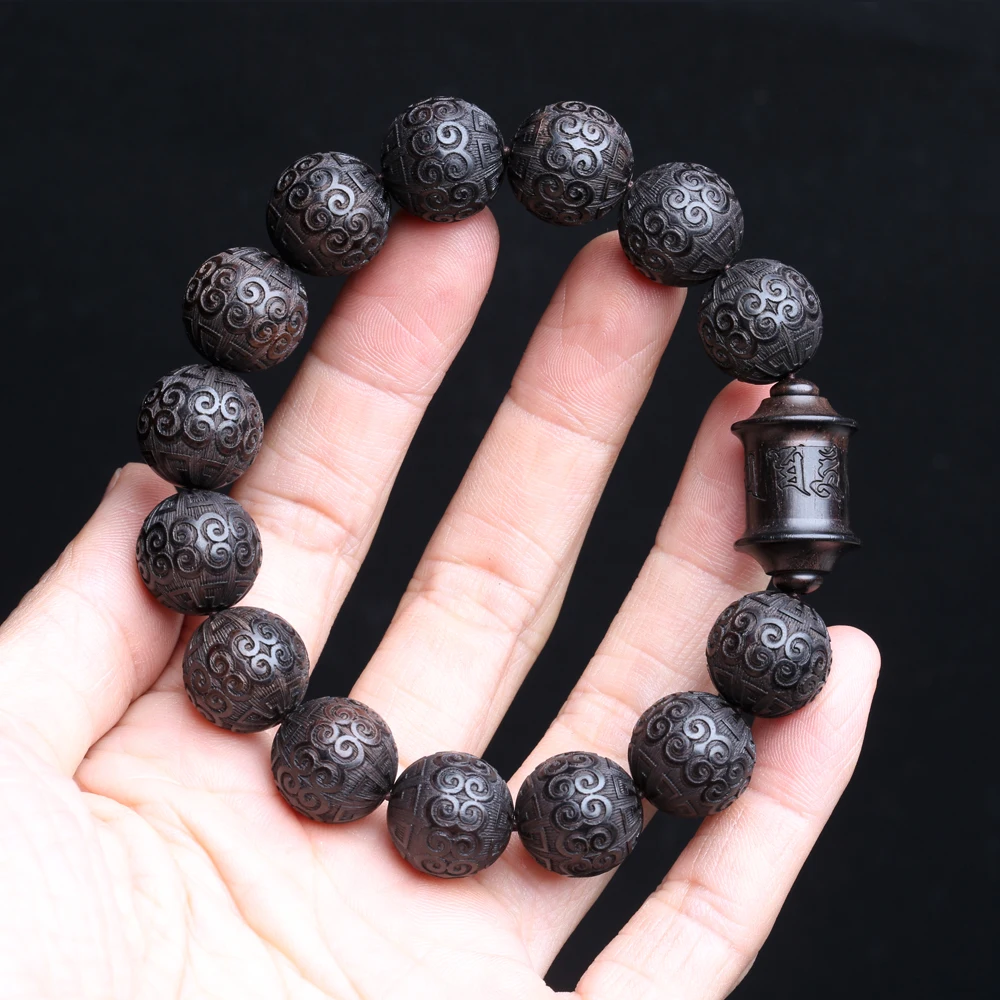
| Czarna Bransoletka Szczęśliwe Chmury, 15 mm | 1 | Chmury w kształcie zwojów | ⚪ |
| Bransoletka Ebony Lucky Character, 15/18 mm | 3 | Po jednej stylizowanej postaci na medalionie | ⚪ |
| Bransoletka Ebony "Odmień Sytuację" 20 mm | 2 | Medaliony yin-yang, gra słów na Nowy Rok | 🟡 |
| Wielokolorowa drewniana bransoletka z mitycznym zwierzęciem, 20 mm | 1 | Kilka motywów, w tym moneta pieniężna | ⚪ |
| Bransoletka Ebony "Classic Book", 15/18 mm | — | Sutra buddyjska, nie szczęśliwy motyw | 🟡 |
| Bransoletka Amulet Feng Shui z Ebonitu, 20 mm | — | Litery pisma o wyglądzie indyjskim | ⚪ |
| Czarna bransoletka na szczęście z rzeźbionym drewnem hebanowym, 20 mm | — | Tekstura z dołeczkami, bez wzoru | 🔴 |
Pomyślne chmury
Klucz 1. Każda koralina nosi zwój-podobne kształty chmur, to właśnie tym wyglądają xiangyun; jedna cylindryczna koralina jest rzeźbiona znakami, których nie umieliśmy przeczytać.
Werdykt: ⚪ Wciąż prowadzone śledztwo — motyw się zgadza; znaki na cylindrze są nieodczytane.
Medalion szczęśliwej postaci
Klucz 3. Każdy medalion zawiera jeden stylizowany znak otoczony płatkami. Z bliska wygląda jak kursywna kaligrafia, a nasze własne próby odczytania go nie są wystarczająco wiarygodne, aby je opublikować. To wciąż pozostaje otwartą kwestią odcinek 1.
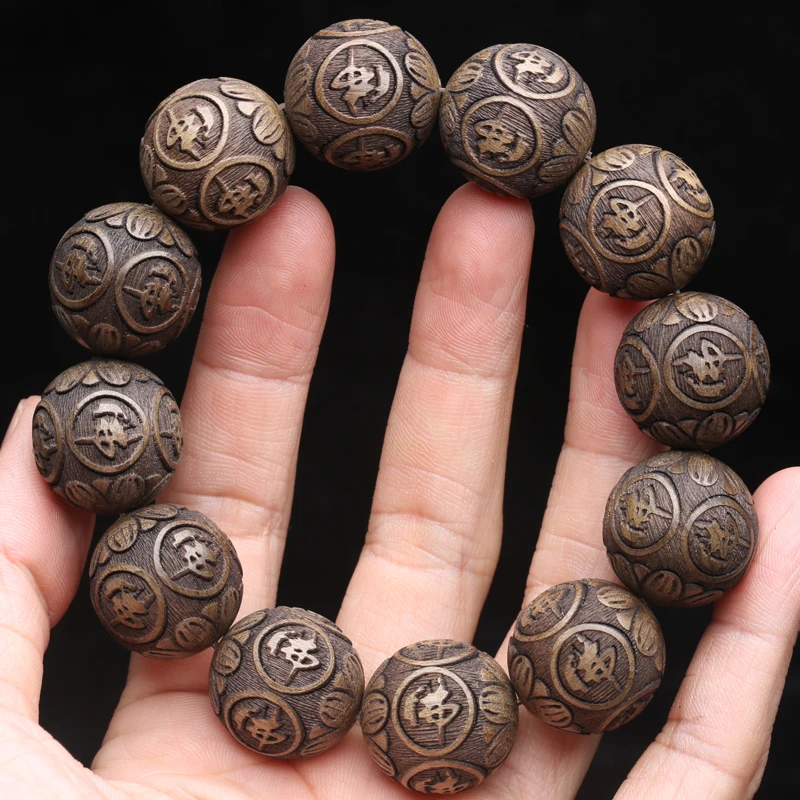
Werdykt: ⚪ Wciąż w trakcie śledztwa.
"Odwrócić sytuację"
Klucz 2. Nazwa to idiom 扭转乾坤, „obrócić niebo i ziemię"; na Rok Wołu, niǔ (扭) zostaje zamieniony na jego homonim niú (牛, wół) (Dziennik Języka; ChinesePod). Koraliki pokazują medaliony yin-yang, które pasują do "nieba i ziemi" z idiomatu. Na głównym zdjęciu nie widać wołu.
Werdykt: 🟡 Częściowo — gra słów jest potwierdzona; znaki wokół medali są nieczytelne.
Mityczne zwierzę
Klucz 1, wiele razy powtarzany. Każda koralik to inne drewno z innym rzeźbieniem: zwierzęta, wzory i przynajmniej jedna okrągła moneta z kwadratowym otworem — symbol bogactwa. Jakie to zwierzęta, nie potrafimy jeszcze powiedzieć.
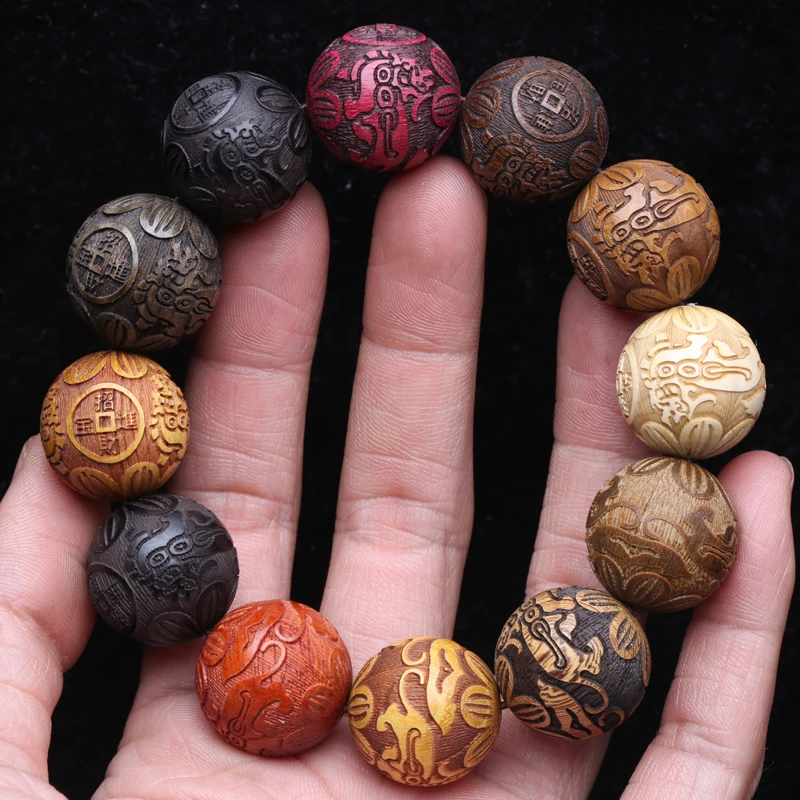
Werdykt: ⚪ Wciąż w trakcie śledztwa — moneta jest identyfikowalna, zwierzęta jeszcze nie.
"Klasyczna książka": nie talizman, a sutra
Ten nie używa żadnego z trzech kluczy. W zbliżeniu koraliki noszą kolumny drobnych znaków wewnątrz granic znaków 卍. Czytamy frazę 人相、眾生相、壽者相 — część czterech „pojęć" (siebie, osoby, istoty żywej, czasu życia), których Sutra Diamentu uczy się puścić (Czytnik Tekstu Buddyjskiego NTI; Diamentowa Sutra, tekst chiński). Większe znaki na jednej koralike wyglądają jak 金剛經, chińska nazwa Diamentowego Sutry.
Jeśli nasza interpretacja jest słuszna, "klasyczna książka" to tłumaczenie maszynowe słowa 經 jīng, "pismo święte", a bransoletka nosi buddyjską sutrę w języku chińskim — buddyjską, tak; tybetańską, nie.
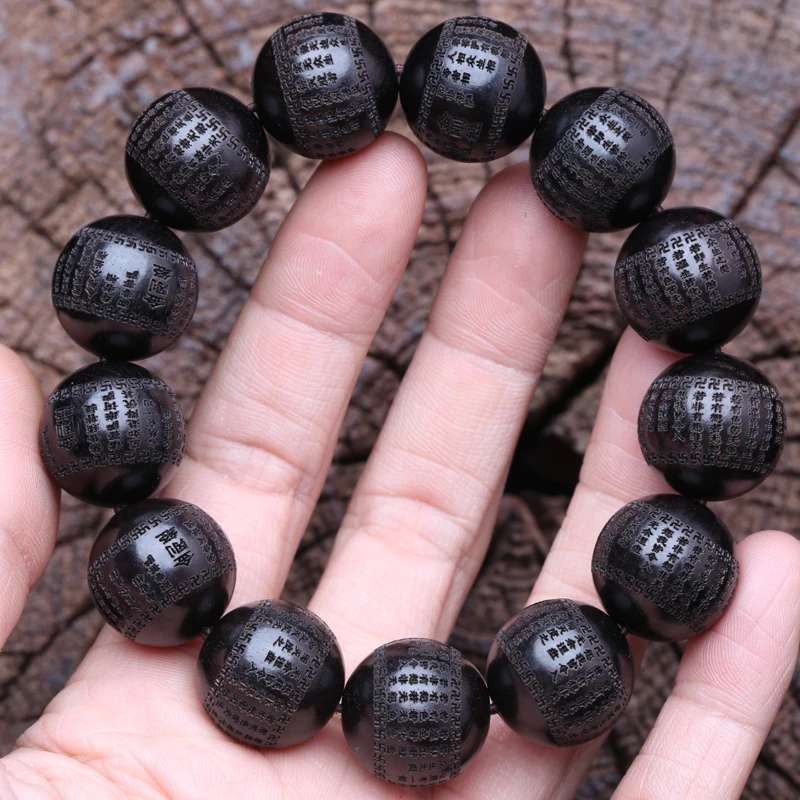
Werdykt: 🟡 Częściowo — sformułowanie jest potwierdzone jako tekst Sutry Diamentu; nasza lektura koralików wymaga drugiego czytelnika.
Amulet "feng shui": wcale nie chiński
Zdjęcia pokazują koraliki wyrzeźbione literami, które wyglądają jak pismo indyjskie, podobne do naszej bransoletki Om mani padme hum, oraz jeden koralik z kwiatowym emblem. Nic na nim nie przypomina motywu feng shui. Zakryjemy to mantry braceletami.
Werdykt: ⚪ Wciąż w trakcie badania — skrypt nie został zidentyfikowany.
20 mm rzeźba "na szczęście"
Koraliki są pokryte drobną teksturą z dołeczkami. Nie ma żadnego znaku, zwierzęcia, przedmiotu ani wzoru o szczęśliwym znaczeniu — nic, co mogłyby przeczytać trzy klucze.
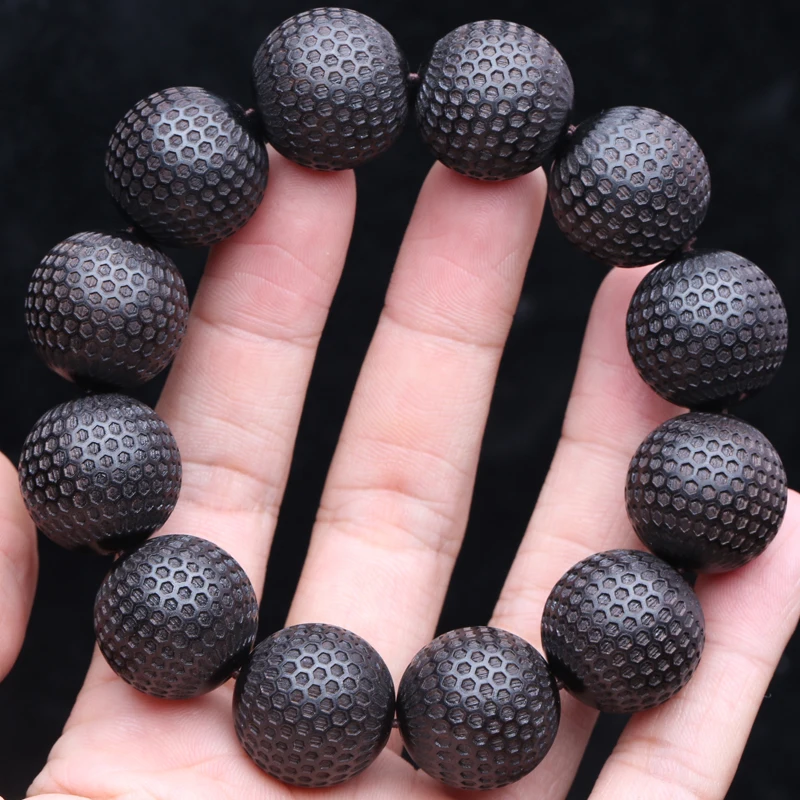
Werdykt: 🔴 Tylko vibes — "powodzenia" nie ma żadnej podstawy w rzeźbie, sądząc po zdjęciach z ogłoszenia. Fizyczna kontrola w toku.
Tykwa na dwóch dodatkowych bransoletach
Nasz Bransoletka Ebony Yin Yang, 20 mm i Bransoletka z koralików z drewna różanego, 20 mm każdy nosi koraliki w kształcie tykwy. To są klucz 1: długowieczność i ochrona, jak wyżej.
O znaku 卍
Widok znaku 卍 na bransoletce może być szokiem dla czytelników europejskich. W Azji jest to starożytny symbol szczęścia, przyniesiony do Chin wraz z buddhizmem i czytany jako wàn, "dziesięć tysięcy" (Korzenie). To nie jest symbol nazistowski (Rzeczy, Które Mówią). Kontekst nadal ma znaczenie: poza Azją niektórzy ludzie mogą go źle zinterpretować, i warto to wiedzieć zanim go nosisz.
Odczytywanie własnej bransoletki
- Zacznij od klucza 3: czy jest tam charakter? Pojedynczy charakter w kole to często 福, 禄 lub 寿 — ale stylizowane wersje zasługują na drugą opinię.
- Następnie klucz 1: czy jest przedmiot lub zwierzę? Chmury, tykwy, monety, nietoperze i stworzenia każde noszą swoje własne znaczenie.
- Wtedy klucz 2: czy nazwa brzmi jak życzenie? Nietoperze na szczęście, 卍 na dziesięć tysięcy, wół na zwrot.
- Kolumny drobnych znaków, często otoczone symbolami 卍 → prawdopodobnie tekst buddyjski, a nie motyw przynoszący szczęście.
- Litery w rzędzie, które nie są chińskie → prawdopodobnie mantra w piśmie indyjskim.
- Tylko tekstura → brak symbolu, cokolwiek mówi lista.
Często zadawane pytania
Czy chińskie symbole szczęścia są religijne?
Głównie nie. Należą do sztuki dekoracyjnej na co dzień: nietoperze na ścianach ekranów dziedzińców, postacie na dachówkach, motywy na porcelanie (Muzeum Pałacowe; Goteborg). Niektóre, jak 卍, przyszły przez buddyzm i stały się ogólnymi znakami szczęścia.
Jak mogę rozróżnić 福, 禄 i 寿 na koraliku?
W standardowych formach można je łatwo porównać ze słownikiem. Wersje wygrawerowane są często stylizowane lub kursywne, więc jeśli nie jesteś pewny, zapytaj kogoś, kto czyta po chińsku — my postępujemy tak samo.
Na której ręce powinienem nosić pixiu?
Zasada „lewej ręki" to wskazówka feng shui publikowana przez jubilerów (Chow Sang Sang), a nie coś, co możemy zweryfikować.
Czy 卍 na bransoletce to symbol nazistowski?
Nie. To starożytny azjatycki symbol szczęścia, który poprzedza nazistowski emblemat o wiele wieków (Korzenie).
Czy mantra/sutra na bransoletce jest odpowiednia doношenia?
Buddyjscy pisarze generalnie mówią, że nie-buddyści mogą nosić przedmioty buddyjskie ze zrozumieniem i szacunkiem (Po prostu Budda). Wiedząc, że koraliki zawierają pismo święte, to dobry początek.
Pomóż nam zamknąć otwarte werdykty
Jeśli czytasz po chińsku i możesz potwierdzić znak na medalionie lub naszą lekturę Sutry Diamentu, wyślij wiadomość — najlepiej z informacją, jak to wiesz — na adres contact@lochness-paris.com. Opublikujemy aktualizację orzeczenia i podziękujemy Ci.
Źródła
- Muzeum Pałacowe Młodzież — Obszerna poszukiwania motywów pomyślności
- The Met — Wazon w kształcie tykwy z tykvami i nietoperzami
- Gotheborg — Motywy homofoniczne
- Gotheborg — Symbole wyjaśnione
- Gotheborg — Osiem Cennych Rzeczy
- Wikipedia — Shou (postać)
- Wikipedia — Xiangyun (szczęśliwe chmury)
- Chow Sang Sang — Pixiu znaczenie i przewodnik noszenia
- Language Log — niú zhuǎn qiánkūn
- ChinesePod — wpis słownikowy 扭转
- Roots (Krajowa Rada Dziedzictwa Singapuru) — Kwadratowe naczynie ze swastyką
- Rzeczy, które mówią — Czy to 壽?
- Po prostu Budda — Czy biżuteria Buddy jest nieszanowna?
- Czytnik Tekstów Buddyjskich NTI — 壽者相
- Diamentowa Sutra, tekst chiński (Chung Tai Zen Center of Sunnyvale)
Dziennik aktualizacji
[DO UZUPEŁNIENIA : data] — Pierwsza publikacja. 4 wyroki otwarte, 2 częściowe, 1 tylko nastroje.