Loch Ness · ZWERYFIKOWANE CZY TYLKO SPEKULACJE? · Przewodnik mantr
Om mani padme hum to najsłynniejszy mantra tybetańskiego buddyzmu i jeden z najczęściej grawerowanych na bransoletach. Prawie każdy sklep tłumaczy go jako "klejnot w locie" i obiecuje ochronę lub szczęście. Sprawdziliśmy tłumaczenie — i trzy nasze własne bransoletki, które mogą nosić mantrę, napisane dwoma różnymi pismami.
Aby zobaczyć resztę naszej kolekcji, zobacz nasz przewodnik po bransoletach z drewnianych korali.
Czym jest mantra
Sześć sylab w sanskrycie, związanych z Avalokiteśvarą, boddhisattwą współczucia. Pierwsza i ostatnia sylaba, oṃ i hūṃ, to świętych dźwięków bez znaczenia słownikowegoWikipedia). W języku chińskim jest to называется mantrą sześciozłogową, 六字真言 liùzì zhēnyán (BabelStone).
Twierdzenie: "To oznacza klejnot w locie"
To jest powtórzenie sklepów translacyjnych. Uczeni się nie zgadzają. Odwołując się do tybetańskich źródeł gramatycznych, buddolog Donald Lopez czyta maṇipadme jako zwracające się do bodhisattwy zwanej "Klejnot-Lotos", epitetu Avalokiteśvary. Inny uczony, Alexander Studholme, czyta to jako "w klejnocie-lotosie" (Wikipedia). Trzecia sugestia jest taka, że mantra pierwotnie przywołała postać kobiecą nazwaną Manipadma (BabelStone).
Więc "klejnot w locie" to jedno spośród kilku możliwych odczytań, a nie to, które preferują specjaliści. Uczciwe tłumaczenie to: jest to sporne.
Werdykt: 🟡 Częściowo — możliwa interpretacja, przedstawiana jako rozstrzygnięta, gdy tak nie jest.
Twierdzenie: "Chroni cię i przynosi szczęście"
Niektórzy sprzedawcy nazywają to "mantą uniwersalnej ochrony" (Feng Shui Mall). To jest przekonanie, a nie coś, co ktoś może sprawdzić, i nie wysuwamy takiego twierdzenia dotyczącego naszych bransoletek.
Wyrok: Nie do sprawdzenia — nie robimy tego twierdzenia.
Jeden mantra, wiele pism
Mantra została wygrawerowana w wielu systemach pisma. Stela wzniesiona w 1348 roku w jaskiniach Mogao koło Dunhuangu zawiera ją w sześciu różnych pismach (Wikipedia), i pojawia się w języku tybetańskim, Lantsa, Siddham, chińskim i innych (BabelStone).
| Skrypt | Mantra | Źródło |
|---|---|---|
| Tybetański | ཨོཾ་མ་ཎི་པདྨེ་ཧཱུྃ | Wikipedia |
| Chiński | 唵嘛呢叭咪吽 (ǎn ma ní bā mī hōng) | ChinesePod |
| Chiński, wariant | Om mani padme hum | Notatki chińskie |
Dwie rzeczy pomagają go zauważyć. W piśmie tybetańskim sylaby są oddzielone małą kropką na górze linii. W języku chińskim sześć znaków jest wybieranych ze względu na ich dźwięk, a większość nosi komponent 口 „usta" po lewej stronie — powszechny znak transkrybowanego obcego dźwięku.
Nasze trzy bransoletki
Na podstawie zdjęć z oferty. Tam, gdzie sami coś czytamy, mówimy o tym: jeden czytelnik to lead, a nie weryfikacja.
| Bransoletka | Skrypt | Wyrok |
|---|---|---|
| Bransoletka z Ebonitu Om Mani Padme Hum, 12 mm | Wygląd indyjski, jeszcze nie przeczytane | ⚪ |
| Czarna "Tybetańska" Bransoletka Amulet, 18/20 mm | Polish: 4 z 6 znaków przeczytane | 🟡 |
| Bransoletka Amulet Feng Shui z Ebonitu, 20 mm | Wygląd indyjski, jeszcze nie przeczytane | ⚪ |
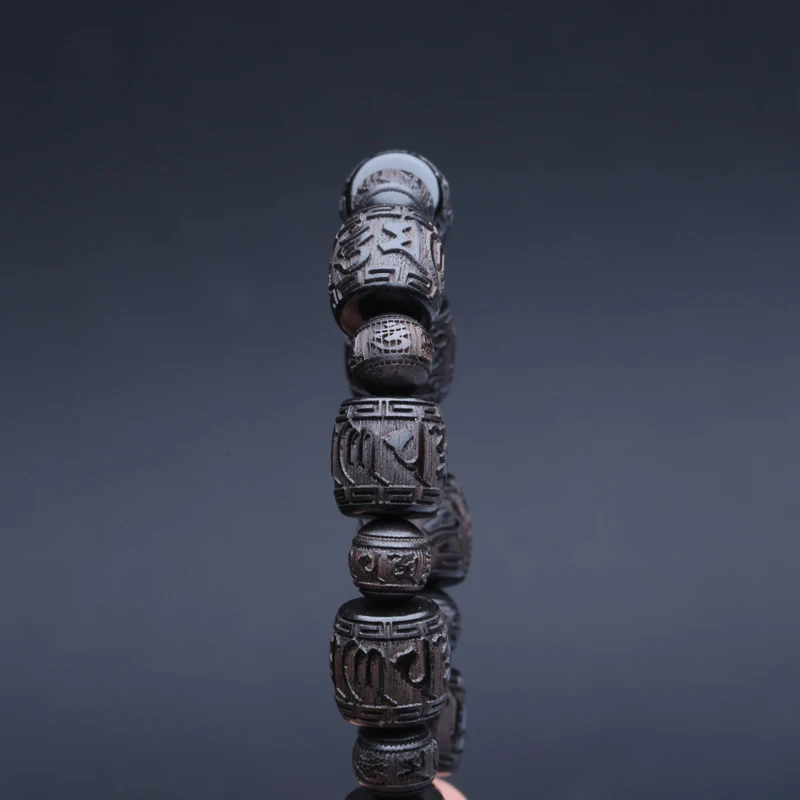
Koraliki do lufy o średnicy 12 mm
Paciorki w kształcie beczki rzeźbione z literami pisma o wyglądzie indyjskim, na przemian z małymi okrągłymi paciorkami, plus jeden przezroczysty paciorek. Zdjęcia nie są wystarczająco ostre, aby odczytać litery lub rozróżnić pismo tybetańskie od Lantsa.
Werdykt: ⚪ Nadal w trakcie śledztwa — skrypt nie został przeczytany.
Amulet "tybetański": mantra w języku chińskim
Duże chińskie znaki, jeden na każdej ściance koralika. Na zdjęciach zbliżeniowych odczytujemy 叭, 咪 i 吽, a bardzo prawdopodobnie 唵 — cztery z sześciu znaków mantrę 唵嘛呢叭咪吽. Dwa pozostałe nie były widoczne na sprawdzanych przez nas zdjęciach.
Jeśli drugi czytelnik to potwierdzi, bransoletka ma napisane Om mani padme hum w chińskich znakach. "Buddyjski" się sprawdza; "tybetański" nie — to jest pismo chińskie, a nie tybetańskie.
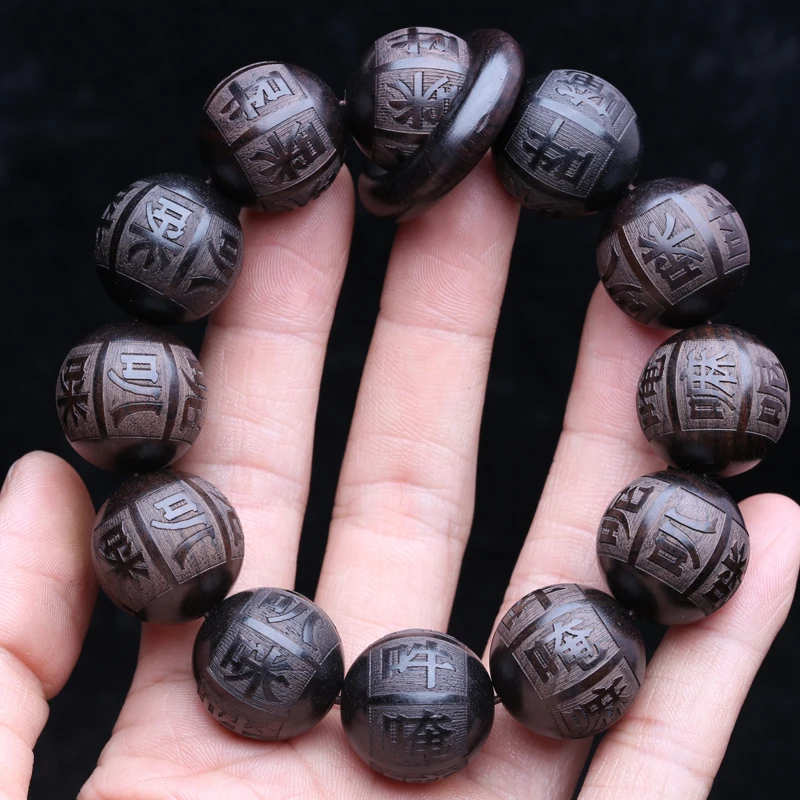
Werdykt: 🟡 Częściowy — cztery z sześciu znaków przeczytane przez nas; wymaga drugiego czytelnika.
Amulet "feng shui"
Litery skryptu o indyjskim wyglądzie na tle podobnym do chmury oraz koralik w kształcie tykwy. Mogą to być mantra lub pojedyncze sylaby „nasienia"; nie potrafimy ich jeszcze odczytać. Nic na nim nie odnosi się do feng shui, jak zauważono w naszym Przewodnik po chińskich symbolach szczęścia.
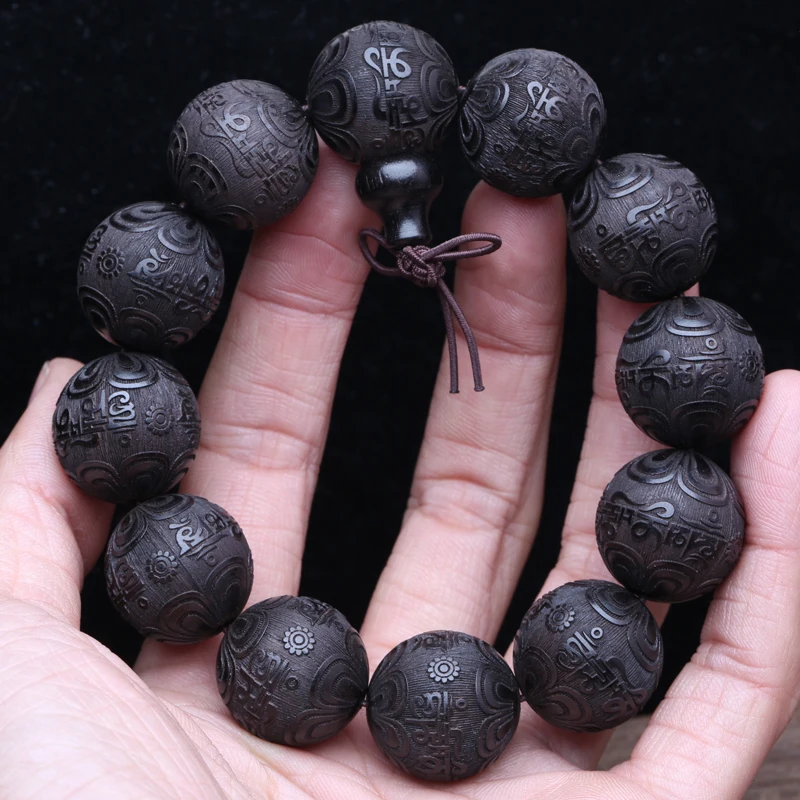
Werdykt: ⚪ Nadal w trakcie śledztwa — skrypt nie został przeczytany.
Jak sprawdzić swoją bransoletę mantra
- Policz sylaby lub znaki: mantra ma sześć.
- Litery z małą kropką między sylabami → prawdopodobnie pismo tybetańskie; por. ཨོཾ་མ་ཎི་པདྨེ་ཧཱུྃ.
- Sześć znaków chińskich, większość z 口 po lewej stronie → porównaj z 唵嘛呢叭咪吽 i jego wariantami.
- Litery, których nie możesz dopasować do żadnej → możliwie Lantsa lub Siddham. Wyślij nam wyraźne zdjęcie.
Często zadawane pytania
Czy mantra jest tybetańska czy sanskrycka?
Słowa pochodzą z sanskrytu; mantra jest centralna dla buddyzmu tybetańskiego i jest zapisana w wielu pismach (Wikipedia; BabelStone).
Czy mogę to nosić, jeśli nie jestem buddystą?
Pisarze buddyjscy generalnie mówią tak, ze zrozumieniem i szacunkiem (Po prostu Budda). Wiedza na temat tego, co mówią koraliki, jest dobrym punktem wyjścia.
Czy scenariusz ma znaczenie?
Nie ze względu na znaczenie: sześć sylab jest takie same, niezależnie od tego, czy zostały napisane w tybetańskim, czy chińskim. To ma znaczenie dla klasyfikacji: mantra zapisana chińskimi znakami nie jest obiektem "tybetańskim".
Pomóż nam zamknąć otwarte werdykty
Jeśli potrafisz czytać po tybetańsku, Lantsa lub chińsku i potrafisz zidentyfikować litery na tych perlach, wyślij wiadomość e-mail — najlepiej z wyjaśnieniem, jak je poznałeś — na contact@lochness-paris.com. Opublikujemy aktualizację orzeczenia i podziękujemy Ci.
Źródła
- Wikipedia — Om mani padme hum
- BabelStone — Kamienie Mani w wielu pismach
- Wikipedia — Stela Sulejamana
- ChinesePod — wpis w słowniku 唵嘛呢叭咪吽
- Chinese Notes — Sześć Słów Prawdy
- Feng Shui Mall — Wystawienie bransoletki Om mani padme hum
- Po prostu Budda — Czy biżuteria Buddy jest nieszanowna?
Dziennik aktualizacji
[DO UZUPEŁNIENIA : data] — Pierwsza publikacja. 2 wyroki otwarte, 1 częściowy.