De ce am construit un test de creativitate pe care trebuie cu adevărat să-l iei
Caută online "teste de creativitate" și vei găsi zeci de chestionare aproape identice: o listă de afirmații precum "Adesea vin cu idei originale", o scală de acord cu 5 puncte și un scor la final. Am încercat câteva dintre ele în timp ce am realizat această cercetare. Toate au măsurat același lucru — cât de creativ ești tu crede ești — și niciunul din ei nu ne-a cerut să creăm cu adevărat ceva.
Acel decalaj este motivul pentru care am construit test de creativitate diferit: în loc de un sondaj de autoraportare, este un exercițiu de 90 de secunde în care generezi idei reale sub presiunea timpului, apoi ești evaluat pe patru dimensiuni separate în loc de un singur număr generic.
Exercițiul se bazează pe o sarcină de psihologie veche de 60 de ani, nu pe un test de personalitate
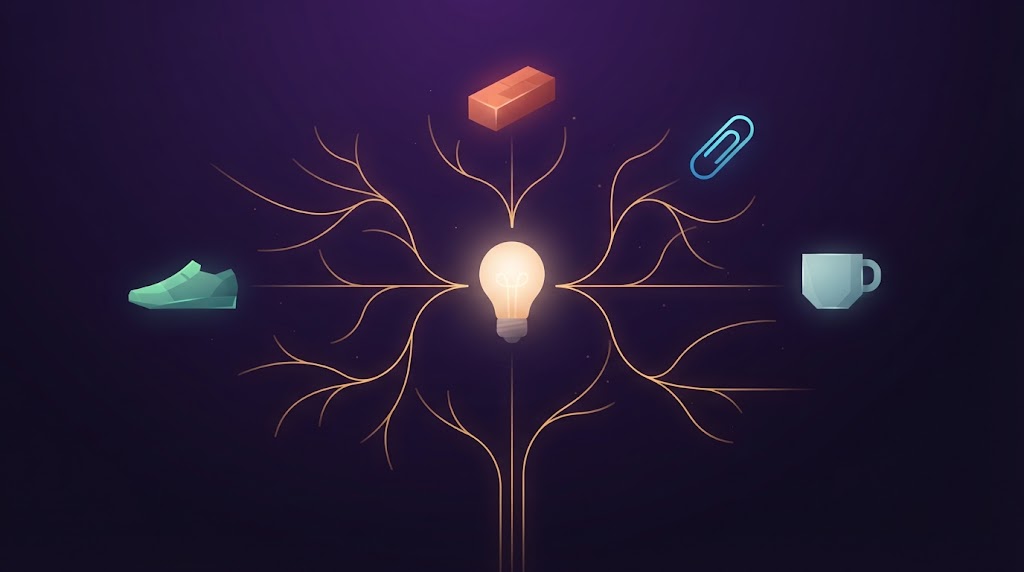
Formatul nu este ceva pe care l-am inventat. Este construit pe Sarcina Utilizări Alternative, dezvoltat de psihologul J.P. Guilford în 1967 ca parte a cercetării sale asupra gândirii divergente — procesul mental de generare a multor răspunsuri posibile la o problemă deschisă, spre deosebire de convergența către un singur răspuns „corect". Sarcina în sine este simplă: ți se oferă un obiect din viața cotidiană și ți se cere să enumeri cât mai multe utilizări neobișnuite pentru acesta înainte ca cronometrul să expire.
Este este încă unul dintre cele mai utilizate paradigme în cercetarea creativității după aproape șase decenii, tocmai pentru că măsoară procesul cognitiv direct în loc să le cearà oamenilor să se autoevalueze. Versiunile academice și aplicate ale exercițiului sunt documentate în detaliu de resurse precum Privire de ansamblu a Testului Utilizărilor Alternative de către Creative Huddle. Am adaptat aceeași logică într-o versiune gratuită, cu limită de timp, bazată pe browser, pe care oricine o poate rula în mai puțin de două minute.
De ce un singur scor nu este suficient
Când am început prototiparea, prima noastră versiune oferea un singur „scor de creativitate" din 100. S-a simțit greșit aproape imediat — în timpul testării interne, doi oameni ar putea produce răspunsuri cu totul diferite și să obțină exact același număr. O persoană a listat douăzeci de idei care erau toate variații ale „aruncă-l" sau „lovește ceva cu el". Alta a listat patru idei, fiecare depărtând o categorie complet diferită, cu detalii reale în spatele fiecăreia. Un singur scor nu putea să diferențieze aceste două profiluri, și ascundea cea mai importantă bucată de feedback pe care oamenii de fapt o doreau: Care parte din gândirea mea este puternică, și care parte are loc de dezvoltare?
Deci, versiunea finală evaluează patru dimensiuni separat, urmând cadrul original al lui Guilford, așa cum a fost perfecționat mai târziu de cercetători, inclusiv E. Paul Torrance:
- Fluență — câte idei valide ai produs în timp ce ai avut la dispoziție.
- Flexibilitate — câte categorii diferite acoperă acele idei, mai degrabă decât un singur unghi repetat.
- Originalitate — cât de departe se află răspunsurile tale de puținele utilizări pe care aproape toată lumea le enumeră mai întâi.
- Elaborare — cât de mult detaliu și dezvoltare au fost dedicate fiecărei idei.
Împărțirea scorului în acest fel scoate la iveală un tipar cu adevărat util: cineva poate fi un gânditor cu fluiditate înaltă și originalitate scăzută (multe idei, în mare parte convenționale), sau invers (puține idei, dar idei pe care nimeni altcineva nu ar gândi). Această distincție este întregul punct al exercițiului, și dispare în clipa în care o comprimi într-un singur număr — ceea ce este exact ce fac majoritatea „testelor de creativitate" online.
Poți de fapt să te îmbunătățești la asta?
Primim constant această întrebare, deci am investigat-o serios în loc să presupunem. Cercetarea privind antrenamentul gândirii divergente este mai încurajatoare decât ideea populară conform căreia creativitatea este o caracteristică fixă. Practica structurată — generarea deliberată a unui volum mare de idei, amânarea judecății până după faza de generare și utilizarea unor tehnici cum ar fi asocierea forțată — s-a dovedit a îmbunătăți măsurabil scorurile de fluență și flexibilitate în încercări repetate. Originalitatea și elaborarea tind să progreseze mai lent, deoarece se bazează mai mult pe lărgimea cunoștințelor și disponibilitatea de a riscă un răspuns neobișnuit, dar nici ele nu sunt imuabile.
De aceea aplicația te lasă să refaci exercițiul cu un nou obiect aleatoriu de câte ori dorești. Un scor scăzut la prima încercare este un punct de plecare, nu un verdict — și a vedea cum îți crește curentul tău de fluență sau flexibilitate în câteva încercări este, în experiența noastră, mai motivant decât orice etichetă statică de „personalitate creativă" ar putea fi.
Ce este — și ce nu este — acest test
Pentru a fi transparent: acesta este un exercițiu accesibil construit pe o paradigmă de cercetare bine stabilită, nu un instrument psihometric validat clinic, cum ar fi testele complete Torrance de gândire creativă. Nu există un scor universal „bun", și nu susținem că există. Ceea ce credem că oferă, mai bine decât un chestionar de autoevaluare, este o imagine sinceră și rapidă a modului în care generezi idei chiar acum — și o cale cu adevărat distractivă de a-ți pregăti gândirea înainte de o sesiune de brainstorming, un sprint de design, sau pur și simplu o după-amiază obișnuită.
Totul rulează în browserul tău — nimic nu este trimis unui server pentru a calcula scorul tău. Dacă alegi să salvezi rezultatul, iti cerem doar ceea ce este necesar pentru asta, în conformitate cu politica de confidențialitate.
Încearcă
Vei primi un obiect, 90 de secunde pe cronometru și un profil pe toate patru dimensiuni la sfârșitul timpului. Fă testul gratuit de creativitate și vezi care dintre cele patru este cel mai puternic al tău.