
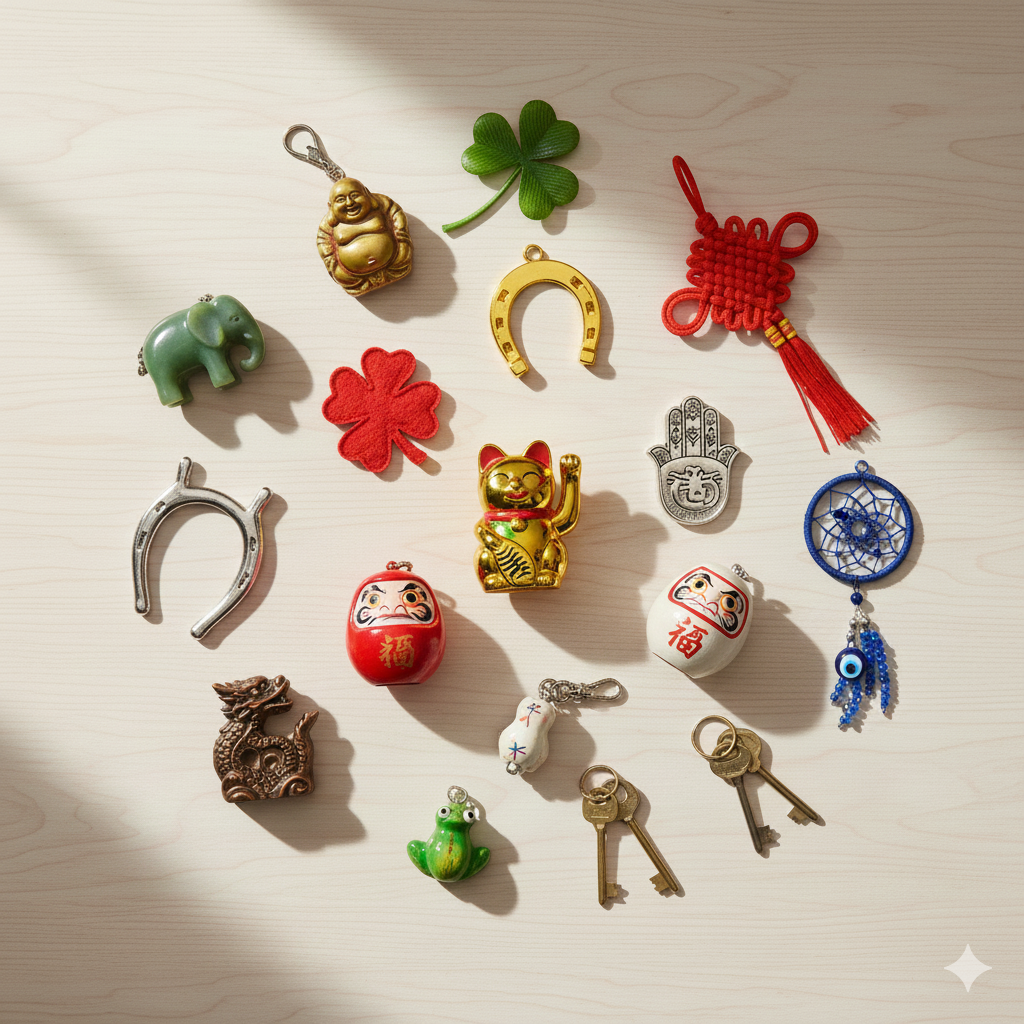
Table of contents of lucky charms
- Four-leaf clover
- The horseshoe
- Lucky dice (Lucky dice / Fuzzy dice)
- Ladybugs
- The number 7
- The number 8
- The rabbit’s foot
- Lucky animals (fish, turtle, etc.)
- The rainbow
- The lucky coin
- Lucky bamboo
- The dreamcatcher
- The evil eye
- Acorns
- Going further with lucky charms
Lucky charms have always fascinated people: some believe in them deeply, others see them as simple decorative objects or charming superstitions. Yet whether you believe in them or not, a lucky charm can genuinely influence our state of mind: it helps us feel more confident, more protected, more aligned, and therefore able to approach life with a more positive attitude.
A lucky charm for self-confidence or protection is not merely a magical symbol. It’s a visual reminder that reconnects you to your intentions: attracting luck, feeling supported, warding off negative energies, boosting your motivation and self-esteem. The more you associate your talisman with a ritual or a clear intention, the stronger its psychological impact.
Discover below 14 powerful lucky charms — the four-leaf clover, the horseshoe, the ladybug, the lucky coin, the evil eye, bamboo, and many others — to attract luck, build your confidence, and create a true bubble of protection around you. Draw inspiration from these symbols to choose your personal lucky charm or build a small luck altar at home or on your desk.
Four-leaf clover lucky charm
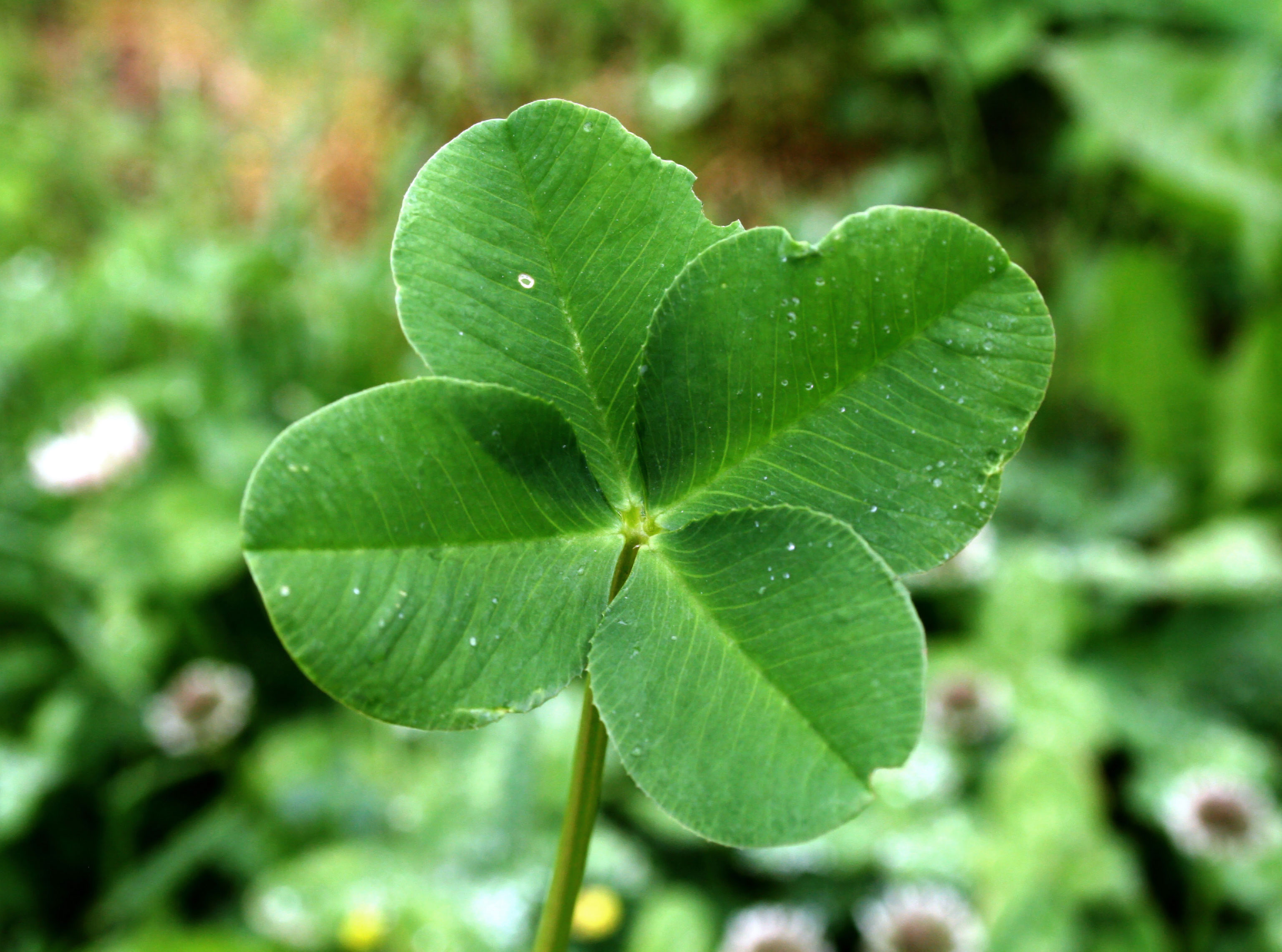
The four-leaf clover is one of the most famous lucky charms for attracting luck, prosperity, and protection. An ancient Irish symbol, it is deeply linked to Celtic culture. The Celts believed that a four-leaf clover allowed them to spot fairies, avoid their mischief, and protect themselves from everyday misfortune.
Each leaf of the four-leaf clover is associated with a positive quality: faith, hope, love, and luck. Other legends speak of glory, wealth, health, and faithful love. Carrying a four-leaf clover in your wallet, on a pendant, or as a bracelet is often seen as a way to support success in your projects, feel guided, and strengthen your self-confidence.
True four-leaf clovers are rare: it’s estimated that only about one clover in 10,000 has four leaves. The genuine lucky clover comes from white clover, also called Trifolium repens. To recognize an authentic four-leaf clover, look closely: one of the leaflets is usually smaller than the other three. If all four are identical, it is often a different variety.
Fortunately, you don’t need to spend hours in the fields to enjoy its symbolic energy. You can create your own four-leaf clover lucky charm out of paper, felt, metal, or resin. Place it on your desk, your nightstand, or in your wallet as a reminder of luck, self-confidence, and protection in your endeavors.
The horseshoe

The horseshoe is one of the best-known lucky charms for attracting luck and repelling negative energies. Ancient beliefs explain its protective power through the material it’s made of: iron. It was thought that malevolent creatures and mischievous spirits hated contact with iron and avoided homes adorned with it.
A famous legend features Saint Dunstan, a blacksmith and future Archbishop of Canterbury. The devil is said to have asked him to shoe his horse. Dunstan, cunningly, nailed the shoe not to the animal’s hoof but to the devil’s own foot. He promised to free him only if the devil swore never to approach a house decorated with a horseshoe. This is how the tradition of hanging a horseshoe on one’s door as a symbol of protection and luck was born.
To use this lucky charm at home, it is common to fix the horseshoe with the points facing upward, so that it “fills up” with luck like a container. It can be placed at the entrance of the house, in an office, or even near a digital workspace to protect your projects, attract success, and strengthen confidence in your decisions.
If you prefer a more modern and discreet version, you can choose a horseshoe-shaped pendant, a symbolic bracelet, or simple stickers to place on your computer, planner, or project notebook. What matters most is pairing it with a clear intention: protection, success, stability, or self-confidence.
Lucky dice (Lucky dice or Fuzzy Dice)
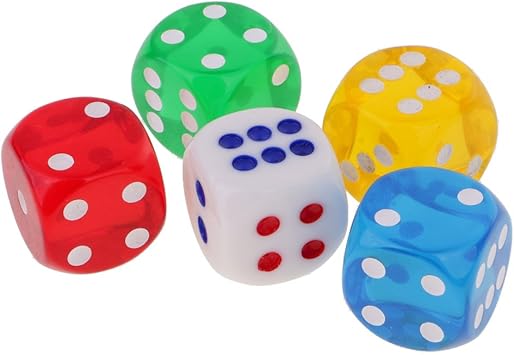
Dice are naturally associated with chance, games, and risk-taking. It’s no surprise, then, that they became very popular symbols of luck, especially among gamblers, pilots, and people who like to “try their luck” in life. Fuzzy dice, hung from car rearview mirrors, have become a retro icon of popular culture.
During World War II, many fighter pilots carried personal lucky charms on their missions, hoping to increase their chances of returning safely. Among these talismans were often playing cards, small figurines, and of course dice. Dice symbolized luck, but also the courage to defy fate.
In 1959, the Deccofelt Corp company popularized fuzzy dice for hanging in cars, drawing on this tradition. Since then, they have been associated with good fortune on the road, style, and boldness. Using dice as a lucky charm can be a playful way to remind yourself that life involves an element of uncertainty, but that you have every right to believe, to dare, and to trust yourself.
To turn them into a personal talisman, you can sew your own pair of fuzzy dice, buy them ready-made, or simply place several colorful dice on your desk. They can become a symbol of confidence in your choices, of taking ownership of your decisions, and of the ability to “play your cards” boldly in your personal and professional projects.
Ladybugs as lucky charms
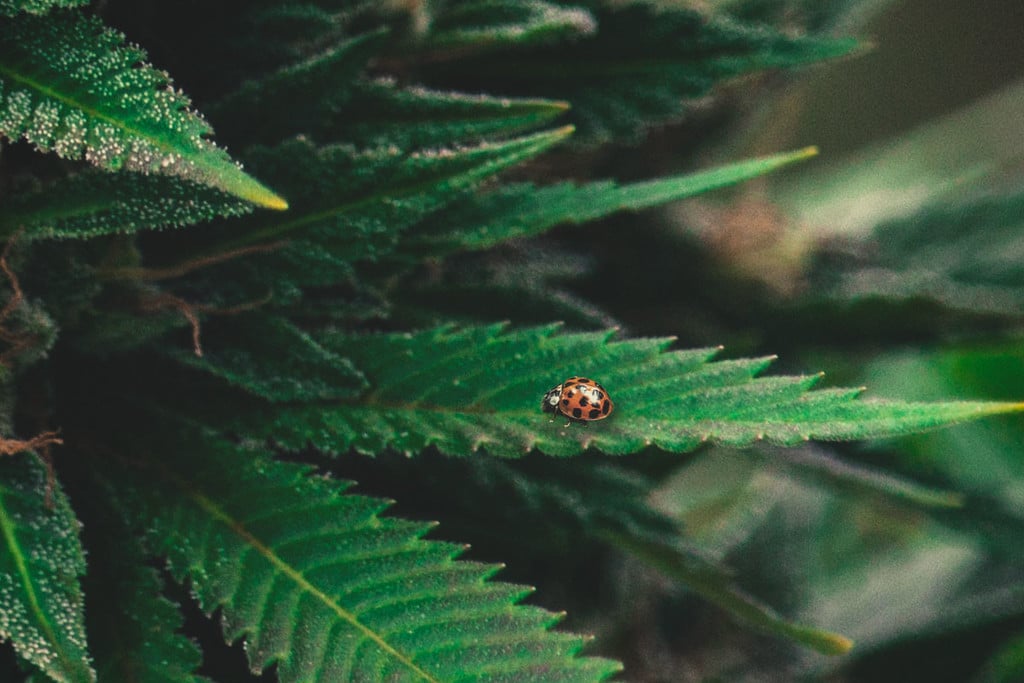
The ladybug is an insect beloved around the world and considered a powerful lucky charm. Its bright red color and small black spots make it a symbol of joy, natural protection, and luck. In some Germanic languages, it’s even called the “lucky bug”: “Glueckskaefer.”
Many beliefs surround the ladybug. One tradition says that if a ladybug lands on you and you let it fly away without shooing it, your luck will improve. In some stories, if a man and a woman see a ladybug at the same time, it foretells a romantic encounter or the beginning of a beautiful story. In Belgium, it was said that a ladybug on a young woman’s hand foretold an upcoming marriage.
In agriculture, the return of ladybugs in spring was interpreted as a sign of a good harvest to come. They eat aphids and naturally protect crops, hence their positive image as allies of nature and guardians of the garden. The redder the ladybug and the more spots it has, the luckier it is said to be, according to some superstitions.
To bring the ladybug into your life as a lucky charm, you can choose jewelry, keychains, desk decorations, or small handmade objects in its likeness. A pebble painted like a ladybug, a mug, a notebook, or an illustration near your workspace can become a discreet symbol of confidence, lightness, and everyday protection. Avoid killing ladybugs: in many traditions, this brings bad luck.
Lucky number seven

The number 7 is often considered the luckiest number in many cultures. It appears in games of chance, popular expressions, and spiritual traditions. It is associated with perfection, balance, and inner knowledge, making it an excellent symbol for a lucky charm linked to success and self-confidence.
The ancient Greeks viewed 7 as a perfect number, the sum of 3 (the triangle, symbolizing harmony) and 4 (the square, symbolizing stability). The number 7 also appears throughout everyday life: 7 days of the week, 7 colors of the rainbow, 7 notes of the musical scale, 7 planets visible to the naked eye in ancient astronomy, and so on. This recurrence reinforces its aura as a symbolic number.
In some beliefs, the 7th son of a 7th son is said to be especially lucky or gifted with special talents. At the casino, 7 is often linked to winnings and winning draws. On a more personal level, choosing 7 as your reference number can help you structure your goals (7 habits, 7 intentions, 7 steps for a project, etc.).
- 7 days of the week.
- 7 colors in the rainbow.
- 7 planets visible to the naked eye in antiquity.
- The 7th son of a 7th son is considered especially lucky.
- 7 is a winning number in many games of chance.
To adopt 7 as a lucky charm, you can choose a piece of jewelry or an accessory featuring this number, put together sets of 7 objects (crystals, candles, lucky symbols), or use 7 as your go-to number in passwords, chosen numbers, dates, or personal rituals.
Lucky number eight

In Chinese tradition, the number 8 is considered one of the luckiest numbers there is. The reason is linguistic: the word “8” in Chinese sounds similar to the word for “prosperity.” It appears everywhere: phone numbers, license plates, floor numbers, wedding dates, or business opening dates.
Visually, the 8 is made up of two balanced loops, evoking harmony, continuity, and abundance. Lying on its side, it also recalls the infinity symbol. As a lucky charm, 8 is therefore perfect for symbolizing a continuous flow of success, financial stability, and balance in personal and professional life.
If 7 embodies luck and perfection, 8 is associated with wealth, material success, and the fulfillment of projects. In a personal development approach, using the number 8 as a symbol is a way of affirming that you allow yourself prosperity, growth, and stability.
To bring the number 8 into your world of lucky charms, you can choose jewelry, wall decorations, artwork, or even arrange certain elements of your environment in groups of 8 (plants, candles, photos). The 8 can also be chosen as a key number for your projects or as a visual reminder of your intention to attract abundance.
The rabbit’s foot
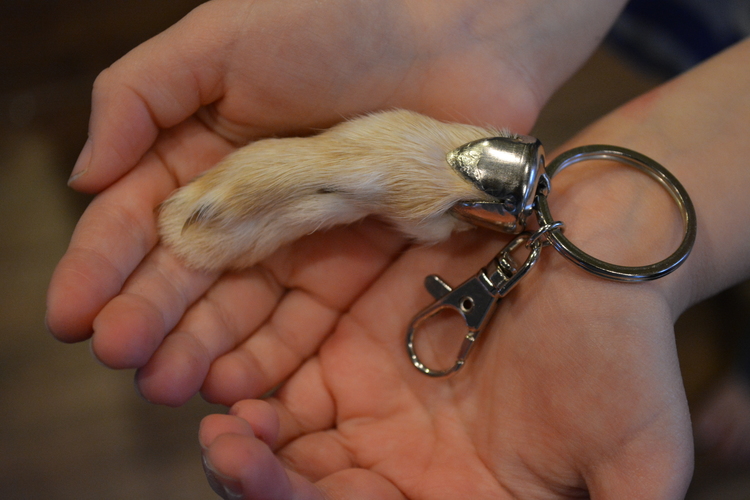
The rabbit’s foot is a classic lucky charm, often used as a keychain or small pendant. It is associated with luck, protection, and the ability to escape danger. Although it can now be made from synthetic material, its original symbolism is very old and largely comes from hoodoo traditions and certain popular magical practices.
According to legend, the left hind foot of a rabbit caught in a cemetery at night was believed to have the power to ward off curses, hexes, and negative energies. The rabbit, a fast and instinctive animal, symbolizes the ability to flee danger, bounce back, and survive. Its foot then becomes a talisman of protection and luck for whoever carries it.
Today, there’s no need to follow these old practices: synthetic or stylized rabbit’s feet are easy to find, allowing you to enjoy the symbol without harming animals. You can also create your own “rabbit’s foot” out of felt, fabric, or leather, to design an ethical and personalized lucky charm.
Carry it in your pocket, attach it to your keys, your bag, or your work keychain to remind yourself that you have the resources to adapt, bounce back, and overcome difficulties. It can also represent speed, mental agility, and the ability to seize opportunities at the right moment.
Lucky animals: The fish

Many animals are considered lucky charms across various cultures, each carrying a particular meaning: wealth, longevity, love, protection, success… The fish, in particular, is very present in Asian traditions and in feng shui as a symbol of abundance, fluidity, and harmony.
In feng shui, fish — especially goldfish — are said to attract luck, prosperity, and success. They are often associated with the smooth flow of energy (“chi”) in the home or workplace. Dragons and horses are also considered highly favorable for luck and personal power.
- In feng shui, goldfish symbolize wealth and fluidity.
- In Germany, lucky pigs (“Glücksschwein”) are given to wish happiness and prosperity.
- Turtles are linked to longevity and stability.
- In ancient Egypt, the scarab was a symbol of rebirth and protection.
- In Korea, the swallow is seen as a sign of good fortune thanks to traditional stories.
Choosing a lucky animal means choosing an energy that speaks to you: the wise slowness of the turtle, the liveliness of the fish, the power of the horse, the transformation of the scarab… You can incorporate these symbols into your decor, your jewelry, your tattoos, or your workspace to inspire you every day.
The rainbow

The rainbow is a universal symbol of hope, renewal, and promise. In popular legends, a pot of gold is said to lie at the foot of the rainbow: it represents the reward after effort, the light after the rain, and success after a difficult stage.
As a lucky charm, the rainbow evokes the passage from a dark period to a brighter one. It reminds us that difficulties are not eternal and that after the storm often comes a calmer sky. It’s an ideal symbol for people in transition, career change, or in search of meaning and confidence.
Visually, the rainbow, with its seven colors, is associated with joy, creativity, and positive energy. It can become an excellent visual lucky charm to boost motivation, restore good spirits, and attract opportunities more aligned with your desires.
You can bring the rainbow into your everyday life through illustrations, wallpapers, decorative objects, stickers, or textile accessories. It’s also a powerful symbol to accompany a raffle, a contest, a creative project, or a fresh start in your personal or professional life.
Lucky coin
Lucky coins are among the simplest talismans to adopt: they fit in a pocket, a wallet, a drawer, or a coin purse. It’s often said: “Find a penny, pick it up, and all day you’ll have good luck,” especially if the coin is found by chance on the ground. For some, the luck only works if the coin lands face up, but for others, any found coin is a sign of abundance.
Coins are not the only pieces associated with luck. Chinese I-Ching coins, for example, are widely used as symbols of prosperity, harmony, and energetic balance. They are often given at Chinese New Year or at weddings to wish wealth, stability, and luck to the couple or family.
Keeping a lucky coin on you can have a positive psychological effect: it reminds you that you are supported, that abundance can flow, and that you deserve prosperity. It can also help build a more confident relationship with money and with your own ability to create opportunities.
To turn it into a true talisman, you can choose a coin marked with a date important to you, a coin found during a happy moment, or a specific coin (I-Ching, old currency, foreign coin). Place it somewhere meaningful, on your desk, or in a coin purse dedicated to your projects.
Lucky bamboo

Lucky bamboo, often sold potted or arranged in a composition, is a widely spread symbol of luck, growth, and harmony. Despite its name, it isn’t actually true bamboo, but a related plant, Dracaena sanderiana. Its hardiness, ease of care, and longevity make it an ideal lucky charm for the home or office.
In feng shui, lucky bamboo is used to harmonize the energy of a space, attract prosperity, and promote serenity. The number of stalks is said to have a particular meaning: three stalks for happiness, wealth, and longevity; five or seven stalks for health; eight stalks for prosperity; nine stalks for overall luck, and so on.
Lucky bamboo can become a visual anchor for your intentions: placing it near your workspace can symbolize stability, professional growth, and confidence in your projects. In the living room or entryway, it can welcome visitors with a gentle, balanced, and inviting energy.
To enhance its lucky-charm quality, choose an attractive container (glass, ceramic, or wooden pot) and optionally add a few natural stones, I-Ching coins, or small symbols that evoke abundance and protection for you. Water it regularly and think of this gesture as a mini-ritual to nourish your luck and self-confidence.
The dreamcatcher

The dreamcatcher is a symbol originating from Native American traditions. It takes the form of a circle adorned with a web-like weave, decorated with beads, feathers, and sometimes stones. It is credited with protective properties, particularly during sleep: it is said to capture bad dreams and let good ones pass through.
According to legend, dreams travel through the air at night. The dreamcatcher filters these dreams: nightmares remain trapped in the web and dissolve at sunrise, while beneficial dreams slide down the feathers to the sleeping person. It is therefore considered a lucky charm for inner peace, emotional well-being, and more restful sleep.
Beyond sleep, the dreamcatcher has also become a symbol of overall protection and spiritual connection. Hanging it in an office, at a window, or in a creative space can serve as a reminder of the importance of listening to your intuition, freeing yourself from fears, and trusting your own dreams.
You can buy a dreamcatcher or make your own with a wooden or metal ring, threads, beads, and feathers. Making it yourself strengthens the symbolic bond: each element can be chosen according to a specific intention (protection, creativity, confidence, calm).
The evil eye to ward off bad luck

The “evil eye” is an ancient belief according to which a jealous, envious, or malicious look could cause bad luck, illness, or hardship. To protect against this negative energy, many cultures have created specific amulets, known as nazars or talismans against the evil eye.
These talismans take various forms: a stylized eye, a hand with an eye at its center (like the Hand of Fatima), or blue and white glass beads. In Turkey and several Mediterranean countries, these amulets are very popular: they are hung on doors, in cars, in homes, in shops, or worn as jewelry.
The symbolic role of the evil eye lucky charm is to reflect or absorb negative energies directed at you: jealousy, resentment, ill will. It represents a subtle barrier, a protective filter that helps you maintain your emotional stability, your luck, and your confidence.
To create your own talisman, you can buy a piece of jewelry with an evil eye motif, paint pebbles, make a clay amulet, or draw this symbol in a notebook dedicated to your intentions. Place it near your entrance, on your desk, or wear it as a reminder that you have the right to protect yourself and preserve your energy.
Acorns as symbols of luck
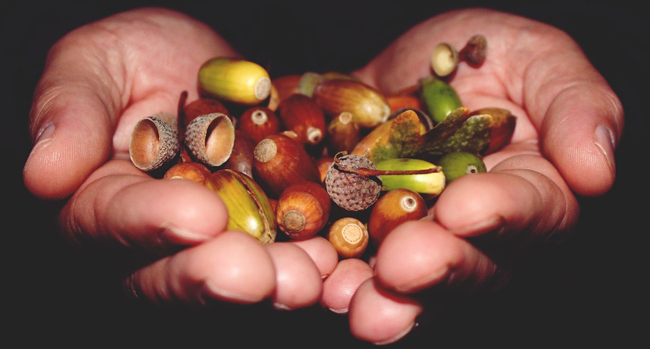
The acorn, the fruit of the oak tree, is a discreet yet powerful symbol of luck, wisdom, and growth. In Norse mythology, it is associated with the god Odin, who is said to have hanged himself from an oak tree to gain knowledge. Because of this, the acorn represents the pursuit of wisdom, the courage to endure hardship, and inner strength.
Scandinavians used acorns as protection: they placed them on windowsills to guard against lightning and storms. During Norse invasions, the English carried acorns in their pockets, hoping to earn the mercy of their conquerors or to attract a bit of luck in those troubled times.
The proverb “great oaks from little acorns grow” reminds us that great things often begin with small gestures, small ideas, small decisions. The acorn thus becomes an ideal symbol for long-term projects, personal development, confidence in one’s potential, and patience.
Easy to find in autumn, acorns can make excellent DIY lucky charms. You can gather them, clean them, and paint them in gold, silver, or bright colors, then turn them into keychains, desk decorations, or elements of a luck altar. Each acorn can symbolize a project, an intention, or a quality you wish to help grow.
Want more luck?
If you want to go further and multiply the positive signs in your life, you can combine several lucky charms: a four-leaf clover in your wallet, lucky bamboo on your desk, an evil eye near your entrance, a ladybug as decoration, or a favorite coin always with you.
To nurture this dynamic of luck and self-confidence, you can also surround yourself with motivating symbols: a playlist of songs about luck and success, inspiring quotes, images of rainbows, fish, or ladybugs. What matters is not believing in it “magically,” but creating an environment that supports your goals and your mood.
You can also check the list of birthstones to choose a crystal linked to your birth month or your current needs (confidence, protection, grounding, creativity, love).
Finally, remember that lucky charms don’t replace your actions, your patience, and your perseverance. They are there to encourage you, help you refocus, and remind you of your inner resources. By combining talismans, positive rituals, and concrete commitment to your projects, you create fertile ground where “luck” can more easily manifest.


Leave a Reply