
Loch Ness · VERIFIED OR VIBES? · Lucky charms
By Camille G., founder of Loch Ness · Published September 27, 2026 · Last updated September 27, 2026
Evil eyes, four-leaf clovers, horseshoes, dreamcatchers: the classics of lucky charm jewelry. Almost every shop gives each one a neat meaning in a table. We checked where those meanings come from, and found something most tables skip: half of these symbols were never about luck. They were about protection.
This guide covers the four symbols we sell. Whether any charm can actually change your luck is a separate question, with its own page: do lucky charms work?
Luck or protection: the distinction nobody makes
| Symbol | Where it comes from | Meant to | What we could verify |
|---|---|---|---|
| Evil eye | Mediterranean and Middle East; the blue glass bead is strongly tied to Turkey | Protect from envious looks | The belief and the bead are well documented; the “5,000 years old” story is shakier |
| Four-leaf clover | European folklore | Bring luck | Its rarity is measurable: about 1 in 5,076 |
| Horseshoe | European folklore | Protect a home, or hold luck | Both ways of hanging it are traditional |
| Dreamcatcher | Ojibwe tradition | Protect a sleeping child | Its origin is documented; its commercial use is contested |
So only one of the four, the clover, is purely a luck charm. The evil eye and the horseshoe are shields first. Keep that in mind when a listing promises “good fortune”.
Evil eye
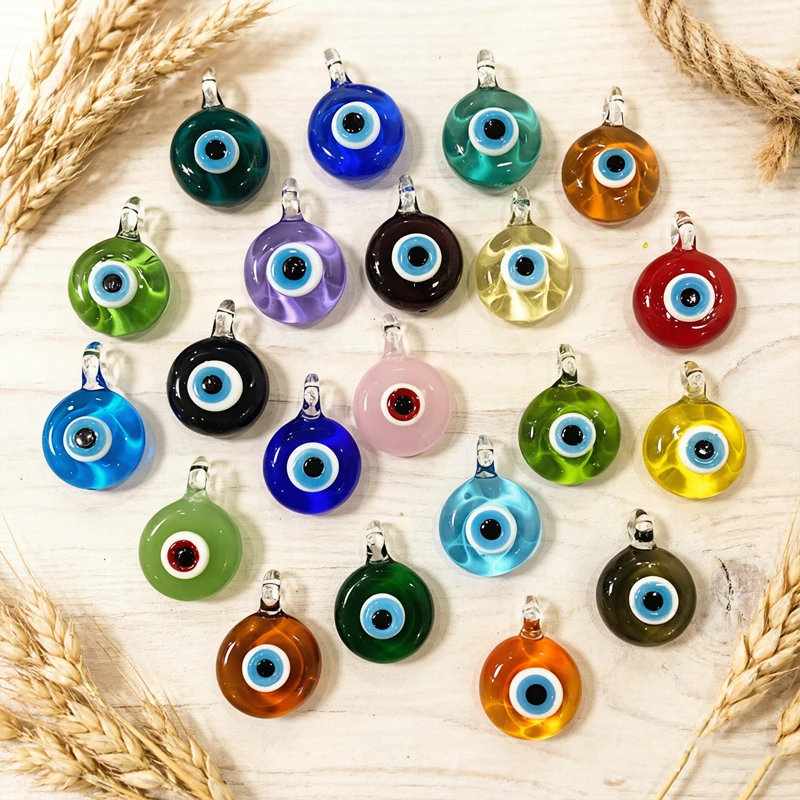
The Turkish nazar boncuğu is a decoy: it is meant to attract a harmful gaze and absorb it. Several Turkish sources insist it is about protection, not luck. Full story: evil eye meaning.
Four-leaf clover
The one true luck charm here, and the only one whose rarity has been counted. Most sites say 1 in 10,000; a large European survey found about 1 in 5,076. Full story: how rare is a four-leaf clover?
Horseshoe
Iron was believed to repel evil, and the horseshoe went over doors. Points up or points down? Both traditions exist. Full story: horseshoe up or down.
Dreamcatcher
An Ojibwe object hung over a child’s cradle, which became a worldwide souvenir in the late 20th century — a history many Indigenous people criticize. Full story: dreamcatcher meaning.
Why people wear charms at all
Amulets are far older than jewelry trends: Egyptian scarabs and Roman bullae were already worn for protection, and the modern charm bracelet flowered under Queen Victoria (Skyjems jewellery encyclopedia). If carved symbols interest you, our guide to carved wood bead bracelets applies the same method to Buddhist texts and Chinese motifs.
What we promise, and what we don’t
We don’t promise that any of our charms will bring luck or protection. We sell symbols people have loved for centuries, with their real history attached.
Sources
- Skyjems — Lucky charm jewellery
- Made in Turkey Tours — Turkish evil eye
- Wikipedia — Four-leaf clover
- Wikipedia — Iron in folklore
- Wikipedia — Dreamcatcher
Update log
September 27, 2026 — First publication.

About the author — Camille G., founder of Loch Ness
Full-stack developer and self-taught jewelry maker since 2013, Camille designs and codes every interactive experience on Loch Ness Lab — from the healing crystal bracelet configurator to the free tools at lochness-paris.com/apps, including the research behind the creativity test’s scoring algorithm.