
Loch Ness · VERIFIED OR VIBES?
By Camille G., founder of Loch Ness · Published September 14, 2026 · Episode 1
⚪ STILL INVESTIGATING
What is this?
Verified or Vibes? is a recurring column where we check the cultural, historical or material claims made about one of our own pieces — in public, against real sources, using the same standard we hold every article on this blog to. No invented translations, no “trust us.” If we can’t verify something, we say so and show our work.
The Claim
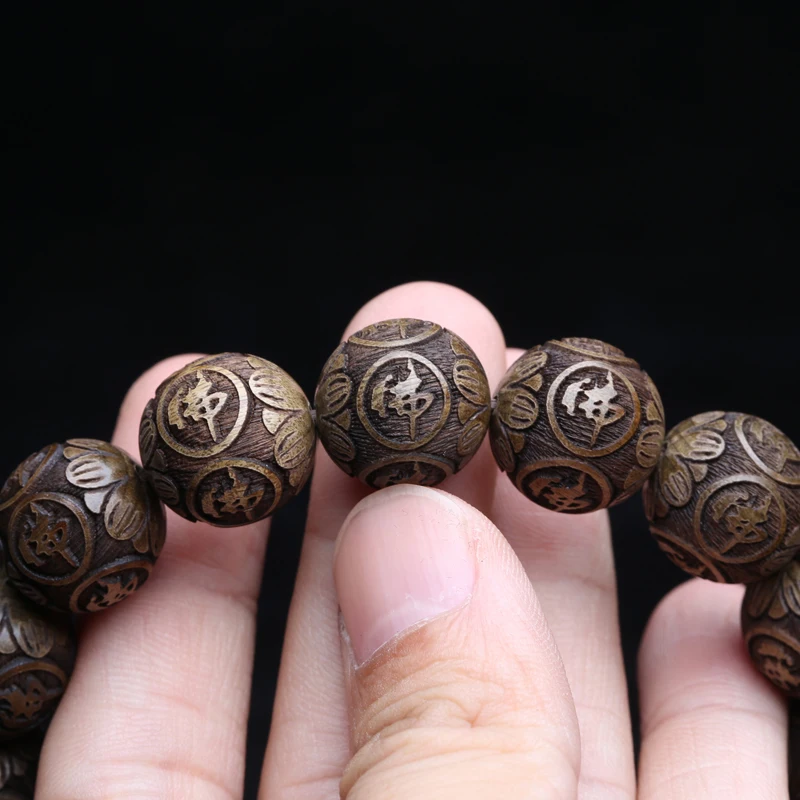
The listing for our ebony wood bead bracelet currently reads: “Buddhist Meditation Rosary, Elastic, Yoga Charm, Tibetan, Lucky.” That’s four separate claims — Buddhist, Tibetan, meditation-use, and “lucky” — attached to one object. Our job in this column is to check each one against what’s actually carved on the piece, not against what sounds good in a title.
What We Checked
The wood. Genuine ebony — dense, dark, checkable independently of any cultural claim. This part holds.
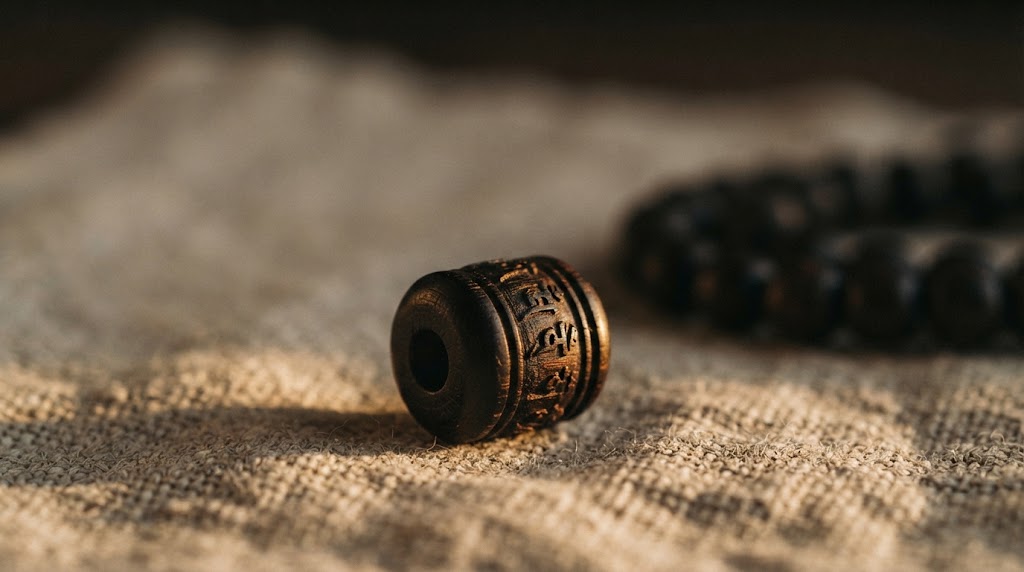
“Tibetan.” The carving is a circular medallion enclosing a single character, bordered by a lotus-like petal motif. This is not Tibetan script. Tibetan Buddhist prayer objects use Sanskrit or Tibetan-alphabet mantras (most commonly “Om Mani Padme Hum”), not this style of medallion carving. On this specific claim: it doesn’t hold.
“Buddhist.” Circular medallion carvings with a single character are a documented style in Chinese decorative craftsmanship, tracing back to auspicious motifs first recorded in the Zhou Dynasty roughly 3,000 years ago — a tradition that predates and runs largely independent of Buddhism specifically. Some auspicious carving does overlap with Buddhist objects, but the presence of a lucky character alone isn’t evidence of a Buddhist context. Unverified as stated.
“Lucky.” This is the one claim category that’s plausible and well-documented in general — characters like fú (福, fortune), shòu (寿, longevity) and lù (禄, prosperity) are exactly the kind of auspicious symbol carved onto jewelry in this tradition. What we can’t yet confirm is whether the specific character on this bracelet is one of them, a different auspicious character, or a stylized decorative variant that isn’t a real character at all.
Why we’re not just picking one. It would take five seconds to write “the fú character, meaning fortune” and move on. But if that’s a guess dressed up as fact, we’ve just done exactly what we’re auditing everyone else for. Until it’s confirmed, calling it “an auspicious character” is the accurate description — not the more specific, more marketable one.
The Verdict
Ebony: verified. Tibetan: does not hold — this is a Chinese decorative carving style, not Tibetan script. Buddhist: unverified — the motif’s tradition runs independently of Buddhism. Lucky: plausible and consistent with the broader tradition, but the exact character is still unconfirmed. The listing will be updated to drop “Tibetan” and “Buddhist” and describe the carving accurately as an auspicious Chinese motif, pending confirmation of the specific character.
Still Open
If you can read the character in the medallion and can tell us with confidence what it says, email a note (and, ideally, how you know) to contact@lochness-paris.com. We’ll update this post publicly with a credit and move the verdict badge to 🟢 Verified once it’s confirmed.
Sources
1. Gotheborg — Chinese Auspicious Motifs, glossary of Chinese decorative arts — gotheborg.com
2. LTL Language School — Most Common Chinese Charms & How to Use Them — ltl-school.com
Verified or Vibes? is an ongoing series by Camille G. for Loch Ness, publicly checking the claims made about our own products.