Loch Ness · VERIFIED OR VIBES?
By Camille G., founder of Loch Ness · Episode 2
🟡 PARTIALLY VERIFIED
A note before we start
This episode is a little different: some of the claims we’re checking here came from our own product description, not a wholesale listing. Auditing our own copy the same way we’d audit anyone else’s is the whole point of this column — so here it is, mistakes included.
The Claim
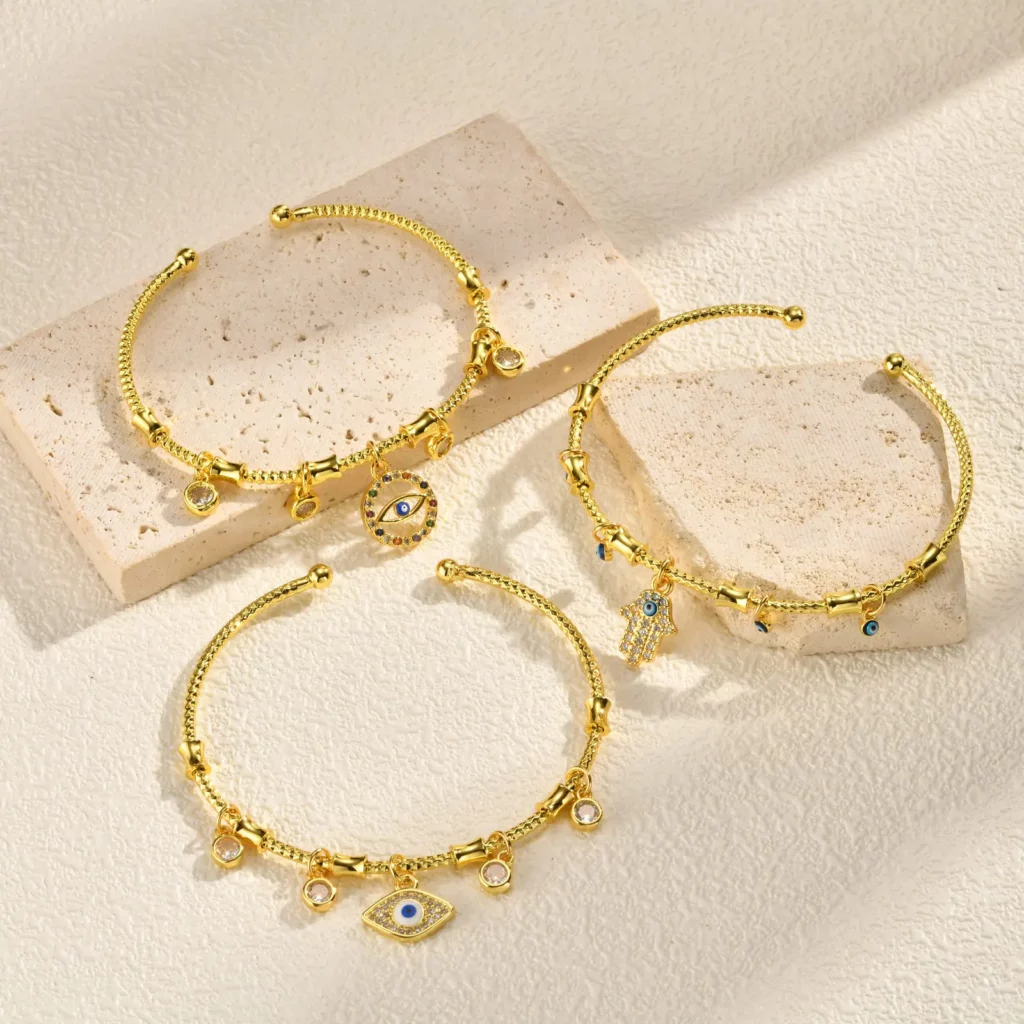
The description for our Turkish Evil Eye cuff makes four separate claims worth checking: the symbol’s history and how it’s supposed to work, the “AAA-grade” cubic zirconia, the stainless steel finish, and a “lead-free and nickel-free” claim about the metal.
What We Checked
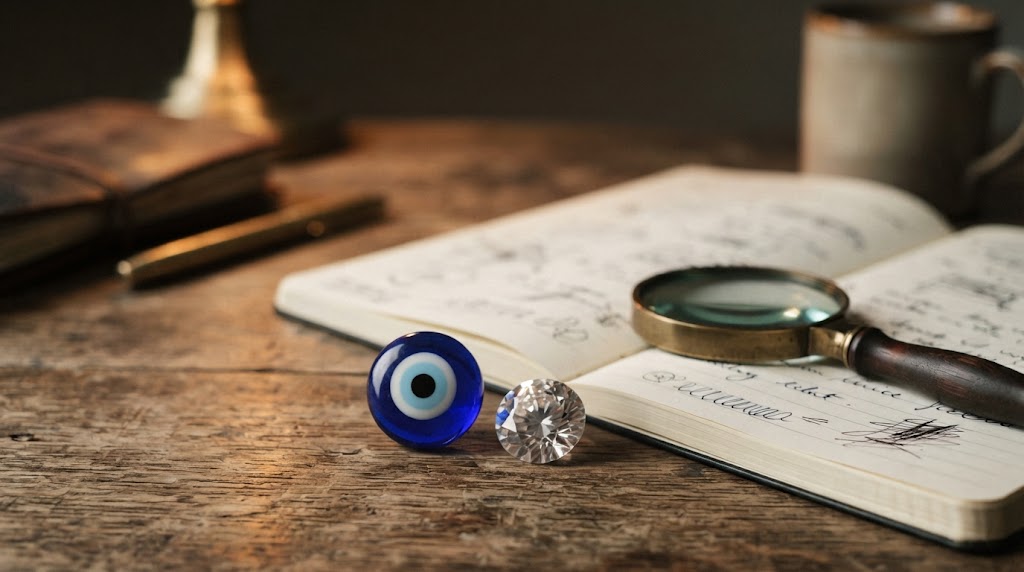
1. The history of the nazar. We wrote that the blue glass amulet “became widespread in Anatolia starting in the Ottoman era” and that cobalt blue was chosen because it “reflects the harmful gaze back.” Checking against reference sources: this understates the age of the tradition by a long way. Extant glass eye beads in the Mediterranean date back as far as the 16th century BCE, made and used from Mesopotamia to Egypt to Greece — many centuries before the Ottoman Empire existed at all. And the mechanism is generally described as the amulet absorbing or shielding against the negative gaze, not mechanically “reflecting” it back like a mirror. The core claim — that this is a real, old, Turkish-associated protective symbol — holds. The specific timeline and mechanism we wrote were imprecise.
Verdict on this point: 🟡 partially accurate, overstated specifics.
2. “AAA-grade” cubic zirconia. There is a real grading concept for CZ based on clarity, cut, and color — but it isn’t standardized or certified the way diamond grading is. Some sellers grade on a scale that tops out at AAA; others grade up to AAAAA, where AAA is only a mid-range tier. “AAA” on its own doesn’t tell a buyer where a stone actually sits without knowing which seller’s scale is being used.
Verdict on this point: 🟡 a real concept, used in a way that overstates certainty.
3. “Lead-free and nickel-free” stainless steel. This one doesn’t hold up. Standard stainless steel used in jewelry — both 304 and surgical-grade 316L — contains real nickel, typically in the 8–15% range as an alloying element. It’s often marketed as hypoallergenic because the nickel is locked into a stable crystal structure and released only in extremely small amounts (well under the EU Nickel Directive’s 0.5 µg/cm²/week limit for 316L) — but “hypoallergenic” and “nickel-free” are not the same claim, and we used the wrong one.
Verdict on this point: 🔴 does not hold as written, unless this specific piece has independent lab certification we don’t currently have on file.
4. Vacuum ion plating (PVD) finish. We described the band as finished with PVD rather than standard electroplating. We can’t currently confirm which process was actually used on this specific batch — that description was written from general industry knowledge about durable finishes, not from a manufacturing spec sheet we’ve verified.
Verdict on this point: ⚪ still investigating.
The Verdict
The nazar symbolism is real but was dated and described too specifically. The zircon grading is a real but unstandardized concept, presented with more certainty than it deserves. The “nickel-free” claim is being corrected on the listing — it should read “hypoallergenic stainless steel,” not “nickel-free.” The plating process claim is unconfirmed and will stay that way until we have a supplier spec sheet to check it against.
Still Open
We’ve requested the manufacturing spec sheet from our supplier to confirm the plating process. Once it comes back, this post gets a dated update and the relevant badge moves accordingly — up or down.
Sources
1. Wikipedia — Nazar (amulet), citing Kaya, Singh & Dua, British Journal of Ophthalmology (2009) — en.wikipedia.org
2. Joy Jewelers — Cubic Zirconia Buying Guide (grading tiers) — joyjewelers.com
3. Cords Club — Is Stainless Steel Hypoallergenic? (nickel content by grade) — cordsclub.com
Verified or Vibes? is an ongoing series by Camille G. for Loch Ness, publicly checking the claims made about our own products — including the ones we wrote ourselves.