
Rhodonite: meaning, properties and bracelet ideas
Rhodonite is traditionally associated with love, a soothed heart and forgiveness. In lithotherapy, it is linked to the Heart chakra and to the earth element. Its vibration is considered balanced, which shapes how it combines with other stones.
Rhodonite meaning and properties
In a bracelet, its dominant quality is emotional and its polarity is receptive (yin).
For which moods?
In your life path
This stone is one of the stones suggested for these karmic numerology numbers.
Where does it come from?
Good to know
Sodalite, rhodonite, hematite, labradorite, amazonite, moonstone, pyrite, prehnite, sunstone… Around window glass (6.5). Good for daily wear; avoid knocks, as some (such as feldspars) have cleavage, meaning they can split along a plane.
A small ritual
- Lie down and rest Rhodonite on your heart for a few minutes.
- Think of someone, or yourself, you wish to send kindness to.
- Wear it on your left wrist, the heart side according to tradition.
Best stones to pair with Rhodonite
Calculated by our compatibility engine from chakras, elements, vibration and properties.
- Moss Agate Strong harmony · 100/100
Same chakra (Heart), same element (earth), same vibration level. - Amazonite Strong harmony · 97/100
Same chakra (Heart), earth and water elements, same vibration level. - Ocean Jasper Strong harmony · 97/100
Same chakra (Heart), earth and water elements, same vibration level. - Aventurine Strong harmony · 95/100
Same chakra (Heart), same element (earth), same vibration level. - Green Dyed Quartz (Malaysia Jade) Strong harmony · 95/100
Same chakra (Heart), same element (earth), same vibration level. - Green Jade Strong harmony · 95/100
Same chakra (Heart), same element (earth), same vibration level.
Bracelets with Rhodonite
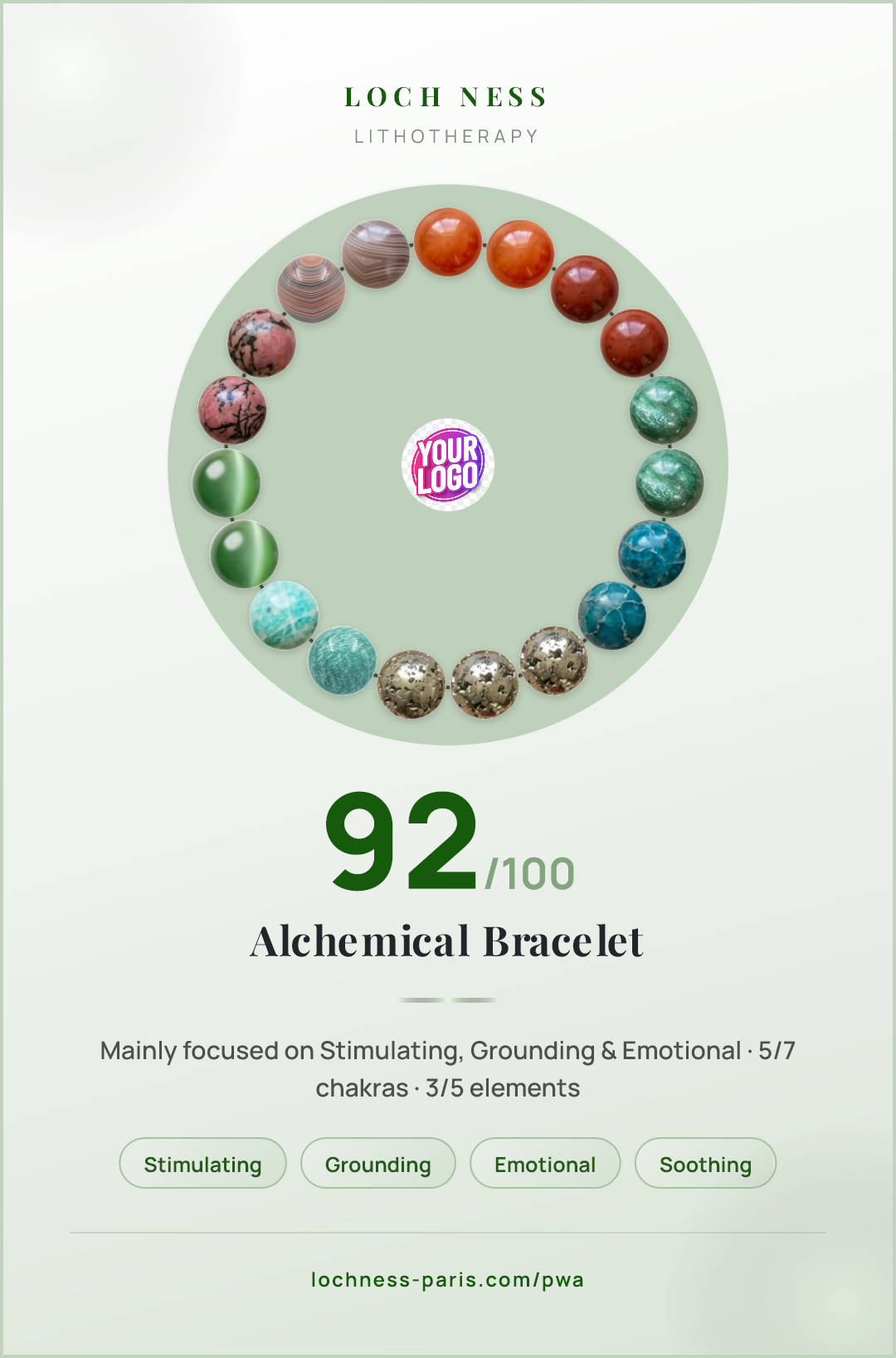
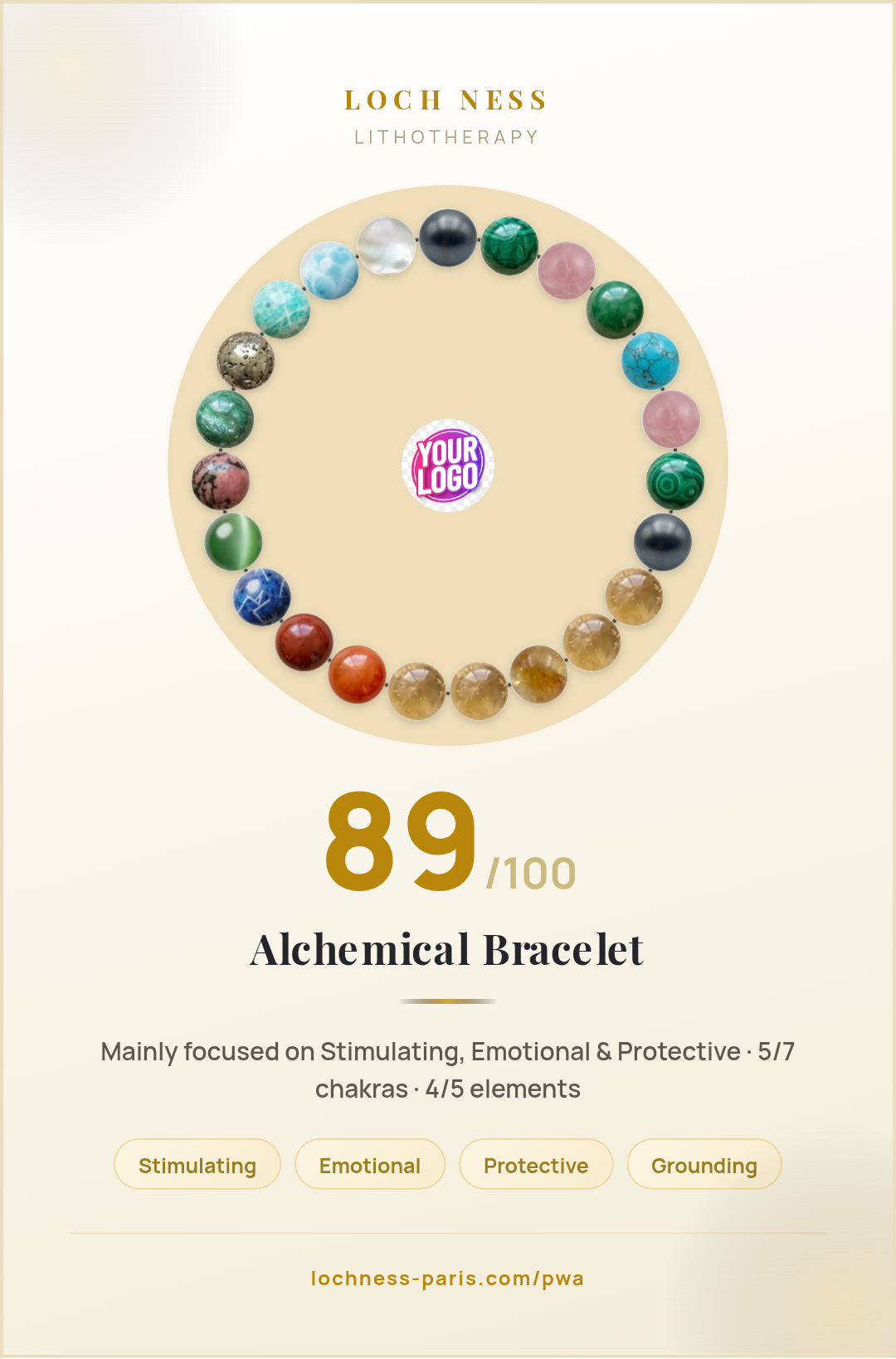
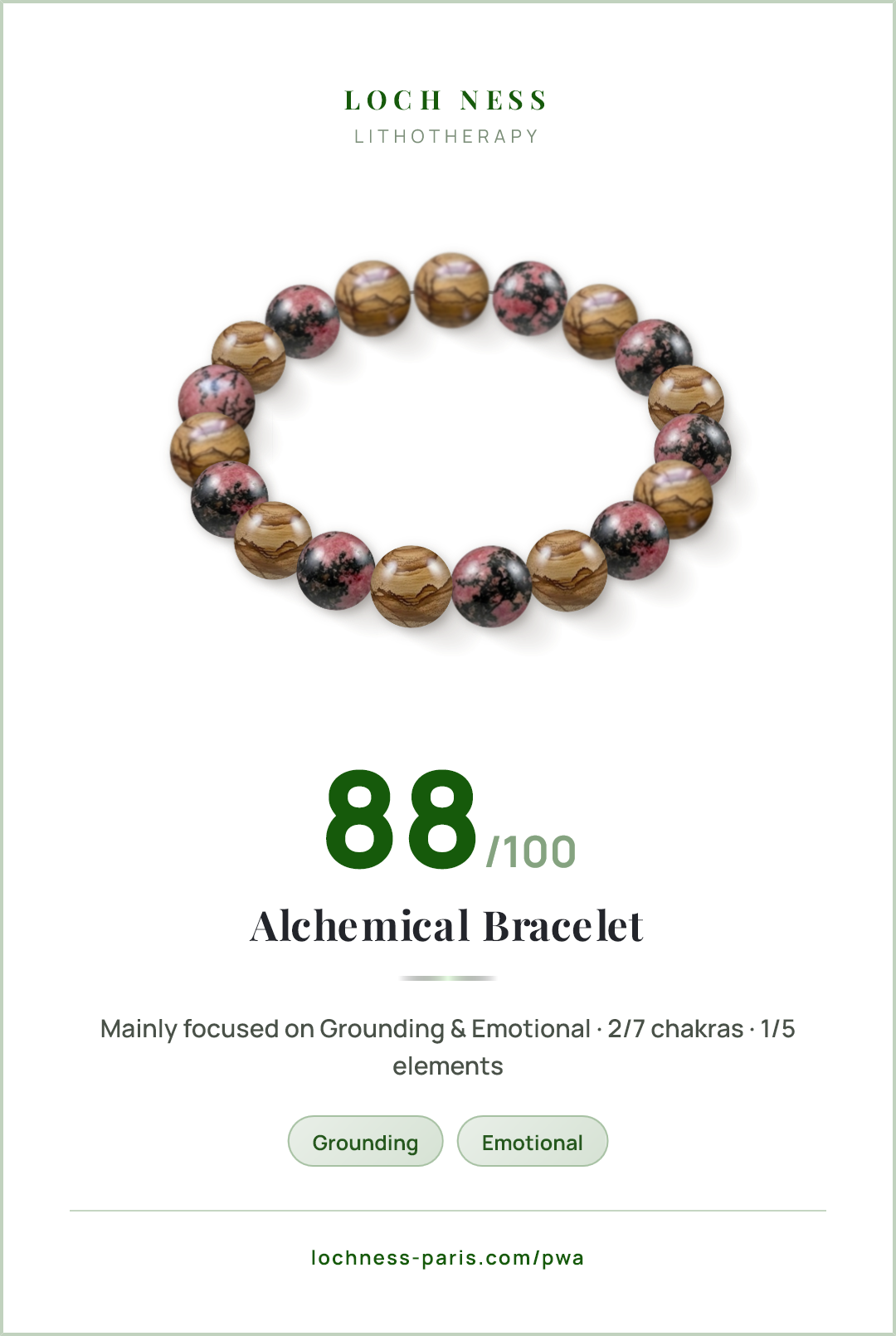
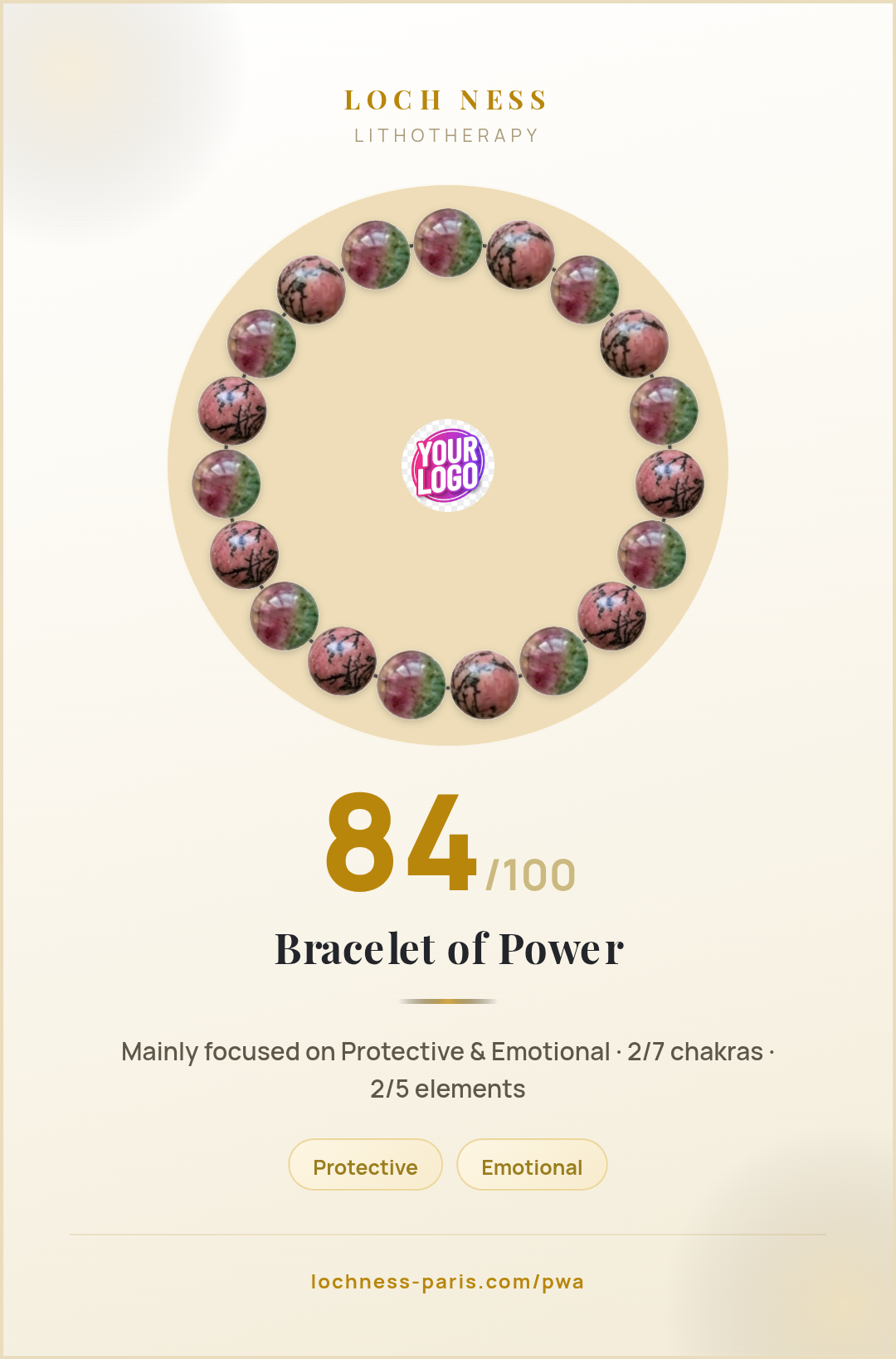
Rhodonite appears in 4 published bracelets, with an average lithotherapy score of 88/100.
How to care for Rhodonite
- 💧 Water: Rhodonite tolerates a quick rinse in clear water; dry it right away.
- 🤲 Skin contact: Rhodonite is not flagged for prolonged-contact precautions.
- 🪨 Hardness: at Mohs 6, Rhodonite resists everyday wear well.
Rhodonite mineral data sheet
| Family | Manganese inosilicate |
|---|---|
| Composition | MnSiO₃ |
| Crystal system | Triclinic |
| Hardness (Mohs) | 5,5 – 6,5 |
| Density | 3,5 – 3,7 |
| Luster | Vitreous to pearly |
| Color | Pink veined with black |
| Origins | Russia, Australia, Brazil |
Frequently asked questions
What is Rhodonite associated with?
Rhodonite is traditionally associated with love, a soothed heart, forgiveness and compassion. Its dominant quality is considered emotional.
Which chakra is Rhodonite linked to?
Rhodonite is linked to the Heart chakra, and to the earth element.
Can Rhodonite get wet?
Rhodonite tolerates a quick rinse in clear water. Dry it right away and avoid long soaking.
Which stones go well with Rhodonite?
According to our compatibility analysis (chakras, elements, vibration and properties), Rhodonite pairs best with Moss Agate, Amazonite and Ocean Jasper.
The properties described here come from lithotherapy traditions. They are not medical claims and do not replace professional advice.