
Recommended products
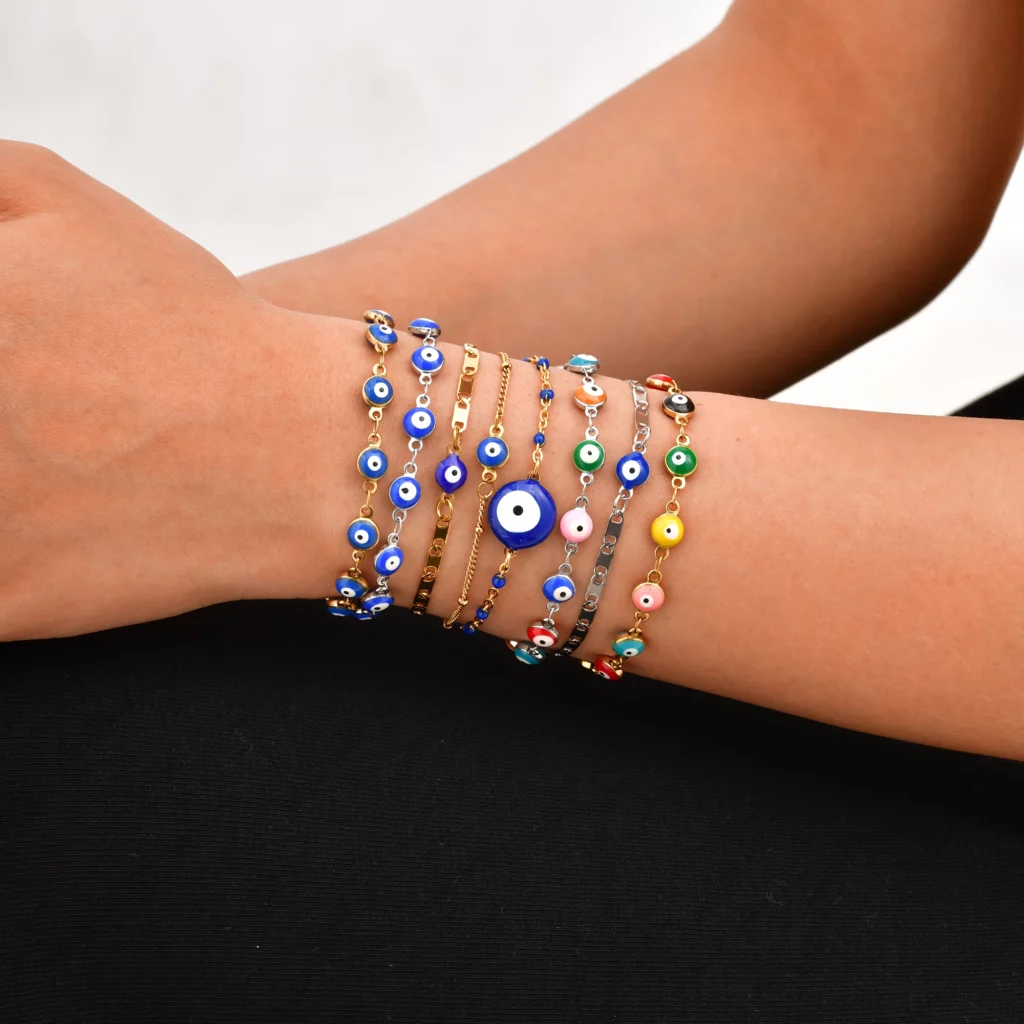
Quick answer: the evil eye is a symbol representing a curse, a harmful glare believed to cause misfortune, and the eye-shaped charms (like the Nazar) are protective objects meant to ward that curse off. The Hamsa is a palm-shaped hand amulet from Jewish, Muslim, and broader Middle Eastern traditions, general-purpose protection and blessing that isn’t specifically about the evil eye at all, even though it very often has an eye symbol placed in its palm, which is exactly where the two get mixed up.
What Is the Evil Eye?
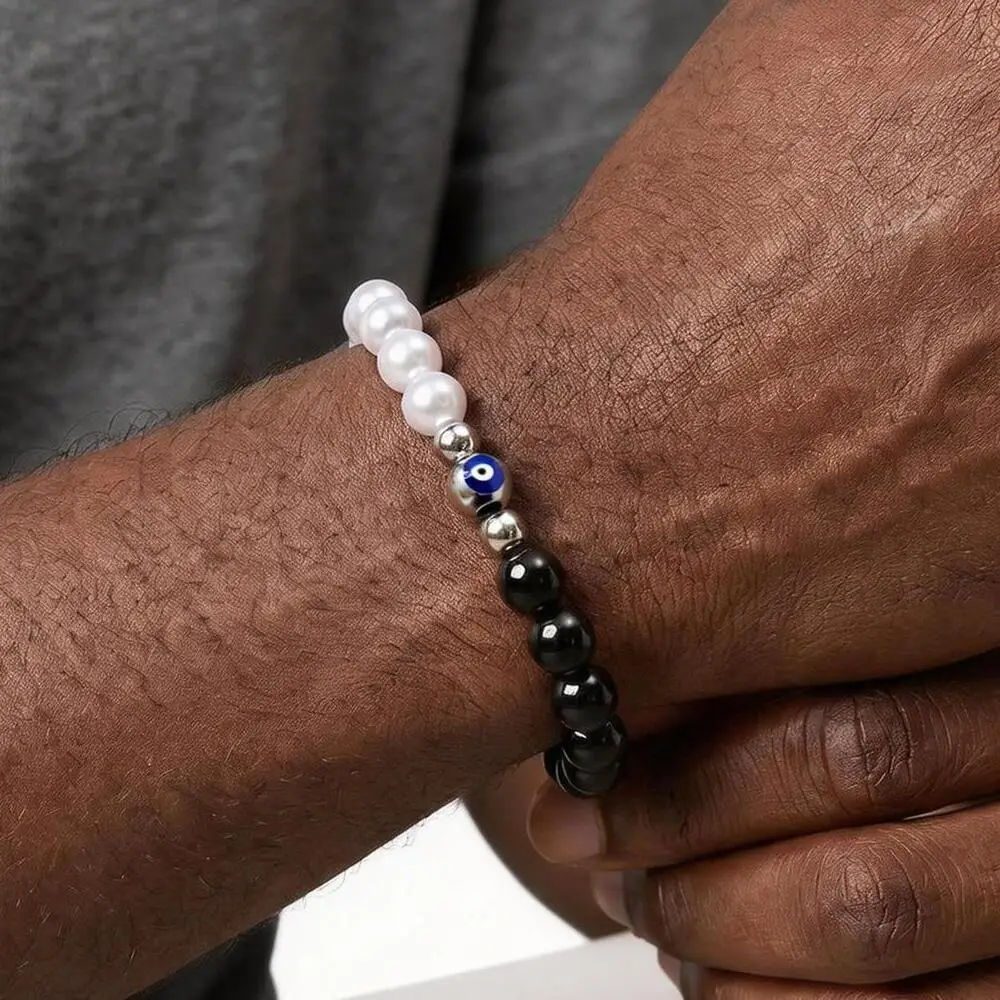
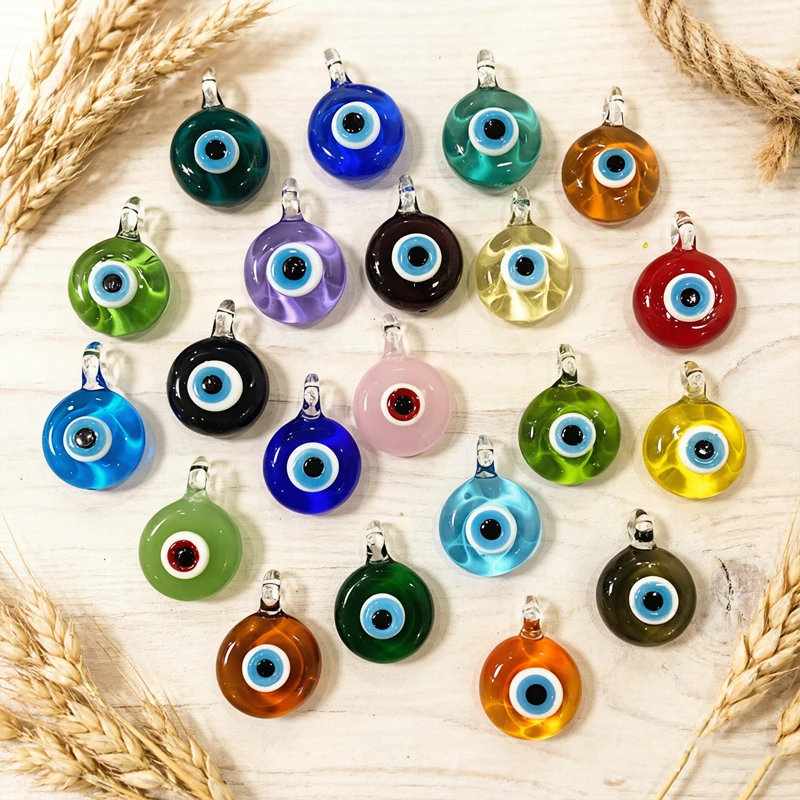
The “evil eye” refers to a curse believed to come from an envious or malicious glare, often unintentional. The blue, teardrop-shaped bead most people picture (the Turkish Nazar) is a charm designed specifically to protect against that curse, not to represent it. We cover the full history and six other related symbols in our complete guide to evil eye symbols.
What Is the Hamsa?
The Hamsa is an open, palm-shaped amulet, its name comes from the Arabic word for “five,” referring to the five fingers. It shows up across Jewish tradition (sometimes called the Hand of Miriam) and Islamic tradition (the Hand of Fatima) alike, which is part of why it carries slightly different specific stories depending on who you ask, while the core idea, an open hand held up to block harm, stays consistent.
The Key Differences, Side by Side
- What it represents: the evil eye symbolizes the curse itself and the protection against it; the Hamsa symbolizes a broader idea of protection, blessing, and good fortune, without being tied to any one specific type of threat.
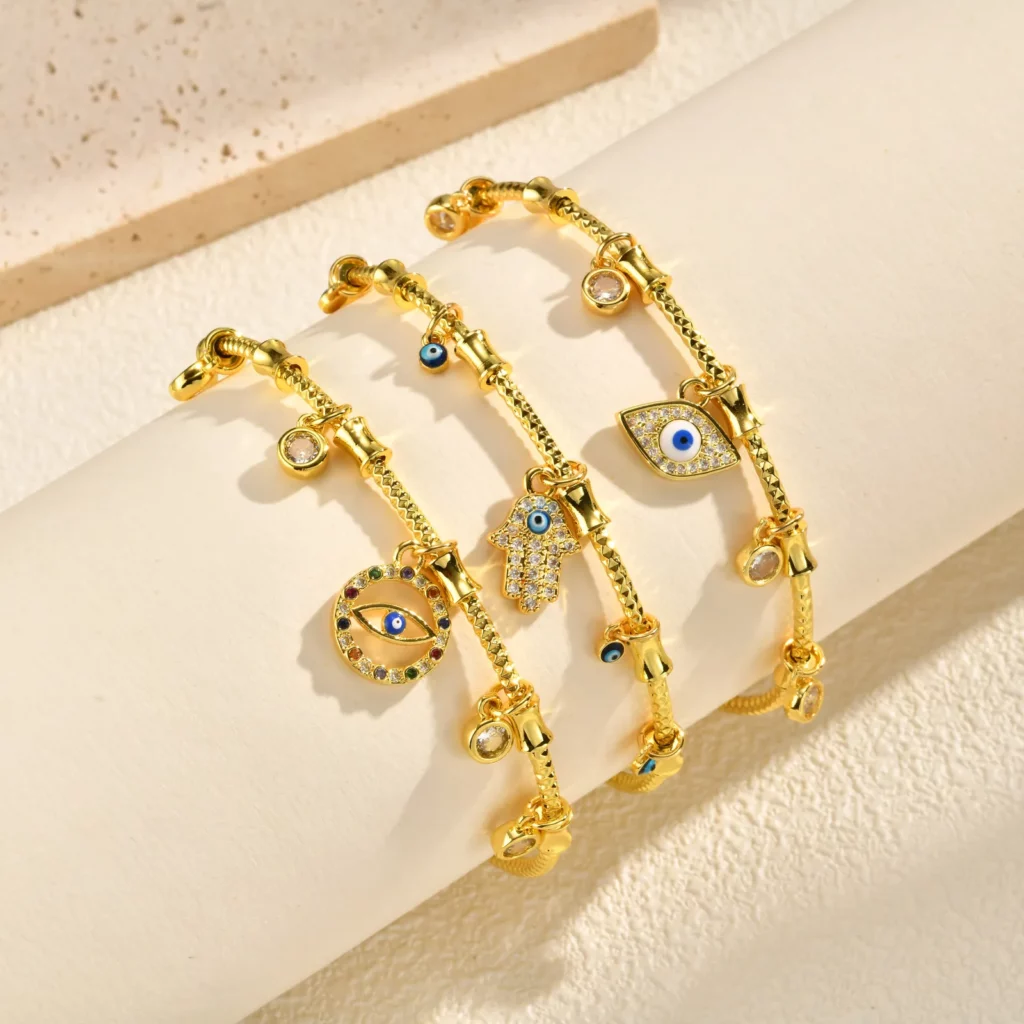
- Shape: the evil eye is typically a round or teardrop eye shape; the Hamsa is a stylized open hand, usually with the thumb and pinky mirrored symmetrically.
- Cultural roots: the evil eye concept appears independently across dozens of cultures (Turkish, Greek, Italian, Latin American, and more); the Hamsa’s roots are more specifically tied to Jewish, Islamic, and broader Middle Eastern and North African traditions.
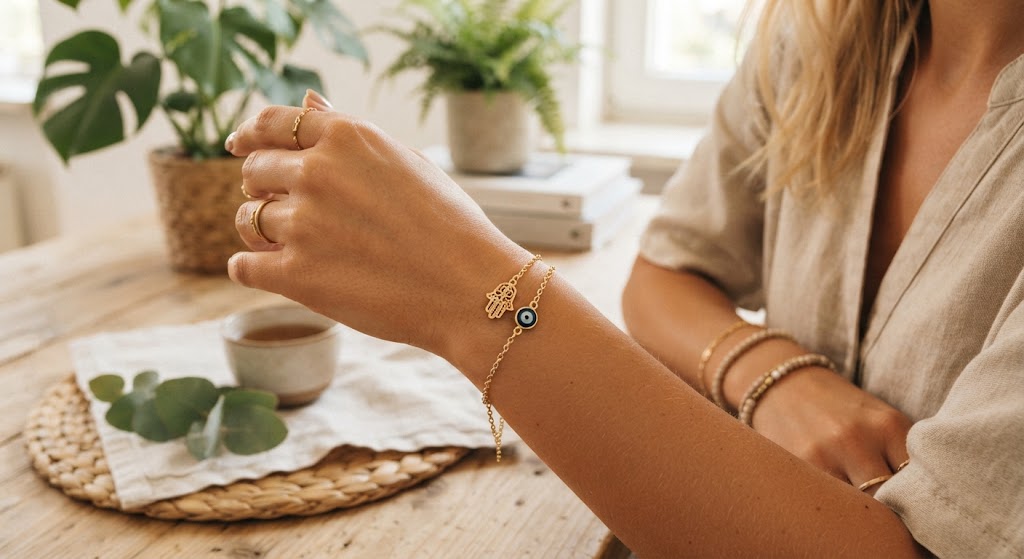
- How they combine: it’s extremely common to see an eye symbol placed directly in the palm of a Hamsa, which is the single biggest reason the two get blended together in people’s minds, even though the hand and the eye are technically two separate symbols layered into one piece.
Why People Mix Them Up
Beyond the eye-in-the-palm design, both symbols are sold side by side in jewelry, both are described loosely as “protection charms” in most product listings, and both are popular in the same regions of the world. None of that makes them interchangeable, but it does explain why the confusion is so common, even among people who wear one or the other every day.
Can You Wear Both Together?
Yes, and plenty of people do. Since the two symbols come from overlapping but distinct traditions and represent complementary rather than conflicting ideas (specific protection from envy, versus general protection and blessing), there’s no traditional rule against combining a Hamsa and a Nazar in the same piece of jewelry or the same stack of bracelets.
Frequently Asked Questions
Is the eye inside a Hamsa the same as the Nazar?
Visually, often yes, the blue eye placed in the center of a Hamsa is typically styled just like a Nazar bead. Symbolically, it’s usually understood as reinforcing the Hamsa’s general protective role rather than being a separate evil eye charm in its own right.
Do you have to be Jewish or Muslim to wear a Hamsa?
No, the Hamsa is widely worn today as a broader symbol of protection and positive energy by people outside both traditions, similar to how the evil eye is worn well beyond Turkey and Greece.
Which one is older?
Both symbols have genuinely ancient roots that are difficult to date precisely, evil eye beliefs and hand-shaped amulets both trace back thousands of years across the ancient Mediterranean and Middle East, often evolving in parallel rather than one clearly predating the other.
Which is better for a gift?
Both make meaningful, widely-recognized gifts. Some people choose based on personal or family background, and others simply choose whichever design speaks to them, tradition places real weight on a protective charm being gifted rather than self-purchased in the first place.
The Bottom Line
The evil eye and the Hamsa are two related but genuinely distinct symbols that happen to overlap visually more often than not. If you’re drawn to both, you’re not choosing incorrectly, you can build a custom protective bracelet that layers a Nazar, a Hamsa, or both, alongside the stones and colors that feel most like you.