Recommended products
Few symbols travel as far, or as fast, as the evil eye. Long before it became one of the most popular motifs in jewelry across the U.S., the belief behind it was already thousands of years old, passed down across the Mediterranean, the Middle East, Latin America, and beyond. Almost every culture that developed the concept came up with its own way to fight back against it — and that’s exactly what this list is about.
What Is the Evil Eye, Exactly?
The “evil eye” refers to a curse believed to be cast by a malicious or envious glare — often unintentional, sometimes just the result of admiring someone or something a little too intensely. The belief shows up under different names almost everywhere: mal de ojo in Spanish, malocchio in Italian, nazar in Turkish and Arabic, ayin hara in Hebrew.
What makes it such a fascinating piece of folklore is how independently it developed across unconnected civilizations, all landing on a similar idea: that envy or ill intent can transmit harm through a look alone, and that certain symbols, worn or displayed, can reflect that harm back before it lands.
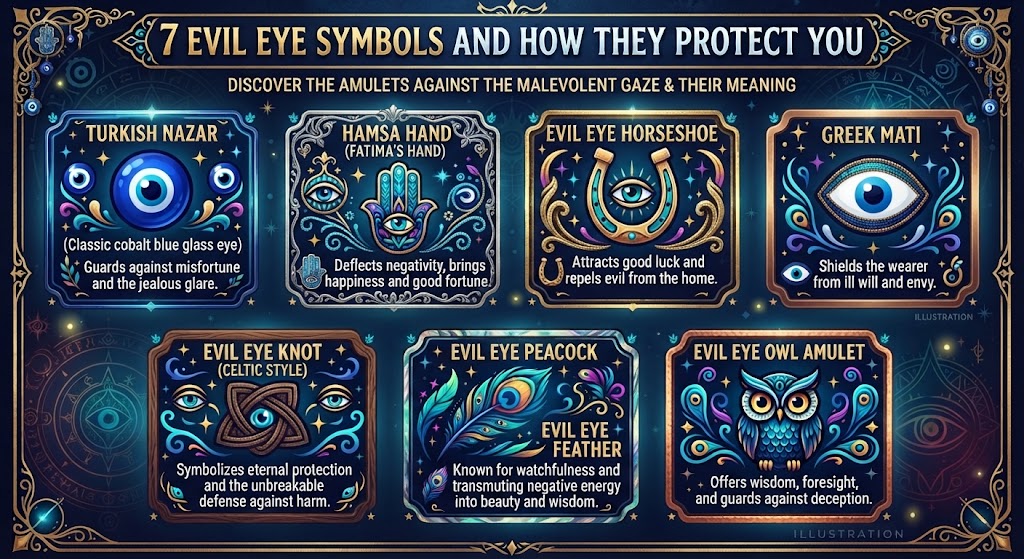
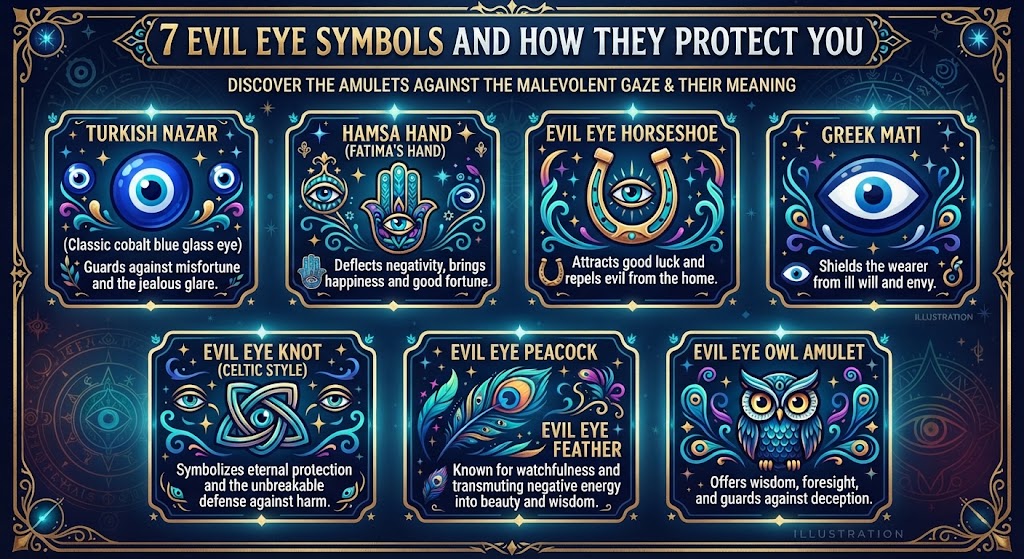
1. The Nazar (Turkish Evil Eye Bead)
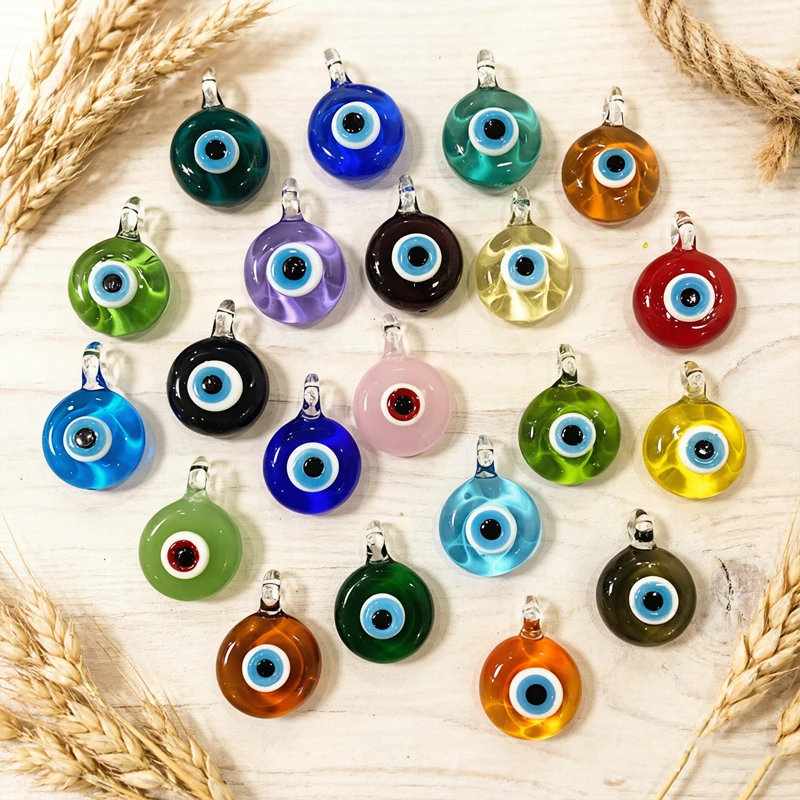
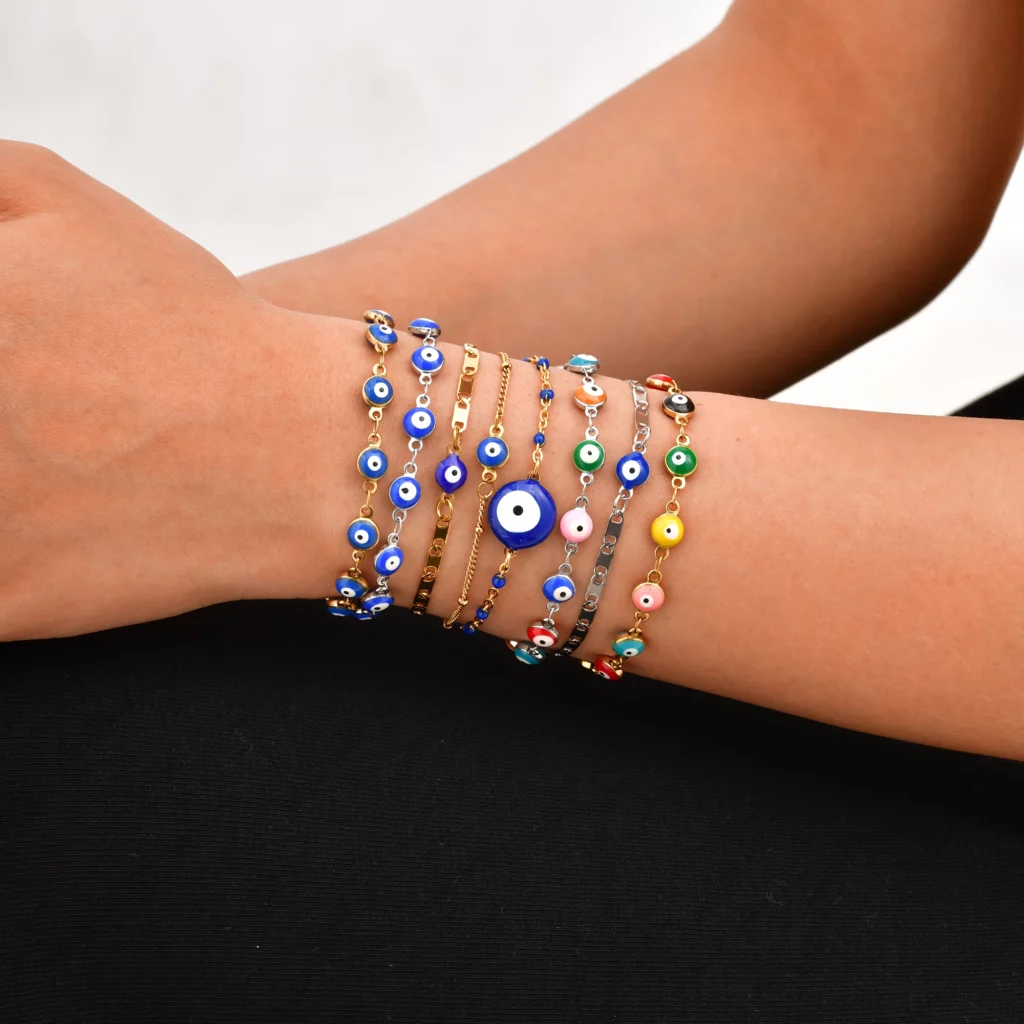
If you picture “the evil eye” in your mind, you’re probably picturing this one: a deep blue, teardrop-shaped glass bead with concentric circles of white, light blue, and a dark blue or black center, resembling an eye. Known as the Nazar (or Nazar Boncuğu in Turkish), it’s one of the most recognized protective symbols in the world, found on doorways, cars, and jewelry throughout Turkey, Greece, and much of the Middle East.
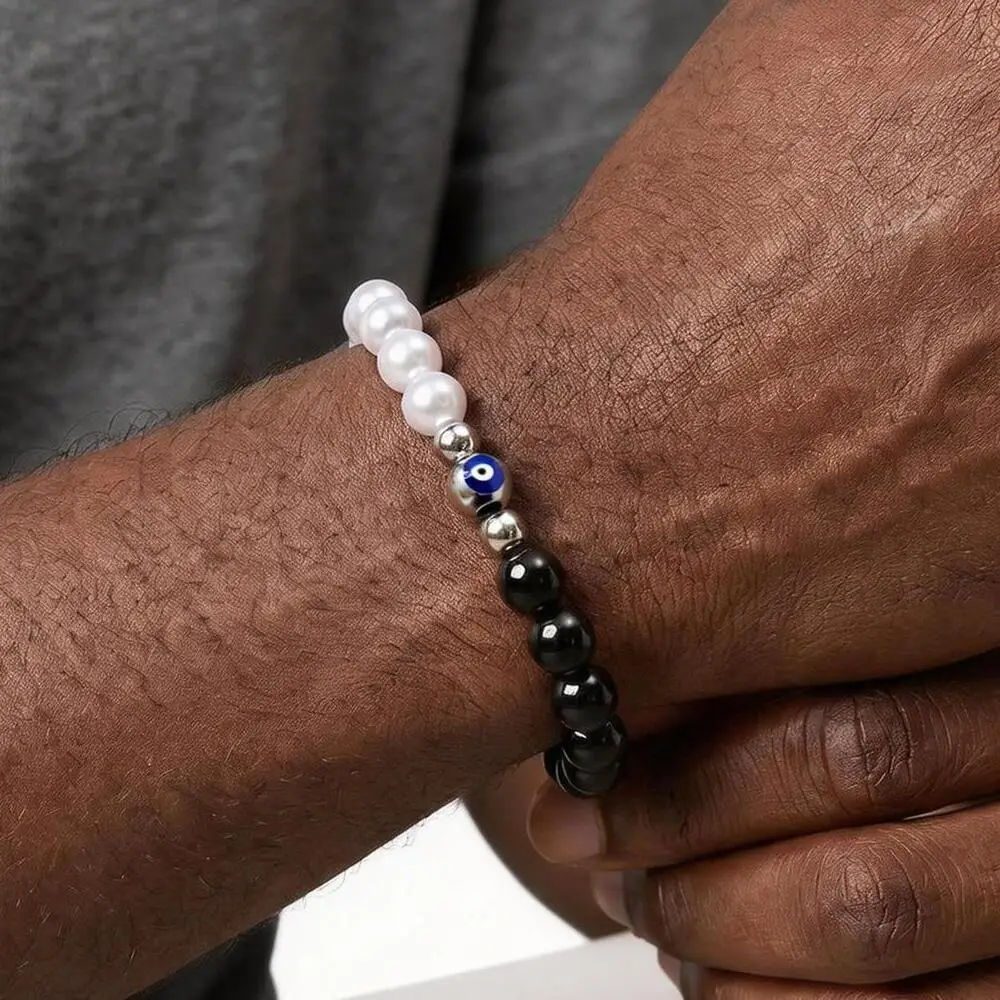
The color blue itself is considered part of the protection — in a region historically populated by mostly dark-eyed people, a rare blue eye was once seen as unusual enough to carry its own power, for better or worse. Wearing a Nazar is meant to attract the negative glare toward the bead instead of toward you, absorbing it before it causes harm.
2. The Hamsa Hand
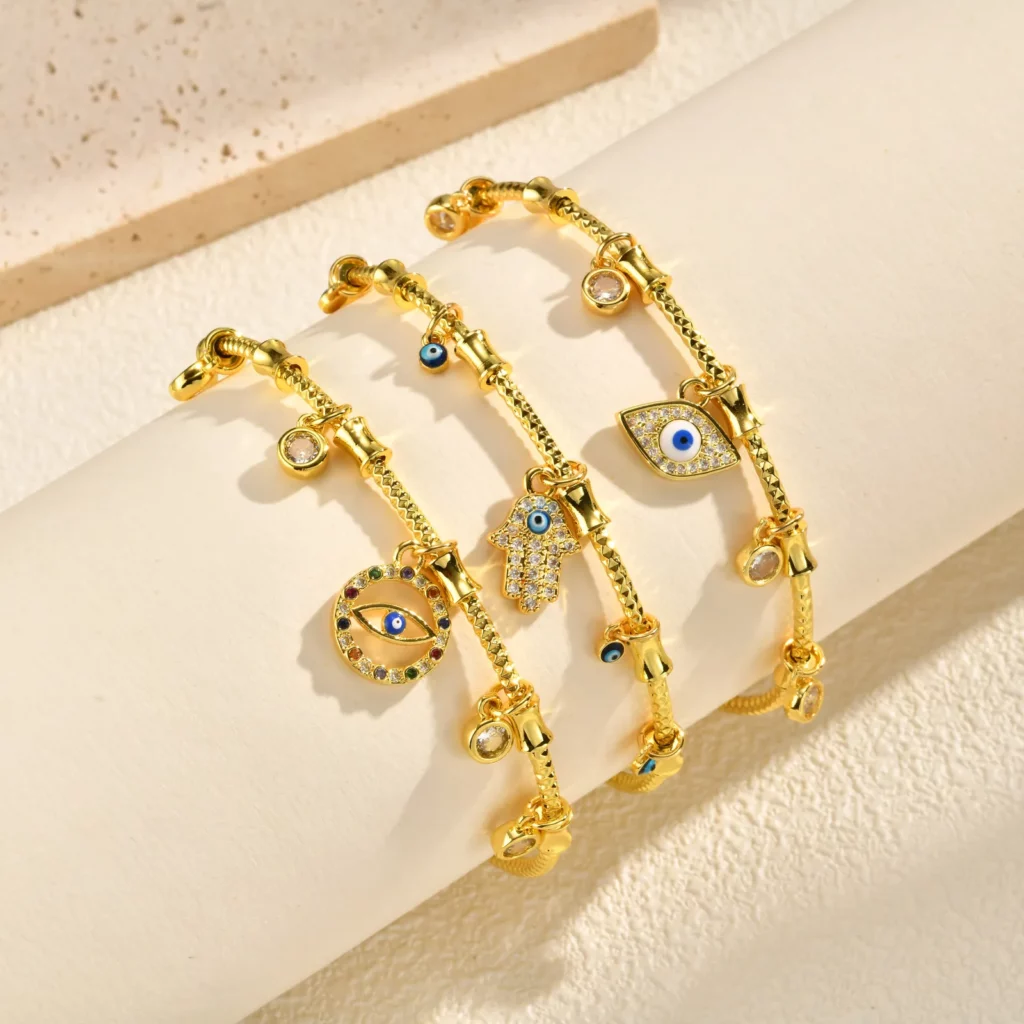
The Hamsa is a palm-shaped amulet, usually shown with an eye in the center, that appears across Jewish, Muslim, and broader Middle Eastern traditions alike — sometimes called the Hand of Fatima in Islamic contexts, or the Hand of Miriam in Jewish ones. “Hamsa” comes from the Arabic word for “five,” referring to the five fingers of the hand.
Because it’s shared across multiple faiths, the exact story behind it varies depending on who you ask, but the core symbolism stays remarkably consistent: an open hand held up to block harm, with the eye at its center watching for danger before it arrives. It’s one of the most popular protective symbols in American jewelry today, often worn regardless of the wearer’s specific faith background as a broader symbol of protection and blessing.
3. The Eye of Horus
Long before the Nazar or the Hamsa, ancient Egyptians were already wearing protective eye symbols. The Eye of Horus, also called the “Wedjat Eye,” comes from the myth of the falcon-headed god Horus, who lost an eye in battle with his rival Set and had it magically restored.
Because of that story, the symbol became associated with healing, restoration, and protection against harm — Egyptians painted it on ships to protect them at sea, placed it in tombs to protect the dead in the afterlife, and wore it as an amulet during daily life. Its distinctive, stylized shape (a human eye with the markings of a falcon) makes it instantly recognizable even to people unfamiliar with the myth behind it.
4. The Greek Mati
Closely related to the Turkish Nazar but distinctly Greek in its own right, the mati (Greek for “eye”) is deeply woven into everyday Greek life. It’s common to see a small blue-eye charm pinned to a baby’s clothing, hung above a doorway, or dangling from a car mirror throughout Greece — and increasingly in Greek-American households across the U.S.
In Greek tradition, if someone suspects they’ve been affected by the evil eye, a specific ritual called xematiasma is sometimes performed by an older family member to “remove” it — a practice still passed down informally in many families today, generation to generation.
5. The Italian Horn (Cornicello)
Shaped like a twisted chili pepper or a small horn, the cornicello (“little horn”) is one of the most distinctive evil eye charms, and one you’ll spot easily in Italian-American jewelry stores across cities like New York, Boston, or Chicago. Traditionally made of red coral, gold, or silver, it’s meant to be worn against malocchio, the Italian version of the evil eye curse.
Its shape is believed to reference ancient fertility and virility symbols tied to horned animals, later folded into Christian-era Italian folklore as a general-purpose ward against envy and bad luck, worn as often by men as by women.
6. The Red String Bracelet (Kabbalah)
Unlike the other symbols on this list, this one isn’t an eye at all — it’s a simple, thin red string, usually wool, tied around the left wrist. Rooted in Kabbalistic Jewish tradition, the red string is believed to protect the wearer from the evil eye, with the left wrist chosen specifically because it’s considered the side of the body connected to receiving.
According to tradition, the string is meant to be tied by someone else, not by yourself, and blessed with a specific prayer as it’s tied. It gained enormous mainstream visibility in the early 2000s when celebrities like Madonna popularized it, and it remains one of the simplest, most accessible evil eye protections to wear every day.
7. The Figa Hand Charm
The figa (or “fig”) is a small clenched-fist charm with the thumb tucked between the index and middle fingers — a gesture with roots in both ancient Roman fertility symbolism and, later, Brazilian and Italian folk protection traditions. In Brazil especially, it’s one of the most widely worn protective charms, often given as a gift for children specifically to ward off the evil eye.
The gesture itself has a slightly cheeky, ambiguous history (it’s also long been used as a rude hand gesture in parts of Europe), which makes it one of the more unusual entries here — proof that protective folklore doesn’t always take itself entirely seriously.
Wearing Protection: Why These Symbols Endure
What’s striking about all seven of these symbols isn’t just their age — it’s how relevant they still feel. Long after the specific rituals and beliefs that created them have faded into folklore, people across the U.S. and around the world keep choosing to wear an eye, a hand, or a horn, not necessarily because they’re certain it works, but because it feels good to carry a small, deliberate piece of protection with you.
If one of these symbols resonated with you, a custom-designed protective bracelet lets you carry it every day, mixed with the stones, colors, or charms that feel most personal to you. Whether it’s a Nazar bead for everyday protection or a Hamsa for peace of mind, wearing it is a small, steady reminder that you’ve got something watching your back.