Our guides
Where do the stones in your bracelets come from?
Volcanoes, mountains, rivers: every stone tells where and how it was born. Here are the three main ways stones form, their best-known deposits, and what that changes for colour, rarity and price.
Loch Ness editorial team · Updated
- Stones form in three ways: by cooling (magma, lava), by being transformed by heat and pressure, or by being deposited near the surface.
- The same stone can come from several countries, with different colours; some come from a single deposit in the world.
- About 80% of coloured stones are mined by small artisanal mines, which makes their origin hard to trace.
- Always ask where a stone comes from and whether it has been treated.
Where some stones are found
| Stone and deposit | How it formed · Good to know |
|---|---|
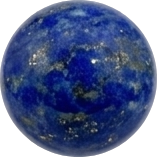
| Afghanistan · Sar-e-Sang (Badakhshan)Lapis Lazuli | Metamorphic rock: limestone turned into marble by the heat of nearby magma, where blue lazurite forms.Mined for more than 6,000 years; other deposits exist in Chile and Russia (Lake Baikal). Ground up, it gave painters their ultramarine pigment. |
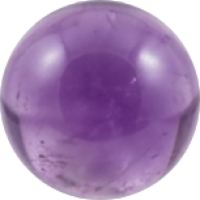
| Uruguay (Artigas) and Brazil (Rio Grande do Sul)Amethyst | Volcanic: in vast basalt lava flows, cavities slowly filled with purple quartz, forming geodes.These basalts are about 130 million years old. The Los Catalanes district (Uruguay) became an IUGS geological heritage site in 2022. |
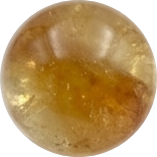
| Mostly Brazil (heated amethyst)Citrine | Same family as amethyst: quartz. Natural citrine is rare.According to the GIA, most citrine on the market is heated amethyst, which turns golden yellow. |
| Botswana · Bobonong areaBotswana Agate | Volcanic: gas bubbles in lava filled with silica, laid down in fine layers of chalcedony.These Karoo lavas are about 180 million years old. The colour bands come from impurities trapped layer after layer. |
| Dominican Republic · Barahona (single source)Larimar | Hydrothermal: a blue pectolite deposited in the cracks of altered basalt; copper gives it its colour.Found in 1974 in river pebbles, then traced to its source. Mostly dug by hand, in small pits often flooded by rain. |
| Democratic Republic of the Congo · KatangaMalachite | Secondary: it forms near the surface, when water and air weather copper deposits.It is a copper mineral: its green bands record successive deposits. |
| Canada (Labrador), Madagascar, FinlandLabradorite | Igneous: a feldspar formed in deep rocks that cooled slowly.Described around 1770 on the coast of Labrador, hence its name. Its flashes come from very thin layers inside the crystal. |
| South AfricaTiger's Eye | Metamorphic: quartz that wrapped mineral fibres in ancient iron-rich formations.Abundant in South Africa since the 1870s. Its silky sheen comes from those fibres; geologists still debate exactly how it forms. |
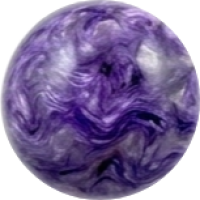
| Russia · Murun massif, Chara River (single source)Charoite | Metamorphic: formed when an igneous rock (a syenite) altered limestone.It is known from a single place in the world, in Yakutia (Siberia). Described in 1978, it is named after the Chara River. |
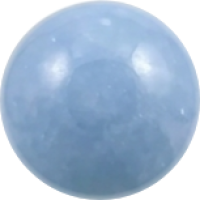
| PeruAngelite | Sedimentary: a calcium sulfate (anhydrite) left by the evaporation of ancient waters.Soft (3.5) and sensitive to water: with prolonged contact, anhydrite can turn into gypsum. |
| Argentina · Capillitas mine (Catamarca)Rhodochrosite | Hydrothermal: a manganese carbonate laid down in layers, sometimes as stalactites.A mine once worked by the Incas, known for its pink and white stalactites, hence the concentric rings. |
| Volcanic regions (Mexico, USA…)Obsidian | Volcanic: a natural glass, born from silica-rich lava that cooled too fast to crystallise.It is not a mineral but a glass: hence its shell-like fracture and very bright lustre. |
Learn more
Three ways to be born
Geologists distinguish three main paths. The first is fire: magma or lava cooling down. Obsidian is lava frozen so fast that it turns into glass; amethyst and Botswana agate form in the bubbles and cavities of basalt flows, slowly filled by silica-rich waters.
The second is transformation: heat and pressure change an existing rock. Lapis lazuli forms this way, from limestone turned into marble by contact with magma.
The third happens near the surface: water and air weather rocks and deposit new minerals. That is how malachite forms, from weathered copper deposits, and angelite, from the evaporation of ancient waters.
One stone, several origins
Most stones are found in several countries, and their colour and look vary from one deposit to another: according to a study published in 2023, Uruguayan geodes give a more intensely purple amethyst than those of southern Brazil, although they were born from the same lavas.
Conversely, a few stones come from a single place in the world: larimar from Barahona province in the Dominican Republic, or charoite from the Chara River in Russia. That single origin partly explains their rarity and price.
How they are mined
Much of the coloured-stone supply does not come from large industrial mines: about 80% comes from artisanal or small-scale mines, often dug by hand. Larimar, for example, is mostly dug with picks and shovels, in pits regularly flooded by rain.
Some stones are also picked up in rivers, where water carried and polished them far from their parent rock: that is how larimar was discovered, in 1974.
Origin, traceability and good questions
Because most stones pass through many intermediaries, their exact origin is often hard to know, and artisanal mining raises real questions about miners' health and the environment.
A few simple questions to ask the seller: which country does the stone come from? Has it been dyed, heated or stabilised? A clear, precise answer is a good sign. Our guide on natural, dyed or heated stones covers the most common treatments.
Frequently asked questions
Why don't two stones with the same name have the same colour?
Because they may come from different deposits: impurities and formation conditions vary from place to place. Treatment (heating, dyeing) can also change the colour.
Is citrine a natural stone?
Natural citrine exists but is rare. According to the GIA, most citrine sold is heated amethyst, which gives it its golden colour.
Is a stone from a single deposit more precious?
It is often rarer and therefore more expensive, like larimar or charoite. But value also depends on quality: colour, transparency, lack of flaws.
How can I find out where my stone comes from?
Ask the seller. For a valuable stone, only a gemmological laboratory can sometimes establish it with certainty.
Stones mentioned in this guide




Sources and method
This guide was written by the Loch Ness editorial team from publications by geologists and gemmologists (GIA, USGS, scientific journals, university collections), listed below. We are not geologists: if you spot a mistake, write to us and we will correct it.
- Wikipedia — Lapis lazuli (formation, Sar-i Sang, histoire)
- GIA — Lapis-lazuli de Sar-e-Sang, Badakhshan, Afghanistan
- Geoconservation Research (2023) — Amethyst deposits of the Los Catalanes Gemological District, Artigas, Uruguay
- Jain, Coetzee & Diskin — Optical features, microstructure and microanalysis of Botswana agates, Botswana Notes and Records 45
- GIA — Blue pectolite from the Dominican Republic (larimar)
- Wikipedia — Larimar
- RWTH Aachen, collection de minéralogie — Malachite (Katanga)
- Encyclopaedia Britannica 1911 — Labradorite
- Scientific American — Tiger's Eye: a deceptive delight
- GIA — Citrine buying guide (traitement thermique)
- Webmineral — Charoite
- Wikipedia — Charoite (formation, nom)
- Galleries.com — Anhydrite (angélite)
- GIA Gems & Gemology (2016) — Trapiche-like rhodochrosite, mine de Capillitas
- USGS — Gemstones: geologic environments
- Conservation X Labs — Artisanal Mining Grand Challenge: colored gemstones
Read next
All our guidesDesign your bracelet
Pick your beads one by one, see the result live and order your bracelet.
What about your life path?
Calculate your life path number and discover the stones of your life path bracelet.