Our guides
Natural, dyed or heated stones: how to tell the difference
Many stones sold as beads are heated, dyed or stabilised. That isn't necessarily a flaw: it is often old, common and harmless. What matters is knowing what you're wearing. Here are the most frequent cases, and how to spot them.
Loch Ness editorial team · Updated
- A heated stone is still a real stone: heating has been practised since antiquity.
- A dyed stone is a real stone whose colour has been changed; its name should say so.
- An imitation is a different material (glass, resin, another stone) sold under a misleading name.
- A very low price and perfectly even colour are the first two warning signs.
The most common cases in beads
| Stone | Common treatment · How to spot it |
|---|---|
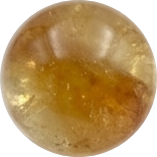
| Citrine | Usually heated amethystOrange to reddish brown, often darker at the base of crystals. Natural citrine is pale yellow and rare. |
| Carnelian | Heated agate, sometimes dyedVery even orange; dye sometimes gathers around the drill hole. |
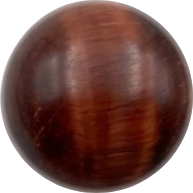
| Bull's Eye | Tiger's eye heated (or dyed) to turn it redThe same silky sheen as tiger's eye, in reddish brown. |
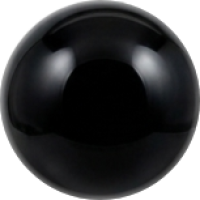
| Black Onyx | Chalcedony dyed black, a very old practicePerfectly even black. This is standard for onyx beads. |
| Black Agate | Agate dyed blackDeep, even black with no visible banding. |
| Bright blue, pink or purple agates | Dyed agateColour too vivid for nature, stronger in bands and cracks. |
| Howlite | Often dyed (turquoise, red, green…)Natural howlite is white veined with grey. When dyed, colour settles in the veins. |
| Turquoise | Resin-stabilised, reconstituted, or imitated with dyed howlite or magnesiteVery low price, even blue, regular vein pattern: ask the seller. |
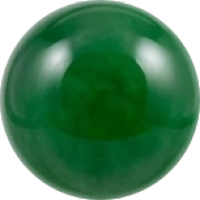
| Green Dyed Quartz (Malaysia Jade) | Quartz or chalcedony dyed green, sold as « Malaysia jade »Bright, translucent, very even green; a low price for « jade ». |
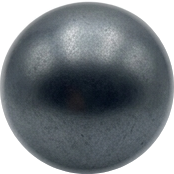
| Matte Hematite | Often « hematine », a reconstituted or synthetic materialAttracted by a magnet (natural hematite barely is); perfectly identical beads. |
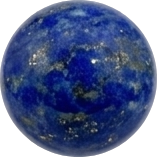
| Lapis Lazuli | Sometimes dyed or reconstitutedFlat blue with no white calcite or golden pyrite; dye on a moistened cotton pad. |
| Lava Stone | Basalt often dyed blackNormal and harmless; natural colour ranges from grey to brown. |
| « Opalite », « sea opal » | Man-made glassBluish glow on a milky background, small bubbles visible under a loupe. |
| « Goldstone », glittery « sunstone » | Glass containing copper flakesVery bright, even, tightly packed glitter. True sunstone is a feldspar with softer flashes. |
Learn more
Why are stones treated?
For several reasons, often combined: to get a stronger or more even colour, to make a stone that is too pale or too porous usable, to consolidate a fragile material, or simply to produce large quantities of identical beads at an affordable price.
None of this is new: carnelian in ancient India was already heated to deepen its orange, and black onyx has been dyed since Roman times. So the question isn't « treated or not? » but « is it clearly stated? ».
The five main families of treatment
Heating changes colour through temperature: this applies to most commercial citrine, much carnelian, and tiger's eye turned red.
Dyeing adds colour to a porous stone: agates, howlite, onyx, quartz sold as « jade ». Stabilisation impregnates a fragile stone with clear resin to harden it: very common for turquoise.
Reconstitution binds stone powder with a resin and moulds it into blocks. Finally, synthesis and imitation produce a different material, glass or ceramic, that looks like the stone: opalite, goldstone, hematine.
What French law says
French decree no. 2002-65 of 14 January 2002 governs the trade in gemstones. In short, a stone treated by dyeing, irradiation, laser or any other laboratory process must be disclosed, with the word « treated » or the name of the treatment.
Some so-called traditional practices are exempt, notably heating without residue, impregnation with a colourless liquid, and bleaching. That's why heated citrine can be sold simply as « citrine ». This summary is not legal advice; the full text is what counts.
Five checks to make up your mind
Price first: turquoise or lapis lazuli at a few cents a bead cannot be natural and of good quality. Then evenness: nature produces nuances, inclusions and variations from bead to bead.
Look at the drill hole and small cracks, where dye often gathers. A magnet reveals hematine. And a jeweller's loupe, costing a few euros, shows the bubbles typical of glass.
You'll often read that a cotton pad with acetone reveals dye. Sometimes it does, but the test can damage a stabilised stone or remove its polish: only try it on a bead you don't value, or not at all. The simplest option is to ask the seller.
How we do things
At Loch Ness, when we know a stone is dyed or treated, its name should say so. That's why the stone once called « imperial jade » in our catalogue is now called « green dyed quartz (Malaysia jade) ».
The traditional associations of each stone are presented for what they are: traditions, not promises. This guide will grow as our checks continue.
Frequently asked questions
Is a heated stone a fake?
No. Citrine made by heating amethyst is still natural quartz: only its colour has changed. It is an old practice, and the colour is stable over time.
Can a dyed stone lose its colour?
It's rare, but dye can fade in sunlight or wear with prolonged contact with water, perfume or sweat. Taking your bracelet off for the shower and the pool limits the risk.
Does a dyed stone keep its traditional associations?
Crystal traditions disagree on this, and they belong to belief rather than science. What matters to us is that you know which material you're wearing, so you can choose with full information.
How can I tell if turquoise is natural?
Without a lab it's difficult. Price, an overly regular look and a vein pattern that repeats identically are clues. Natural, untreated turquoise is rare and expensive; most turquoise beads are stabilised, reconstituted or imitations.
Stones mentioned in this guide




Read next
All our guidesDesign your bracelet
Pick your beads one by one, see the result live and order your bracelet.
What about your life path?
Calculate your life path number and discover the stones of your life path bracelet.