
Turquoise: meaning, properties and bracelet ideas
Turquoise is traditionally associated with protection, communication and comfort. In lithotherapy, it is linked to the Throat chakra and to the water element. Its vibration is considered balanced, which shapes how it combines with other stones.
From the workshop
Turquoise takes me back to Greece, where the warmest light is blue. It sounds absurd, put like that. But this blue-green has something sunny about it. I find it in every bead.
It's a stone that asks for a little consideration. It's porous: water, perfume, creams and long hours in the sun can dull its colour. Put your bracelet on last, after your perfume, and take it off before showering. A soft, dry cloth is all it needs.
Turquoise is traditionally associated with protection and communication.
A warm blue.
It doesn't exist.
Except over there.
— Camille G., jewelry maker from 2013 to 2023, founder of Loch Ness
Turquoise meaning and properties
In a bracelet, its dominant quality is protective and its polarity is receptive (yin).
For which moods?
In your life path
This stone is one of the stones suggested for these karmic numerology numbers.
Where does it come from?
In the sky: moon and zodiac
Good to know
Porous (5 to 6), often stabilised. Creams, sweat and water can change its shade. Dry cloth.
Caring for your bracelet: the stone-by-stone guide →
Resin-stabilised, reconstituted, or imitated with dyed howlite or magnesite. Very low price, even blue, regular vein pattern: ask the seller.
Natural, dyed or heated? The guide to telling them apart →
Howlite dyed blue is the most common turquoise imitation. A very bright, even blue, regular grey veins and a very low price point to howlite.
Stones that look alike: how to tell them apart →
This stone in our other guides: Mineralogy and lithotherapy: the line · Mohs scale: how hard are your stones? · Mineralogy explained
The phosphate family
Apatite and turquoise are phosphates; copper gives turquoise its blue-green.
A small ritual
- In the morning, hold Turquoise and set one clear intention for the day.
- Picture a bubble around you that lets the good in and keeps the rest at a distance.
- Wear it, especially in crowded places.
Best stones to pair with Turquoise
Calculated by our compatibility engine from chakras, elements, vibration and properties.
- Amazonite Strong harmony · 89/100
Neighbouring chakras (Throat and Heart), same element (water), same vibration level. - Malachite Strong harmony · 89/100
Neighbouring chakras (Throat and Heart), water and earth elements, same vibration level. - Ocean Jasper Strong harmony · 89/100
Neighbouring chakras (Throat and Heart), same element (water), same vibration level. - Rose Quartz Strong harmony · 89/100
Neighbouring chakras (Throat and Heart), same element (water), same vibration level. - Aquamarine Strong harmony · 87/100
Same chakra (Throat), same element (water), close vibrations. - Blue Apatite Strong harmony · 87/100
Same chakra (Throat), same element (water), close vibrations.
Bracelets with Turquoise
Turquoise appears in 6 published bracelets, with an average lithotherapy score of 85/100.
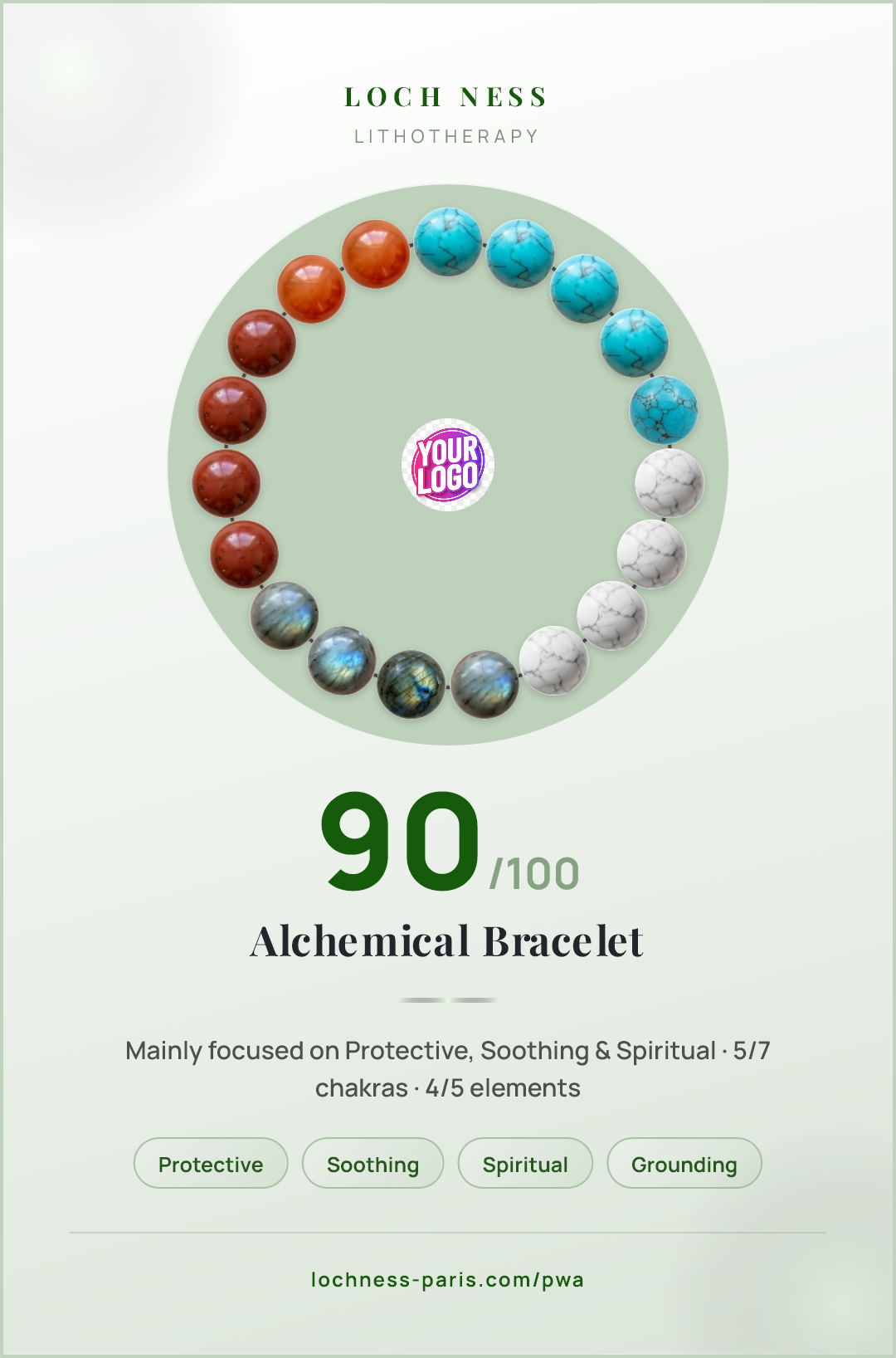 Turquoise and Howlite Bracelet: Meaning, Chakras & Properties90/100
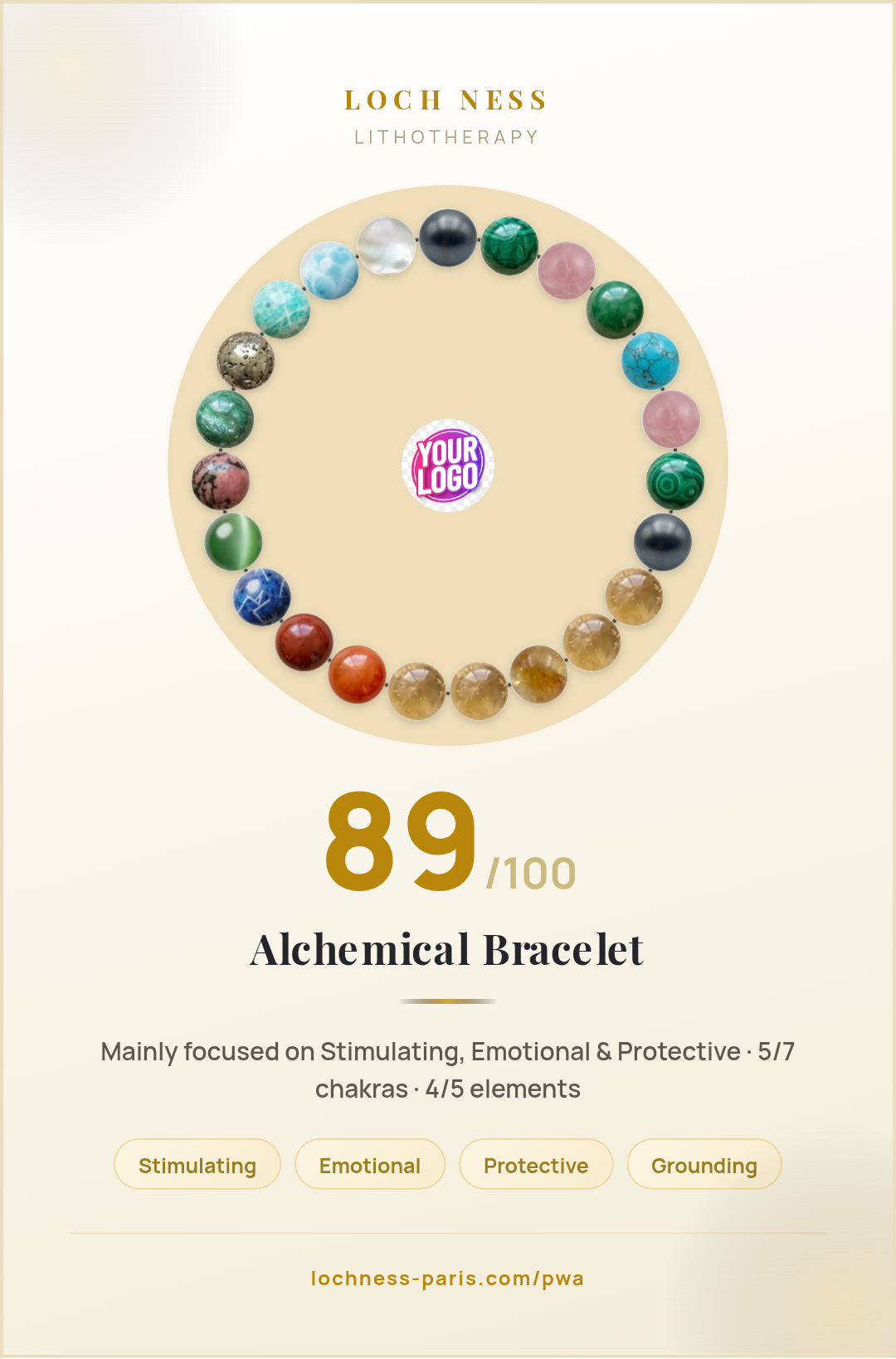 Citrine & Matte Hematite Bracelet: Meaning, Chakras & Properties89/100
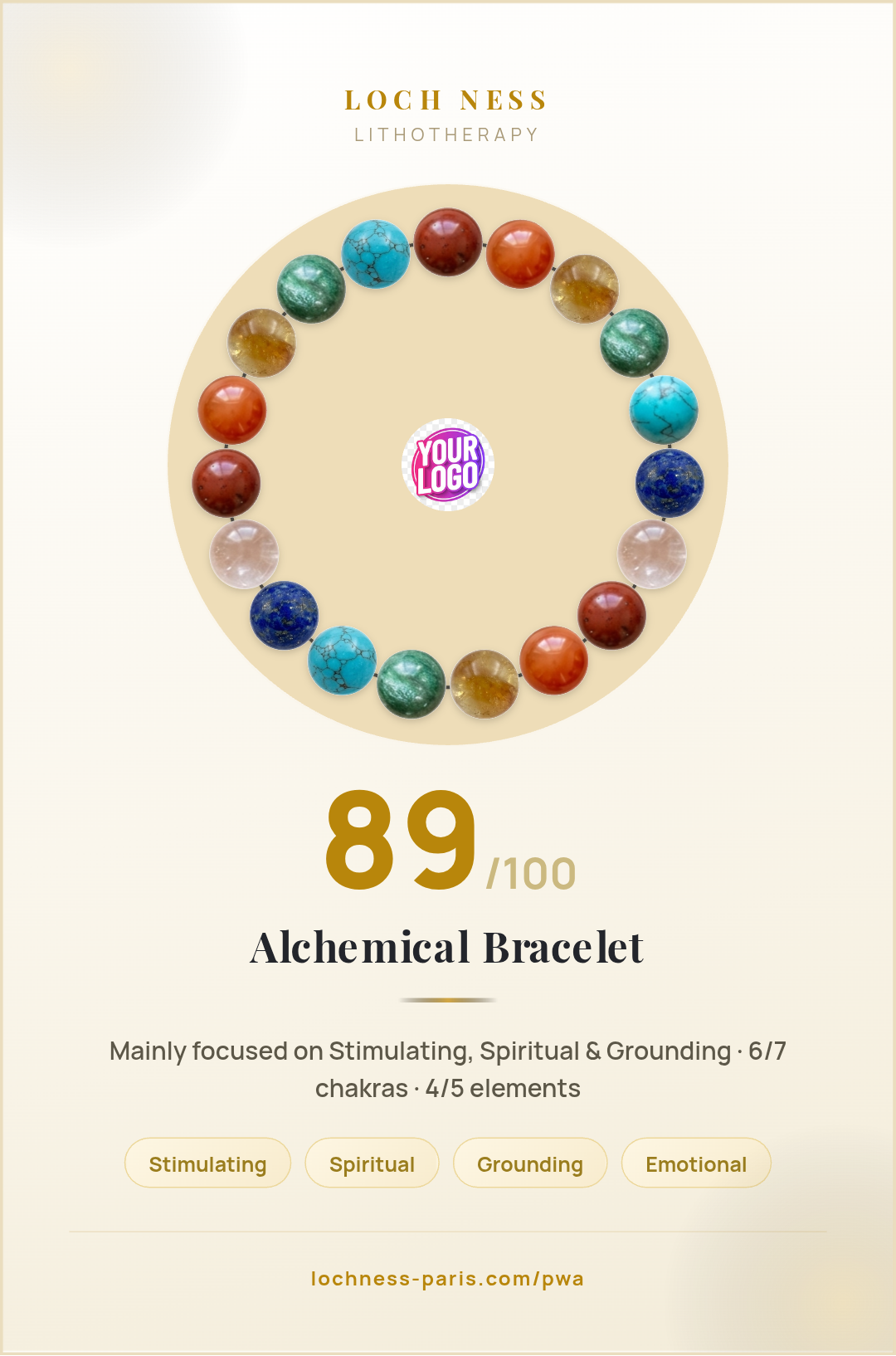 Red Jasper & Carnelian Bracelet: Meaning, Chakras & Properties89/100
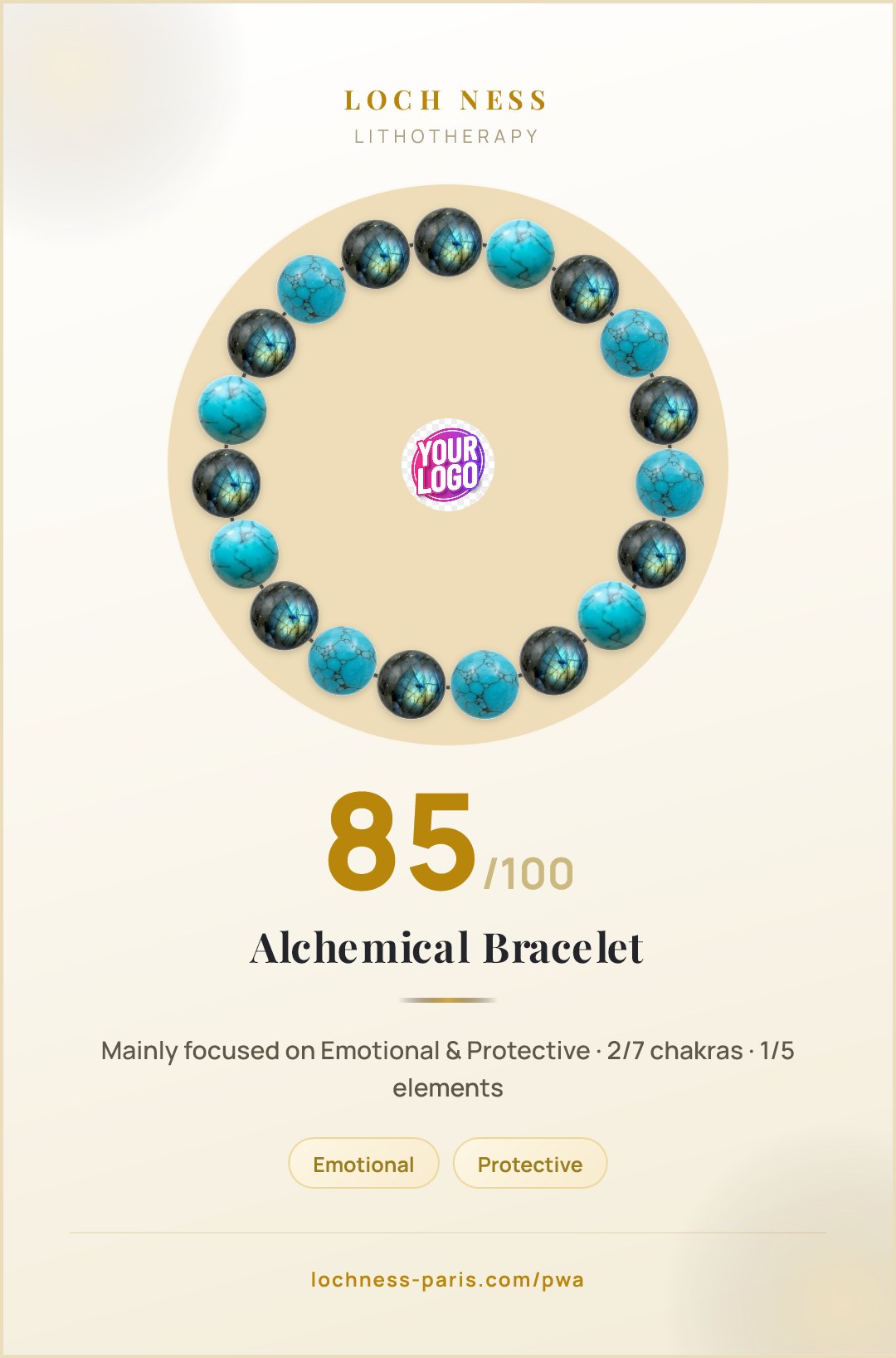 Serpentine and Turquoise Bracelet: Meaning & Crystal Properties85/100
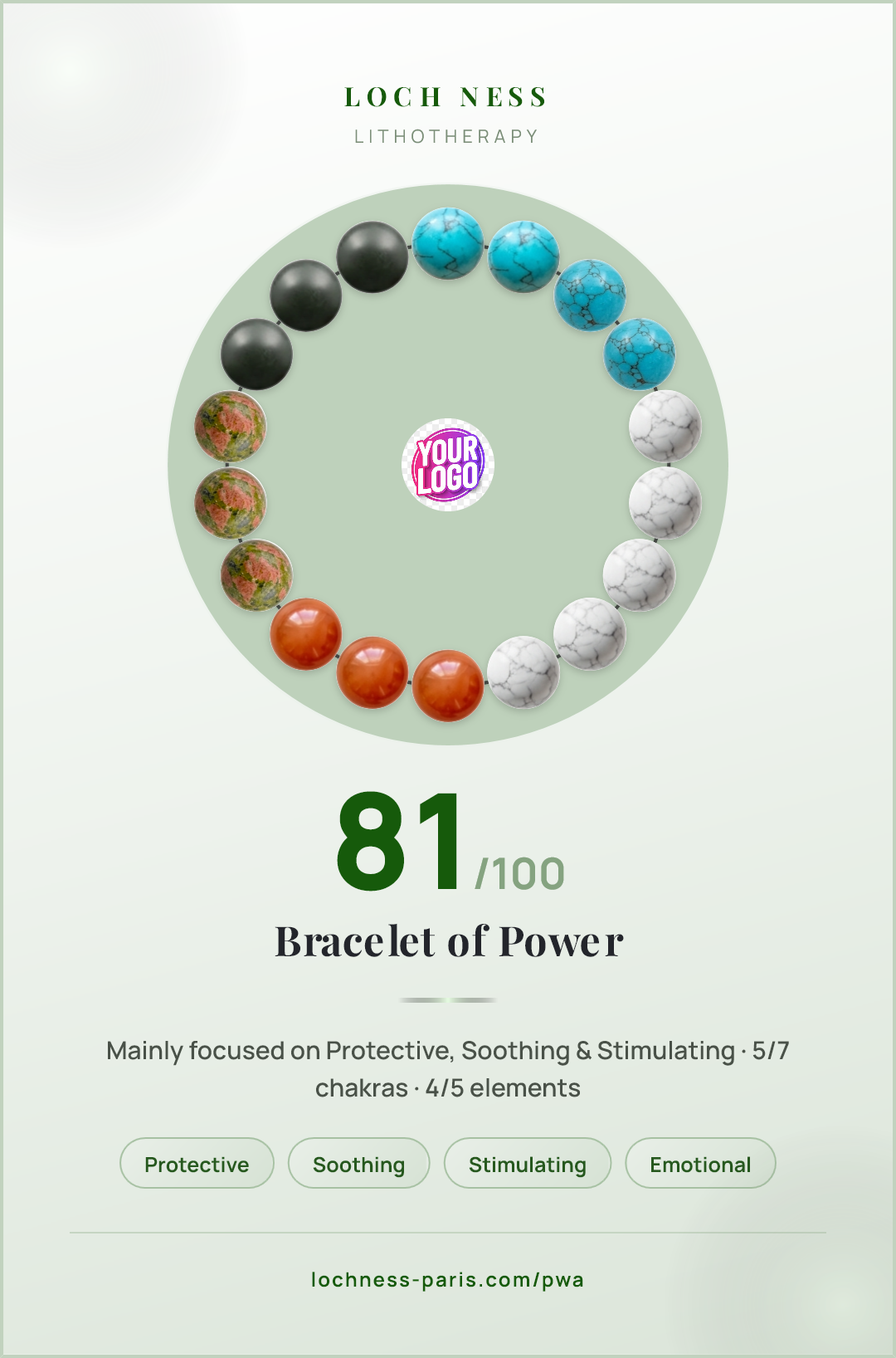 Howlite and Turquoise Bracelet: Meaning & Crystal Properties81/100
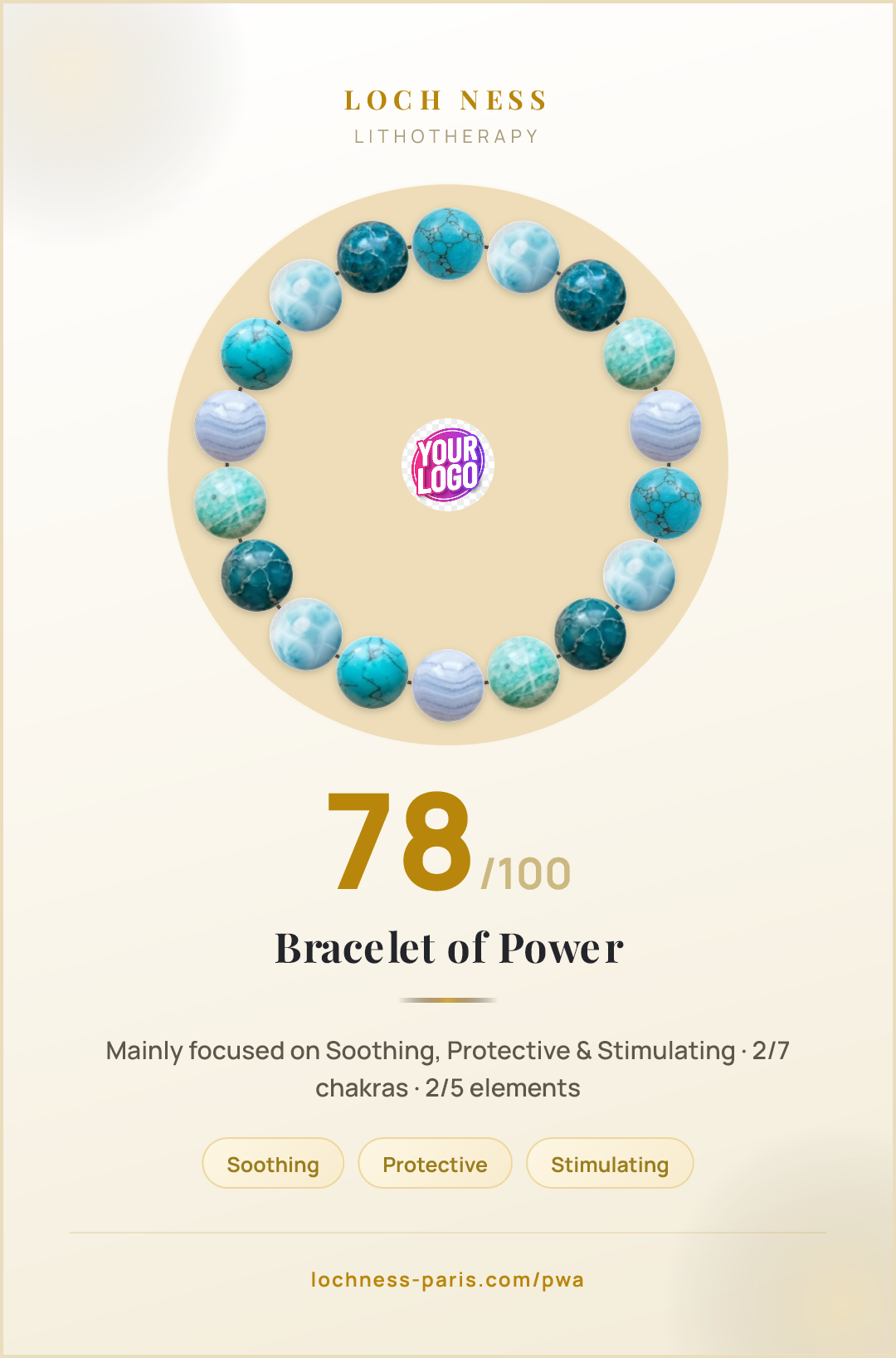 Turquoise & Larimar Bracelet: Meaning & Crystal Properties78/100
How to care for Turquoise
- 💧 Water: Turquoise does not tolerate water. Keep it dry and clean it with a soft dry cloth.
- 🤲 Skin contact: Turquoise is not flagged for prolonged-contact precautions.
- 🪨 Hardness: at Mohs 5.5, Turquoise can scratch: store your bracelet on its own.
Turquoise mineral data sheet
| Family | Copper-aluminum phosphate |
|---|---|
| Composition | CuAl₆(PO₄)₄(OH)₈·4H₂O |
| Crystal system | Triclinic |
| Hardness (Mohs) | 5 – 6 |
| Density | 2,6 – 2,8 |
| Luster | Waxy to dull |
| Color | Blue-green |
| Origins | Iran, United States, China |
Frequently asked questions
What is Turquoise associated with?
Turquoise is traditionally associated with protection, communication, comfort and luck. Its dominant quality is considered protective.
Which chakra is Turquoise linked to?
Turquoise is linked to the Throat chakra, and to the water element.
Can Turquoise get wet?
No. Turquoise does not tolerate water: keep it dry and clean it with a soft dry cloth.
Which stones go well with Turquoise?
According to our compatibility analysis (chakras, elements, vibration and properties), Turquoise pairs best with Amazonite, Malachite and Ocean Jasper.
The properties described here come from lithotherapy traditions. They are not medical claims and do not replace professional advice.