Our guides
Mineralogy and lithotherapy: where is the line?
Charging stones in the sun, cleansing them in salt water, feeling their energy… These habits come from lithotherapy. Some are harmless, others damage the stones, a few can be dangerous. Here is what mineral science says about them, without mockery or naivety.
Loch Ness editorial team · Updated on
- Mineralogy describes what a stone is and can be checked by measurement. Lithotherapy records what stones are traditionally associated with.
- No study has shown any effect of stones beyond suggestion: lithotherapy never replaces medical advice.
- Some common rituals damage stones: sunlight fades amethyst and kunzite, water tarnishes pyrite, porous stones absorb whatever they are soaked in.
- Never drink water in which a stone containing copper (malachite) or sulfur (pyrite) has soaked.
Common beliefs and what science says
| What you often hear | What science measures · Our advice |
|---|---|
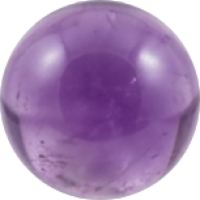
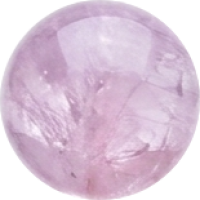
| “Charge your stones in the sun”Amethyst · Kunzite | Several stones fade in light. GIA notes that amethyst's colour can fade with prolonged exposure to intense light; the International Gem Society notes that sunlight fades kunzite's lilac.If you love this ritual, choose moonlight, which does not affect colour, or a short exposure for stable stones. |
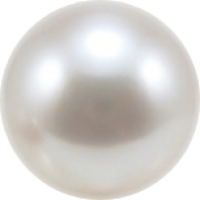
| “Cleanse them in water or salt water”Turquoise · Malachite · Pyrite · Freshwater Pearl · Akoya Pearl · Mother of Pearl | Turquoise is porous: soaps and products penetrate it and change its colour. Malachite dislikes acids and hot water. Pyrite oxidises with humidity. Pearls and mother-of-pearl should not be soaked.A soft, barely damp cloth, then a dry one. For a ritual, choose a dry gesture. Stone-by-stone details are in our care guide. |
| “Elixirs: a stone soaking in water you drink”Malachite · Pyrite | The International Gem Society rates malachite (copper) and pyrite as high-risk stones and advises against making potions to swallow with them. Malachite dust is toxic.Never drink water a stone has soaked in, whatever the stone. |
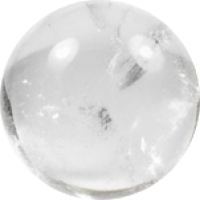
| “Stones give off energy, a vibration”Clear Quartz · Smoky Quartz · Citrine | Quartz is piezoelectric: it produces a small electric charge when squeezed, an effect discovered in 1880 by Pierre and Jacques Curie and used in watches. This charge requires mechanical stress and a circuit. No measurement has shown that a worn stone transmits energy to the body.The quartz that keeps your watch on time is real. The “energy” of a bracelet belongs to tradition. |
| “Each colour matches a chakra”Malachite · Rhodochrosite · Amethyst | A stone's colour comes from its chemistry and structure: copper in malachite, manganese in rhodochrosite, iron and natural radiation in amethyst. The rainbow colours of the chakras are a 20th-century Western construction; ancient Indian texts gave different ones.A symbolic correspondence, to be taken as such. |
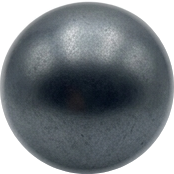
| “Magnetic hematite”Matte Hematite | Natural hematite is barely magnetic. “Magnetic hematite” beads are usually hematine, a synthetic material (a ferrite) that imitates its shine.If a bracelet clings firmly to a fridge magnet, it is very probably not natural hematite. |
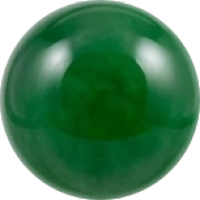
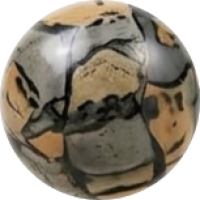
| “A rare and powerful stone”Green Dyed Quartz (Malaysia Jade) · Jasper Picasso | Trade names are often misleading. “Malaysia jade” is dyed quartz, “Picasso jasper” is a marble. Claimed rarity can only be checked with the exact mineral name.Always ask for the stone's mineral name. See our guides on treatments and on stones people mix up. |
| “You can feel the stone when you hold it” | In two studies led by psychologist Chris French (1999 and 2001, 80 volunteers each), participants felt as many sensations with a fake glass crystal as with real quartz. The sensations were linked to suggestion and to each person's beliefs.The feeling is real: it comes from you and the moment, not from a measurable energy. |
Learn more
Two languages for the same stone
Mineralogy answers the question “what is it?”. It describes a stone's composition, structure, hardness and origin. Its answers can be checked: two laboratories measuring the same stone find the same thing.
Lithotherapy answers another question: “what does this stone stand for?”. It records the qualities different cultures have associated with stones. It is a tradition, not a science, and it does not need to pass itself off as a science to be meaningful to those who love it.
Confusion begins when one borrows the other's vocabulary: “vibrational frequency”, “energy field”, “quantum”. These words come from physics, but they do not mean that there.
What science can settle, and what it cannot
Science can say what a stone is made of, whether it is dyed, whether it fades in the sun, whether it is toxic, whether it scratches easily. It can also test a precise claim: as soon as a physical effect on the body is announced, it can be measured.
It cannot settle the value of a symbol, a memory or an intention. Giving a birthstone, wearing a stone that reminds you of someone, choosing a colour that calms you: all this makes sense without needing proof. That is where the line runs: claimed effects on the body belong to measurement, the meaning you give a stone belongs to you.
What the studies say
Research on the effects of stones is rare. The most cited is by British psychologist Chris French. In 1999 and again in 2001, he asked volunteers to hold a crystal while relaxing, without telling them whether it was real quartz or a glass imitation. The sensations reported (warmth, tingling, relaxation) were the same in both cases. They depended mainly on suggestion and on each person's beliefs.
An honest caveat: these studies were presented at psychology conferences, not published in peer-reviewed journals. But no serious study has shown the opposite, and lithotherapy is today classed among practices without scientific evidence.
Where do the modern correspondences come from?
Many lists of stone “properties” are recent. The chakras are a telling example. In ancient Indian texts, the number of chakras varied between schools and their colours did not follow the rainbow. The red, orange, yellow, green, blue, indigo, violet series took shape in the West between the 1920s and the 1950s, among colour therapists, and was joined in 1977 to a list of psychological qualities.
Matching a stone to each colour is a further, even more recent step. Knowing this takes nothing away from the pleasure of the symbol. It simply helps to read it for what it is.
Enjoying tradition without harming your stones or your health
A few simple rules are enough. No long soaking for soft or porous stones (turquoise, malachite, pearls, howlite), no water at all for pyrite. No prolonged sun for amethyst and kunzite. No elixir to drink, ever. Dry gestures, such as moonlight, pose no problem.
Above all, a stone never replaces medical advice or treatment. If a tradition brings you comfort, all the better: keep it alongside care, never instead of it.
Our position at Loch Ness
On each of our stone pages, the two views are kept apart. The mineral profile gives verifiable facts: composition, hardness, origin, care. The tradition section says what the stone is traditionally associated with, without any promise of effect.
We believe you can love stones for their beauty, their geological history and what they symbolise, as long as you know which register each belongs to. That is also why our guides cite their sources.
Frequently asked questions
Is lithotherapy scientifically recognised?
No. No study has shown any effect of stones beyond suggestion. It can accompany a moment of relaxation or a personal ritual, but never replaces medical advice.
Can I charge my stones in the sun?
Not all of them. Amethyst and kunzite can fade under intense, prolonged light. Moonlight has no effect on colour.
Can I put my stones in water?
A quick rinse does not bother quartz and agates. Avoid water, however, for pyrite, porous stones such as turquoise and howlite, malachite, pearls and mother-of-pearl. And never drink water a stone has soaked in.
Why present traditional associations if they are not proven?
Because they are part of the history of stones and of the pleasure of wearing them. We present them clearly as tradition, separate from mineral facts, so that everyone can choose knowingly.
Stones mentioned in this guide





Sources and method
This guide was written by the Loch Ness editorial team from sources in gemmology (GIA, International Gem Society), collection conservation, physics and the history of ideas, listed below. It does not judge people who practise lithotherapy: it separates what can be measured from what belongs to tradition. If you spot a mistake, write to us and we will correct it.
- Chris French – « Romance in the stones? The power of crystals vs the power of suggestion », The Skeptic, 2021 (études de 1999 et 2001)
- Wikipedia – Lithothérapie (article anglais : état des preuves scientifiques)
- International Gem Society – Gemstone toxicity table (malachite, pyrite, préparations à avaler)
- International Gem Society – Gemstone care guide (kunzite, turquoise, malachite, perles)
- GIA – Amethyst care and cleaning (décoloration à la lumière intense)
- GIA – Tips on caring for jewelry (pierres poreuses, produits chimiques)
- NatSCA – Project Airless (oxydation de la pyrite à l'humidité)
- Wikipedia – Piezoelectricity (découverte par les frères Curie, montres à quartz)
- Wikipedia – Hematine (« hématite magnétique » synthétique)
- Quest (Theosophical Society in America) – The Rainbow Body: how the Western chakra system came to be
Read next
All our guidesDesign your bracelet
Pick your beads one by one, see the result live and order your bracelet.
What about your life path?
Calculate your life path number and discover the stones of your life path bracelet.