Our guides
Mineralogy explained: the main fields of mineral science
Why does quartz grow in six-sided prisms, why is malachite green, why does labradorite flash in the light? Each question belongs to a field of mineralogy. Here is a map of this science, illustrated with stones you already know.
Loch Ness editorial team · Updated on
- A mineral is an element or chemical compound, normally crystalline, formed by geological processes.
- The International Mineralogical Association (IMA) recognises about 6,200 mineral species, and around a hundred new ones are described every year.
- Mineralogy divides into main fields: structure (crystallography), composition (chemistry), physical and optical properties, classification, formation, gemmology and uses.
- Several jewellery “stones” are not minerals in the strict sense: obsidian is a glass, pearl is organic, lapis lazuli is a rock.
The main fields of mineralogy, with our stones as examples
| Field | What it studies · Example in our bracelets |
|---|---|
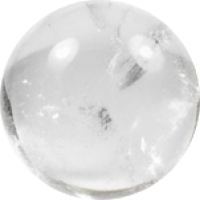
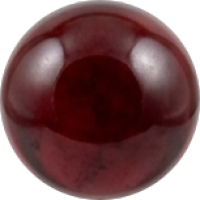
| CrystallographyClear Quartz · Garnet · Fluorite · Pyrite | The ordered arrangement of atoms and the shape of crystals. Minerals fall into seven crystal systems.Quartz crystallises in the trigonal system, hence its six-sided prisms. Garnet, fluorite and pyrite are cubic: pyrite sometimes forms almost perfect cubes. |
| Mineral chemistryMalachite · Turquoise · Rhodochrosite · Pyrite | What minerals are made of, and which elements give them their colour.Copper colours malachite (a carbonate) and turquoise (a phosphate). Manganese gives rhodochrosite its pink. Pyrite is an iron sulfide. |
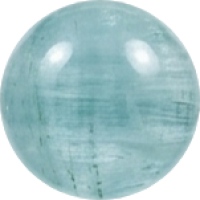
| Physical mineralogyHowlite · Fluorite · Aquamarine | Hardness, density, cleavage, fracture, toughness: how a mineral reacts to knocks and scratches.Howlite scratches easily, aquamarine much less. Fluorite cleaves into octahedra. Our Mohs scale guide gives the hardness of every stone. |
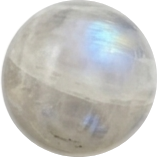
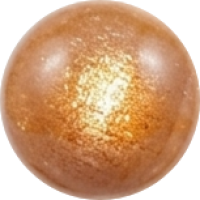
| Optical mineralogyLabradorite · Tiger's Eye · Moonstone · Sunstone | How light passes through or reflects off a mineral: refractive index, lustre, light effects.The labradorescence of labradorite, the cat's-eye effect of tiger's eye, the bluish glow of moonstone, the glitter of sunstone. |
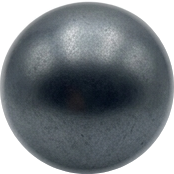
| Classification (systematic mineralogy)Matte Hematite · Celestite · Blue Apatite · Tourmaline | Sorting species into chemical classes: native elements, sulfides, oxides, halides, carbonates, sulfates, phosphates, silicates…Hematite is an oxide, celestite a sulfate, apatite a phosphate, tourmaline a silicate. |
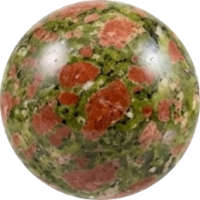
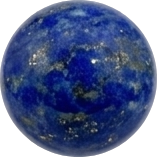
| Genetic mineralogy and petrologyObsidian · Lava Stone · Unakite · Lapis Lazuli | How and where minerals form: magma, metamorphism, circulating water. Petrology studies rocks, which are assemblages of minerals.Obsidian and lava stone are volcanic, unakite is an altered granite, lapis lazuli is born from metamorphism. See our guide on where stones come from. |
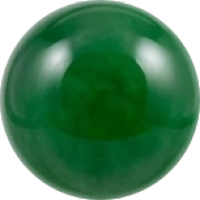
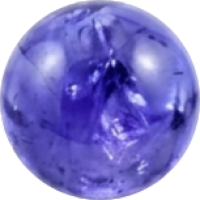
| GemmologyGreen Dyed Quartz (Malaysia Jade) · Tanzanite | The branch applied to jewellery stones: identification, detection of treatments and imitations, sometimes origin.“Malaysia jade” is actually dyed quartz; tanzanite is usually heated. See our guides on treatments and on stones people mix up. |
| Applied mineralogyLapis Lazuli · Clear Quartz · Matte Hematite · Fluorite · Blue Apatite | The uses of minerals in industry, technology and the arts.Lapis lazuli gave the ultramarine blue pigment, quartz keeps watches on time, hematite is an iron ore, fluorite is a flux in metalworking, apatite is a source of phosphate for fertilisers. |
Learn more
What is a mineral (and what isn't)?
For the International Mineralogical Association (IMA), a mineral is an element or chemical compound, normally crystalline, formed by geological processes. Three ideas matter: a defined chemical composition, an ordered atomic structure, and a natural, geological origin.
This definition rules out several materials common in jewellery. Obsidian is a volcanic glass: its atoms are not ordered. Opal is silica without a true crystal structure: it is called a mineraloid. Pearls and mother-of-pearl are made by a mollusc: they are organic. Murano glass is man-made.
Finally, many stones are rocks, that is, mixtures of minerals. Lapis lazuli combines lazurite, calcite and pyrite. Unakite mixes epidote, pink feldspar and quartz. “Picasso jasper” is a marble. This is not a flaw: the mix is what draws their patterns.
How mineralogists identify a stone
The first steps are simple: look at colour, lustre and crystal shape, test hardness, measure density. Then come optical instruments such as the refractometer (which measures how light bends), the polariscope and the loupe or microscope, which reveal inclusions and treatments.
Gemmological laboratories such as GIA's add spectroscopy: UV-visible to understand what causes the colour, infrared to spot certain treatments, Raman to identify a stone or its inclusions with a laser. Chemical analysis by X-ray fluorescence or laser ablation measures trace elements. In research, X-ray diffraction reveals the crystal structure itself.
The same colour can hide very different stones. That is why a name is never enough: you need measurements.
How minerals are classified
Minerals are sorted by chemistry, more precisely by the group of atoms that structures their formula. Silicates, built around silicon and oxygen, dominate: according to Encyclopædia Britannica, they make up about 95% of Earth's crust and upper mantle. Quartz, feldspars (labradorite, moonstone, amazonite), garnets, tourmalines and beryls (aquamarine, morganite) all belong to them.
The other classes are rarer but well represented in our bracelets: carbonates (malachite, rhodochrosite), sulfates (celestite, angelite), phosphates (apatite, turquoise), oxides (hematite), halides (fluorite), sulfides (pyrite). Every new species must be approved by an IMA commission before it joins the official list.
Minerals and us
Mineralogy is not just a collector's science. The ultramarine blue of Renaissance painters came from ground lapis lazuli, before it was made in the laboratory in the 19th century. Quartz has a special property, piezoelectricity: it vibrates at a very stable frequency when a current is applied. The first quartz wristwatch sold to the public, the Seiko Astron, went on sale on 25 December 1969.
Hematite is one of the main iron ores, fluorite gave its name to fluorescence and is used as a flux in steelmaking, apatite supplies the phosphate in fertilisers. Many of the objects around us begin in a mine.
Mineralogy and lithotherapy: two different views
Mineralogy describes what a stone is: its composition, structure, hardness and geological history. It can be checked by measurement. Lithotherapy belongs to tradition: it records the qualities that different cultures have associated with stones over time. These associations are not scientifically proven and never replace medical advice.
On our stone pages the two views are kept apart: the mineral profile gives verifiable facts, the tradition section says what the stone is traditionally associated with. Knowing both lets you choose a stone knowing what you wear. We go through this line, belief by belief, in our guide Mineralogy and lithotherapy: where is the line?
Frequently asked questions
What is the difference between a mineral and a rock?
A mineral is a defined chemical species with an ordered structure (quartz, fluorite). A rock is an assemblage of several minerals (granite, marble, lapis lazuli). Many jewellery stones are rocks.
How many minerals are there?
About 6,200 species are recognised by the International Mineralogical Association, and the number grows by around a hundred a year. Only a few dozen are commonly used in jewellery.
What is the difference between mineralogy and gemmology?
Mineralogy studies all minerals. Gemmology is an applied branch focused on jewellery stones: identifying them, detecting treatments and imitations, sometimes determining their origin.
How do you become a mineralogist or a gemmologist?
Mineralogy is learned through geology degrees at university, often up to a master's or PhD. Gemmology is learned through specialised courses, such as those of GIA, Gem-A in the United Kingdom or the university gemmology diploma in Nantes, France.
Stones mentioned in this guide






Sources and method
This guide was written by the Loch Ness editorial team from reference sources in mineralogy and gemmology (International Mineralogical Association, Mineralogical Society of America, GIA, Encyclopædia Britannica), listed below. We are not mineralogists: we cite our sources so you can check everything. If you spot a mistake, write to us and we will correct it.
- IMA – « Expanding mineral vocabulary », Elements, 2025 (définition d'un minéral, nombre d'espèces reconnues)
- IMA – Commission on New Minerals, Nomenclature and Classification (nouvelles espèces)
- Mineralogical Society of America – présentation de la discipline
- Webmineral – Définitions d'un minéral (Nickel 1995 et autres)
- Encyclopædia Britannica – Silicate mineral (part des silicates dans la croûte)
- GIA – How GIA analyzes colored stones (méthodes d'identification)
- IEEE / ETHW – Electronic Quartz Wristwatch, 1969
- Wikipedia – Lapis lazuli (pigment outremer)
Read next
All our guidesDesign your bracelet
Pick your beads one by one, see the result live and order your bracelet.
What about your life path?
Calculate your life path number and discover the stones of your life path bracelet.