Our guides
Stones that look alike: how to tell them apart
Some stones look so similar they fool even a trained eye, especially as small polished beads. Here are the most frequent mix-ups, and the simple clues that tell them apart.
Loch Ness editorial team · Updated
- Hold the stone up to the light: does light pass through (agate, carnelian) or not (jasper)?
- Look for details: glitter, veins, moving flashes, inclusions.
- Compare the weight and how cool it feels in your hand.
- When in doubt, ask the seller: a good seller knows their stones.
The most frequent mix-ups
| Stones | What sets them apart · The giveaway |
|---|---|
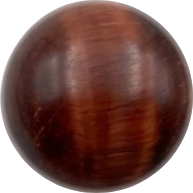
| Tiger's eye or bull's eye?Tiger's Eye · Bull's Eye | Almost the same stone: bull's eye is tiger's eye heated or dyed red.The same silky sheen that moves as you turn the bead; only the colour changes, from gold to reddish brown. |
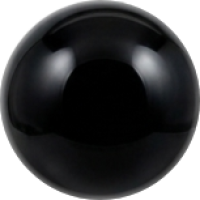
| Onyx, obsidian or black agate?Black Onyx · Obsidian · Black Agate | Onyx and black agate are dyed chalcedony; obsidian is volcanic glass.Obsidian has a very bright, glassy lustre and sometimes golden or silver sheen; onyx has a softer, waxy lustre. |
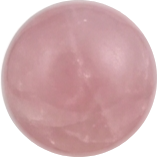
| Rose quartz or rhodochrosite?Rose Quartz · Rhodochrosite | Rose quartz is hard (7) and an even milky pink; rhodochrosite is soft (3.5 to 4).Rhodochrosite shows pink and white bands, in zigzags or circles; rose quartz has none. |
| Dyed howlite or turquoise?Howlite · Turquoise | Howlite dyed blue is the most common turquoise imitation.A very bright, even blue, regular grey veins and a very low price point to howlite. |
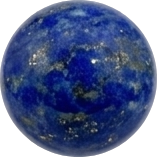
| Sodalite or lapis lazuli?Sodalite · Lapis Lazuli | Two royal-blue stones, often mixed up in trays.Lapis lazuli often carries golden specks of pyrite; sodalite has white veins and a more violet blue, without golden flecks. |
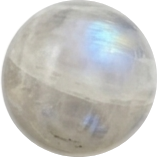
| Labradorite or moonstone?Labradorite · Moonstone | Both show moving flashes, but on very different backgrounds.Labradorite is grey with a dark base and blue, green or gold flashes; moonstone is white or peach, translucent, with a milky bluish glow. |
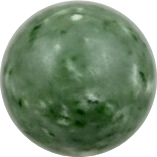
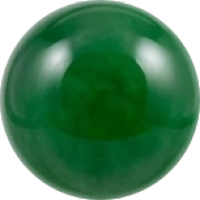
| Aventurine, jade or « Malaysia jade »?Aventurine · Green Jade · Green Dyed Quartz (Malaysia Jade) | Three green stones: aventurine is glittery quartz, jade a fibrous rock, « Malaysia jade » dyed quartz.Aventurine sparkles with fine glitter; jade looks greasy and soft; « Malaysia jade » is bright, translucent and very even green. |
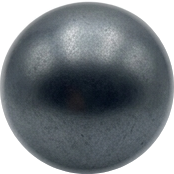
| Hematite or pyrite?Matte Hematite · Pyrite | Two heavy, metallic stones in different colours.Hematite is steel grey-black; pyrite is brassy yellow, « fool's gold ». |
| Carnelian or red jasper?Carnelian · Red Jasper | Two orange-red stones of the quartz family: carnelian is translucent, jasper opaque.Held up to the light, carnelian glows as light passes through; red jasper stays opaque. |
| Amazonite or larimar?Amazonite · Larimar | Two soft blue-greens; larimar is much rarer and more expensive.Amazonite often shows parallel white streaks; larimar has swirling patterns, like light on water. |
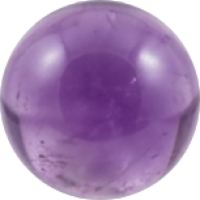
| Amethyst or purple fluorite?Amethyst · Fluorite | Purple fluorite resembles amethyst but is much softer (4 versus 7).Fluorite often shows purple bands alongside green or colourless ones; amethyst stays in the purples. |
Learn more
Why they're so easy to confuse
As polished beads a few millimetres across, stones lose much of what makes them recognisable: crystal shape, fracture, size. What remains is colour, lustre and pattern, and these clues look alike from one stone to another. Add treatments (dyeing, heating) that bring appearances even closer, and trade names that are sometimes misleading.
Three simple tests that don't harm the stone
First, the light test: hold the bead in front of a lamp or window. A translucent stone such as agate, carnelian or moonstone lets light through; jasper or howlite does not.
Then the loupe: a jeweller's loupe reveals aventurine's glitter, the pyrite specks in lapis lazuli, the bubbles in glass. Finally, your hand: stones feel cool and warm up slowly, whereas plastic or resin feels warm straight away.
What's best avoided
You'll sometimes read that scratching a stone tests its hardness. True in a lab, but on jewellery it leaves a permanent mark. Likewise, flame or acetone tests can damage a stabilised or dyed stone. For a valuable stone, a gemmologist is the only real certainty.
And when doubt remains?
Ask the seller: where does the stone come from, is it dyed, heated, stabilised? A clear answer is a good sign. Our guide “Natural, dyed or heated stones” covers the most common treatments and what French law says.
Frequently asked questions
How do I recognise real obsidian?
Obsidian is volcanic glass: it has a very bright lustre, a shell-shaped fracture and sometimes golden, silver or rainbow sheen. Industrial black glass looks similar, but it is often perfectly even with no inclusions at all.
Is sodalite fake lapis lazuli?
No, it's a stone in its own right, and in fact one of the minerals found in lapis lazuli. It's only misleading if it's sold under the name lapis.
Why do two beads of the same stone look different?
Because a natural stone varies across its deposit: colour, veins, transparency. That's rather a good sign: perfectly identical beads can point to dye or a reconstituted material.
Stones mentioned in this guide










Read next
All our guidesDesign your bracelet
Pick your beads one by one, see the result live and order your bracelet.
What about your life path?
Calculate your life path number and discover the stones of your life path bracelet.