
Reviewed by [Author Name, Title/Credential] · Last updated September 16, 2026 · 7 min read ·
Legal notice
Time yourself on this one: a bat and a ball cost $1.10 in total. The bat costs $1.00 more than the ball. How much does the ball cost?
If a number appeared in your head almost instantly, there’s a very good chance it was 10 cents — and a very good chance it’s wrong. The correct answer is 5 cents. Most people don’t get this wrong because they’re bad at math. They get it wrong because the incorrect answer arrives first, feels obviously right, and nothing makes them check it before moving on.
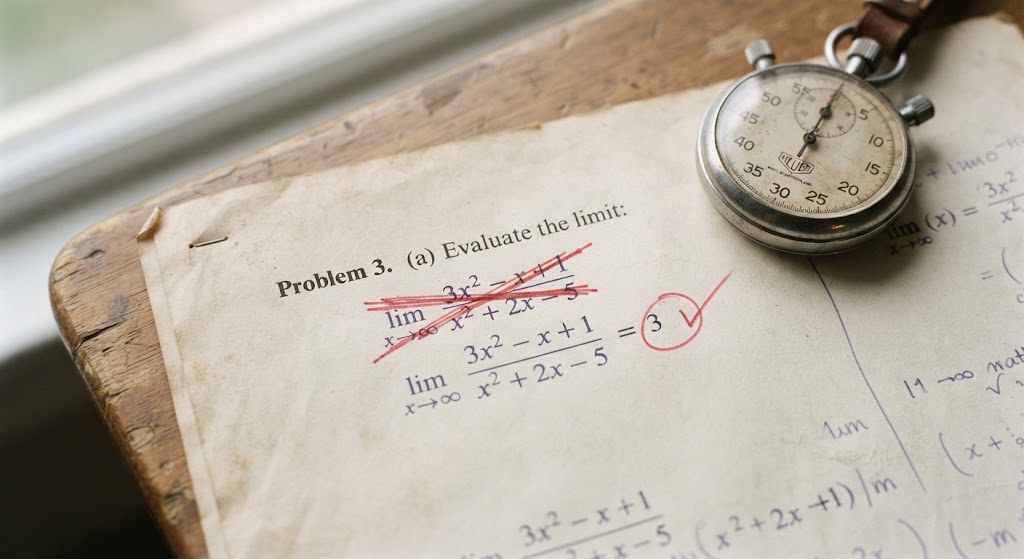
That gap — between the speed of an answer and the truth of it — is the entire premise of the Cognitive Reflection Test (CRT), a seven-question psychology instrument that’s become one of the most cited tools in behavioral science. It’s also why we built something most CRT quizzes online don’t bother with: a stopwatch on every single answer, built into Second Guess, our free implementation of the test.
Table of Contents
The test everyone copies, but nobody times
Search “cognitive reflection test” and you’ll find the same three Shane Frederick questions from 2005, reproduced on a dozen sites, usually as a static list with a scroll-down answer key. They tell you what you got wrong. They almost never tell you how fast you got it wrong — which turns out to be the more interesting number.
The CRT was introduced by Yale decision scientist Shane Frederick in a 2005 paper in the Journal of Economic Perspectives, as a short measure of “the ability or disposition to resist reporting the response that first comes to mind.” [1] In 2014, researchers Maggie Toplak, Richard West, and Keith Stanovich extended it with four additional verbal items, designed to catch the same tendency in people who are naturally more careful around numbers than around words. [2] Second Guess runs all seven questions from both instruments, and times every answer.
Why the clock matters more than the score
A raw score out of 7 flattens a lot of nuance. Two people can both score 4/7 with completely different profiles: one answered every question in under two seconds and got lucky on three of them; the other visibly slowed down on the questions with a trap, caught two of them, and still missed one anyway. The score treats them identically. A timer doesn’t.
This distinction matters because the CRT was never designed to measure how smart you are — it measures whether you consult a slower reasoning process before committing to an answer that already feels finished. Timing each question turns that invisible habit into a visible number. Second Guess reports three of them at the end: your average response time, your average time on questions you got right, and your average time on the ones you fell for.
What the seven questions are actually testing
Second Guess uses all seven items from the two published CRT instruments, not just the three everyone’s already seen:
- The bat and the ball — tests whether you check that the two prices actually satisfy both conditions in the problem, not just the total.
- The widgets and the machines — a parallel-processing trap disguised as a proportion problem.
- The lily pads — an exponential-growth question where the intuitive answer is off by nearly half.
- The race — a verbal item with no arithmetic at all, testing whether you track positions correctly under a linguistic trick.
- The sheep — a sentence that already contains its own answer, if you read it instead of doing the subtraction it seems to invite.
- Emily’s sisters — a naming pattern engineered to make you finish the sequence instead of reading the question.
- The hole — arguably the cleanest trap of the seven, because the “correct” calculation is a category error.
Three are numeric, four are verbal — deliberately, since the 2014 extension exists precisely to catch people who are cautious around numbers but just as reflexive with words. [2]
What the research actually says about response time
It would be tidy to say “correct answers always take longer” and leave it there, but the published evidence is more mixed than that, and worth stating honestly. Psychologist Daniel Kahneman’s dual-process framework — a fast, automatic “System 1” and a slower, effortful “System 2” that can override it — is the theoretical basis for expecting slower, correct answers to reflect System 2 catching what System 1 got wrong. [6]
Some studies find exactly that pattern. Others complicate it: a 2017 response-time study in PLOS ONE measured answer latency on the standard three-item CRT and found only a weak overall correlation between response time and accuracy, with no reliable timing difference between correct and incorrect answers on two of the three classic items. [4] In other words, a slow wrong answer and a slow right answer both happen — timing is a useful signal, not a guarantee.
There’s a second, separate reason to take any single CRT score with a grain of salt: prior exposure. A 2016 study found that participants who had already seen a CRT item before — the bat-and-ball problem especially — scored dramatically higher on it than first-time takers, to the point that the original three-item test may be partly measuring “have you seen this before” rather than reflective thinking. [5] It’s part of why the extended seven-item version, with four less-recognizable verbal items, is worth taking even if you already know the classic three.
A two-minute mirror, not a diagnosis
None of this makes Second Guess a measure of intelligence, and it isn’t trying to be. A low score doesn’t mean you’re not sharp; it means your first-instinct answers went unchecked on seven specific sentences, on one particular day, possibly while distracted, rushed, or just trusting your gut a little more than usual. A high score doesn’t make you smarter than someone who missed a question — it means you paused on these seven sentences. That’s the whole test, and it’s honest about being exactly that small.
What it is good for is noticing a pattern you can’t usually see from the inside: the moment between having an answer and checking it. Most of the day, that moment doesn’t exist — decisions just happen. A timed CRT is one of the few two-minute exercises that puts a number on it.
Take the test yourself →
It’s free, takes about two minutes, and the full breakdown — including your response time on every question — unlocks the moment you’re done.
About this article
Written and maintained by the Second Guess editorial team at Loch Ness Paris.
This piece summarizes findings from peer-reviewed psychology and behavioral-economics research (see Sources below);
it is not itself original research and Second Guess is not a clinical or diagnostic tool.
Have a correction or a source we should add? Contact us.
[Optionally replace this box with a named subject-matter reviewer, their credentials, and a photo/bio link —
a real reviewer credit strengthens E-E-A-T more than an editorial-team byline.]
Sources & further reading
- Frederick, S. (2005). Cognitive Reflection and Decision Making. Journal of Economic Perspectives, 19(4), 25–42. https://doi.org/10.1257/089533005775196732
- Toplak, M. E., West, R. F., & Stanovich, K. E. (2014). Assessing miserly information processing: An expansion of the Cognitive Reflection Test. Thinking & Reasoning, 20(2), 147–168.
- Toplak, M. E., West, R. F., & Stanovich, K. E. (2011). The Cognitive Reflection Test as a predictor of performance on heuristics-and-biases tasks. Memory & Cognition, 39(7), 1275–1289. https://doi.org/10.3758/s13421-011-0104-1
- Stupple, E. J. N., Pitchford, M., Ball, L. J., Hunt, T. E., & Steel, R. (2017). Slower is not always better: Response-time evidence clarifies the limited role of miserly information processing in the Cognitive Reflection Test. PLOS ONE, 12(11). https://doi.org/10.1371/journal.pone.0186404
- Haigh, M. (2016). Has the Standard Cognitive Reflection Test Become a Victim of Its Own Success? Advances in Cognitive Psychology, 12(3), 145–149. https://pmc.ncbi.nlm.nih.gov/articles/PMC5225989
- Kahneman, D. (2011). Thinking, Fast and Slow. Farrar, Straus and Giroux.
Disclosure: Second Guess is a free tool built by Loch Ness Paris. Unlocking your full result requires an email address, used only to send you that result — see our legal notice for details.